











Popular
What motivates Tanya Degurechaff to pursue a military career?
How does Tanya's relationship with her subordinates evolve throughout the series?
What role does the Being X play in Tanya's life and decisions?
How does Tanya's use of magic influence her military strategies?
What are the consequences of Tanya's actions during the war, particularly in relation to her enemies?
Should I watch it?
Ask Your Own Question

What is the plot?
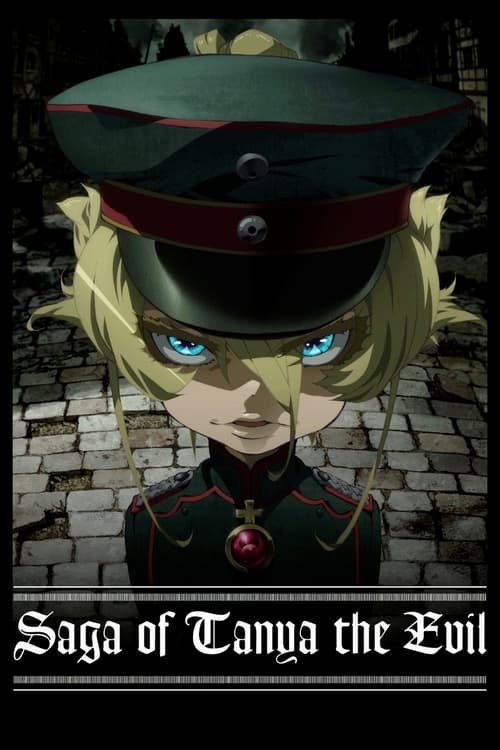
In a world reminiscent of early 20th-century Europe, the story begins with a salaryman who is suddenly confronted by a mysterious being known as Being X. This entity claims to be God and punishes the salaryman for his atheism by reincarnating him into a war-torn world as a young girl named Tanya Degurechaff. Tanya is reborn into a military family in the Empire, a nation engaged in a brutal war against the Republic. As a child, she possesses the memories of her past life, which fuels her ambition to rise through the military ranks and secure a comfortable life.
Tanya quickly demonstrates her exceptional magical abilities, which are rare in this world. She is recruited into the Imperial Army and assigned to a unit known as the 203rd Aerial Mage Battalion. Tanya's cold and calculating nature drives her to prioritize her own survival and success over the lives of her comrades. She views the military as a means to an end, believing that if she can climb the ranks, she can avoid the front lines and live a life of luxury.
During her first major battle, Tanya leads her battalion against the Republic's forces. The battle is intense, with aerial dogfights showcasing the magical combat capabilities of the mages. Tanya's strategic mind shines as she devises a plan to outmaneuver the enemy, resulting in a decisive victory for the Empire. However, her ruthless tactics and willingness to sacrifice her own soldiers for the sake of victory create tension within her unit.
As the war escalates, Tanya faces off against a powerful enemy mage known as Mary Sioux, who is determined to avenge her fallen comrades. Their encounters are marked by fierce battles, with both mages showcasing their skills in aerial combat. Tanya's confidence is tested as she realizes that Mary is a formidable opponent, and she must adapt her strategies to counter her rival's abilities.
Tanya's ambition leads her to make a series of morally questionable decisions, including the use of civilians as human shields during military operations. This ruthlessness earns her both accolades and enemies within the military hierarchy. Despite her success, Tanya remains haunted by the presence of Being X, who continues to interfere in her life, often putting her in situations that challenge her beliefs and resolve.
As the war progresses, Tanya's unit is deployed to various fronts, facing increasingly difficult challenges. She encounters the realities of war, including the loss of comrades and the impact of her decisions on innocent lives. Despite her emotional detachment, moments of doubt begin to creep in, forcing her to confront the consequences of her actions.
In a pivotal moment, Tanya is captured by the Republic's forces during a reconnaissance mission. She is interrogated and tortured, but her resolve remains unbroken. Using her cunning, she manages to escape, showcasing her resourcefulness and determination to survive. This experience deepens her understanding of the brutality of war and the sacrifices made by those around her.
The climax of the story occurs during a massive battle where Tanya faces off against Mary once again. The stakes are higher than ever, with both sides suffering heavy casualties. Tanya's strategic brilliance is on full display as she orchestrates a plan to turn the tide of battle in favor of the Empire. However, the emotional toll of the conflict weighs heavily on her, leading to moments of introspection about her life choices.
In the aftermath of the battle, Tanya is promoted to a higher rank, solidifying her position within the military. However, the victory is bittersweet as she grapples with the loss of friends and the moral implications of her actions. The presence of Being X looms larger than ever, as the entity continues to manipulate events in Tanya's life, pushing her towards a destiny she cannot escape.
The series concludes with Tanya's ongoing struggle against the forces of fate and her relentless pursuit of power. Despite her achievements, she remains trapped in a cycle of violence and conflict, with the specter of Being X ever-present, challenging her beliefs and forcing her to confront the true nature of her existence.








What is the ending?
In the ending of "Saga of Tanya the Evil," Tanya Degurechaff faces off against the powerful being known as Being X. After a fierce battle, Tanya is ultimately defeated, but she remains defiant in her beliefs. The series concludes with Tanya's fate left ambiguous, as she is confronted with the possibility of reincarnation, which she desperately wishes to avoid.
As the final episodes unfold, the tension escalates on the battlefield. Tanya Degurechaff, a young and ruthless mage, is engaged in a fierce conflict against the Republic of Eruvia. The war has reached a critical point, and Tanya's strategic brilliance has earned her both respect and fear among her peers and enemies alike.
In a pivotal scene, Tanya leads her battalion into a decisive confrontation against the Republic's forces. The air is thick with the sounds of artillery and the cries of soldiers. Tanya, clad in her military uniform, exudes an aura of cold determination. Her eyes, sharp and calculating, scan the battlefield as she issues commands with precision. The chaos of war surrounds her, but she remains focused, driven by her desire to climb the ranks and secure her own future.
As the battle rages on, Tanya's internal conflict becomes evident. She is constantly at odds with the entity known as Being X, who represents a higher power that has manipulated her life. Being X's presence looms over her, a constant reminder of the divine intervention that has shaped her existence. Tanya's defiance against this being fuels her actions, as she fights not only for victory but also for her autonomy.
In a climactic moment, Tanya confronts Being X directly. The setting shifts to a surreal realm, where the laws of reality bend and twist. Tanya stands firm, her expression a mix of anger and determination. She challenges Being X, refusing to accept the fate that has been imposed upon her. The confrontation is intense, filled with magical energy and philosophical exchanges about faith, power, and the nature of existence.
Despite her fierce resolve, the battle takes a toll on Tanya. She is ultimately overpowered by Being X, who reveals the futility of her struggle against fate. In a moment of vulnerability, Tanya's facade cracks, and she is faced with the reality of her situation. The scene is heavy with emotion as she grapples with the implications of her defeat.
As the final moments approach, Tanya is confronted with the possibility of reincarnation, a fate she desperately wishes to avoid. The imagery shifts to a bright light, symbolizing the transition to another life. Tanya's expression is one of defiance, yet there is an underlying fear of losing her identity and agency. The screen fades to black, leaving her ultimate fate ambiguous.
In the aftermath, the series concludes without a clear resolution for Tanya or the other characters. The war continues, and the consequences of their actions linger in the air. Tanya's subordinates, who have witnessed her unwavering determination, are left to ponder the legacy of their commander. The conflict between Tanya and Being X remains unresolved, highlighting the ongoing struggle between free will and predestination.
The final scenes encapsulate the essence of Tanya's character--a complex blend of ambition, defiance, and vulnerability. Her journey, marked by battles and moral dilemmas, leaves a lasting impact on those around her, even as her own fate hangs in the balance. The series closes with a sense of uncertainty, inviting viewers to reflect on the themes of power, belief, and the human condition.
Who dies?
In "Saga of Tanya the Evil," several characters meet their demise throughout the series, each death serving to highlight the brutal realities of war and the motivations of the characters involved. Here are some notable deaths:
- General Staff Officer (the "Old Man"):
- Circumstances: The Old Man is a high-ranking officer in the Imperial Army who initially underestimates Tanya's capabilities. He is involved in the planning of military operations against the Republic.
- When: His death occurs during the battle against the Republic's forces.
-
How: Tanya, demonstrating her tactical prowess, orchestrates a surprise attack that leads to the destruction of the enemy forces. The Old Man is caught in the chaos, and his death serves as a reminder of the high stakes of war and the consequences of underestimating one's opponents.
-
Viktor:
- Circumstances: Viktor is a soldier who serves under Tanya. He is portrayed as a loyal and capable officer who respects Tanya's leadership.
- When: His death occurs during a mission where Tanya leads her unit into battle against the Republic.
-
How: Viktor sacrifices himself to protect Tanya and the rest of the squad from an enemy ambush. His death is poignant, showcasing the camaraderie and loyalty among soldiers, as well as the harsh reality of war where even the most dedicated can fall.
-
The Mage Soldiers:
- Circumstances: Throughout the series, several mage soldiers are killed in action during various battles against the Republic and other enemies.
- When: These deaths occur at different points in the series, particularly during large-scale battles.
-
How: Many of these soldiers die due to enemy fire, magical attacks, or as collateral damage in Tanya's aggressive strategies. Their deaths illustrate the high casualty rates in warfare and the emotional toll it takes on those who survive.
-
The Republic's Mage Battalion:
- Circumstances: Tanya faces off against a battalion of mages from the Republic, who are determined to stop her.
- When: This confrontation occurs during a significant battle where Tanya's unit is tasked with breaking through enemy lines.
-
How: Tanya employs her superior tactics and magical abilities, leading to the annihilation of the Republic's mages. The scene is intense, filled with explosions and the chaos of battle, emphasizing the ruthlessness of war and the cost of conflict.
-
The Emperor:
- Circumstances: The Emperor of the Empire is a character whose fate is tied to the overarching political and military struggles.
- When: His death is not shown directly in the series but is implied through the political machinations and the consequences of war.
- How: His demise is a result of the ongoing conflict and the pressures of leadership during wartime, reflecting the instability and dangers faced by those in power.
Each of these deaths contributes to the overarching themes of the series, including the futility of war, the moral complexities of leadership, and the personal sacrifices made by individuals in the name of duty and survival. The emotional weight of these losses resonates throughout the narrative, shaping Tanya's character and her relentless pursuit of power and survival in a harsh world.
Is there a post-credit scene?
In the 2017 anime "Saga of Tanya the Evil," there is indeed a post-credit scene that adds an intriguing layer to the story. After the main credits roll, the scene opens with a view of a vast, snowy landscape, evoking a sense of isolation and the harsh realities of war.
The camera pans down to reveal Tanya Degurechaff, the protagonist, standing resolutely in her military uniform, her expression a mix of determination and contemplation. She is surrounded by the remnants of a battlefield, the aftermath of a recent conflict that showcases the toll of war on both the land and its people. The air is thick with tension, and the distant sounds of artillery fire echo, reminding viewers of the ongoing struggles she faces.
As Tanya surveys the desolate scene, her internal monologue begins, reflecting her thoughts on the nature of power and the relentless pursuit of her goals. She grapples with her identity as a soldier and the burdens of her past life, revealing her deep-seated motivations and the psychological toll of her experiences. This moment of introspection highlights her complex character--driven by ambition yet haunted by the consequences of her actions.
The scene concludes with Tanya receiving a report from one of her subordinates, pulling her back into the harsh reality of her duties. Her expression shifts to one of cold resolve as she prepares to make strategic decisions for the Empire, emphasizing her role as a ruthless leader. The post-credit scene encapsulates the themes of ambition, survival, and the moral ambiguities of war that permeate the series, leaving viewers with a lingering sense of Tanya's relentless pursuit of power and the challenges that lie ahead.
What motivates Tanya Degurechaff to pursue a military career?
Tanya Degurechaff, a salaryman reincarnated as a young girl in a war-torn world, is driven by her desire for a comfortable and secure life. Her past life experiences instill in her a strong aversion to the unpredictability of death, leading her to believe that the military offers the best chance for stability and power. She seeks to climb the ranks to ensure her own safety and to avoid the fate of being a mere pawn in a chaotic world.
How does Tanya's relationship with her subordinates evolve throughout the series?
Initially, Tanya views her subordinates as tools to achieve her goals, often treating them with cold pragmatism. However, as the series progresses, she begins to develop a begrudging respect for their capabilities and loyalty. This evolution is marked by moments of vulnerability, such as when she acknowledges their sacrifices during battles, revealing her internal conflict between her ruthless ambition and the bonds formed through shared experiences.
What role does the Being X play in Tanya's life and decisions?
Being X, a mysterious entity that reincarnates Tanya, serves as both an antagonist and a catalyst for her actions. It represents the divine forces that Tanya vehemently rejects, pushing her to prove her own strength and independence. Tanya's constant struggle against Being X's influence drives her to make decisions that often lead to conflict, as she seeks to assert her will against what she perceives as a manipulative deity.
How does Tanya's use of magic influence her military strategies?
Tanya's mastery of magic, particularly her ability to manipulate mana for combat, significantly enhances her military strategies. She employs her magical prowess to gain tactical advantages in battles, often using her skills to outmaneuver opponents and execute complex operations. Her innovative use of magic not only showcases her intelligence but also instills fear in her enemies, as she becomes known for her ruthless efficiency on the battlefield.
What are the consequences of Tanya's actions during the war, particularly in relation to her enemies?
Tanya's ruthless tactics and strategic brilliance lead to significant consequences for both her enemies and her own side. Her actions result in high casualties, instilling terror among opposing forces and earning her the nickname 'The Devil of the Rhine.' However, her relentless pursuit of victory also creates a cycle of vengeance and escalation, as her enemies become more determined to defeat her, leading to increasingly brutal confrontations and moral dilemmas.
Is this family friendly?
"Saga of Tanya the Evil" is not considered family-friendly due to its mature themes and graphic content. Here are some potentially objectionable or upsetting aspects that may affect children or sensitive viewers:
-
Violence and Warfare: The series features intense battle scenes with significant violence, including the use of magic and military combat. Characters are shown being injured or killed, which can be graphic and disturbing.
-
Death and Destruction: The consequences of war are depicted starkly, with scenes showing the aftermath of battles, including destruction of cities and loss of life.
-
Moral Ambiguity: The protagonist, Tanya, is portrayed as ruthless and manipulative, often making morally questionable decisions. This can be unsettling for viewers who prefer clear distinctions between good and evil.
-
Psychological Themes: The show explores themes of reincarnation, existentialism, and the nature of power, which may be complex and heavy for younger audiences.
-
Dark Humor: There are instances of dark humor that may not be appropriate for all viewers, as they often revolve around the grim realities of war and death.
-
Religious and Philosophical Undertones: The series includes discussions of faith and the existence of a higher power, which may be sensitive topics for some viewers.
These elements contribute to a tone that is more suited for mature audiences rather than children.