




Popular
What is the relationship between Nagatoro and Senpai throughout the series?
How does Senpai's character develop in response to Nagatoro's teasing?
What are some key moments that highlight Nagatoro's feelings for Senpai?
How does the art club setting influence the interactions between Nagatoro and Senpai?
What role do the supporting characters play in the development of Nagatoro and Senpai's relationship?
Should I watch it?
Ask Your Own Question

What is the plot?
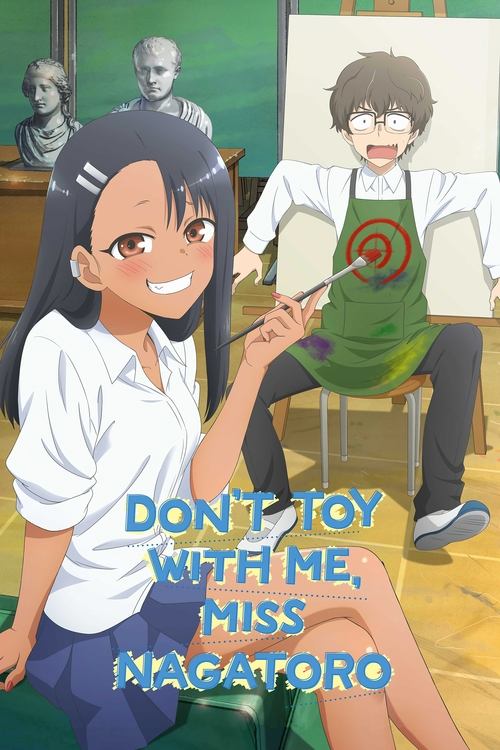
The story begins with Naoto Hachioji, a shy and introverted high school student who enjoys drawing manga. He spends his time in the art club, where he feels comfortable expressing his creativity. One day, while he is sketching in the clubroom, he is interrupted by a boisterous girl named Nagatoro, who is a first-year student. She enters the room with her friends and immediately begins to tease Naoto about his artwork, calling him a "loser" and mocking his drawing style. Naoto is visibly flustered and embarrassed by her comments, but he tries to brush them off.
As the days go by, Nagatoro continues to visit Naoto in the art club, often bringing her friends along. She finds joy in teasing him, pushing him out of his comfort zone. Naoto, despite his initial annoyance, begins to develop a complicated relationship with her. He feels a mix of irritation and intrigue, as Nagatoro's playful bullying forces him to confront his insecurities. One day, she challenges him to draw her, which he reluctantly agrees to. The drawing session is filled with tension, as Nagatoro continues to poke fun at him, but it also reveals a softer side to her character.
During a school festival, Nagatoro convinces Naoto to help her with a booth. She dresses up in a cute outfit, and Naoto is taken aback by her appearance. As they work together, they share moments of laughter and camaraderie, which deepens their bond. However, Nagatoro's teasing does not stop, and she continues to push Naoto's buttons, leading to a mix of frustration and attraction on his part. Naoto's feelings for her begin to grow, but he struggles to understand them.
In another episode, Nagatoro invites Naoto to a swimming pool. She playfully challenges him to a race, and while he is hesitant, he eventually agrees. At the pool, Nagatoro's competitive nature shines through, and she continues to tease him about his swimming skills. However, when Naoto shows determination and manages to keep up with her, Nagatoro is impressed and begins to see him in a new light. This moment marks a turning point in their relationship, as they start to appreciate each other's strengths.
As the series progresses, Naoto and Nagatoro's interactions become more complex. They share moments of vulnerability, such as when Naoto reveals his struggles with self-doubt and his passion for drawing. Nagatoro, in turn, opens up about her own insecurities, showing a more sensitive side that contrasts with her teasing persona. Their relationship evolves from one of simple teasing to a deeper connection, filled with mutual respect and understanding.
In a pivotal episode, Naoto faces a major setback when he submits his manga to a competition and receives harsh criticism. Feeling defeated, he contemplates giving up on his dream of becoming a manga artist. Nagatoro, noticing his distress, steps in to encourage him. She reminds him of his talent and pushes him to keep trying, demonstrating her support in a way that is both tough and caring. This moment solidifies their bond, as Naoto realizes that Nagatoro genuinely cares about him.
The climax of the series occurs during a school trip, where Naoto and Nagatoro find themselves in a series of comedic and awkward situations. They are forced to confront their feelings for each other amidst the chaos of the trip. At one point, they end up alone together, and the tension between them reaches a peak. Naoto finally gathers the courage to express his feelings, but Nagatoro playfully deflects, leaving him both hopeful and frustrated.
In the final episodes, the school year comes to an end, and Naoto must confront the reality of their relationship. He reflects on how much he has grown thanks to Nagatoro's influence. As graduation approaches, they share a heartfelt moment where they acknowledge their feelings for each other without explicitly stating them. The series concludes with a sense of ambiguity, leaving viewers to ponder the future of Naoto and Nagatoro's relationship, but it is clear that they have both changed for the better through their interactions.
More TV Shows Like This
Browse All TV Shows →


What is the ending?
In the ending of "Don't Toy With Me, Miss Nagatoro," the story culminates in a heartfelt moment between Nagatoro and Senpai. After a series of teasing and playful interactions, they both come to terms with their feelings for each other. The final scenes depict a growing bond, hinting at a deeper connection as they navigate their emotions.
As the final episodes unfold, the atmosphere is charged with a mix of tension and anticipation. The school festival is approaching, and the art club, where Senpai and Nagatoro spend much of their time, is buzzing with activity. Senpai, who has been increasingly aware of his feelings for Nagatoro, finds himself both excited and anxious about the festival. He wants to impress her with his artwork, but he is also nervous about how she perceives him.
Scene breaks into the art club, where Senpai is diligently working on his piece. Nagatoro enters, her usual teasing demeanor in full swing. She playfully mocks his concentration, but there's a softness in her eyes that reveals her genuine interest in his work. As she leans over his shoulder, the closeness creates a palpable tension. Senpai's heart races, and he struggles to maintain his composure, feeling both flustered and exhilarated by her presence.
The day of the festival arrives, and the art club's display is set up. Senpai's artwork, a reflection of his growth and feelings, is showcased prominently. As visitors admire the pieces, Nagatoro stands beside him, her pride evident. She encourages him, her teasing now laced with sincerity. This moment marks a shift in their relationship; the playful banter has evolved into a deeper understanding and appreciation for one another.
Later, as the sun sets, the festival takes on a magical quality. The two find themselves alone, away from the bustling crowd. The atmosphere is serene, illuminated by the soft glow of lanterns. Senpai, feeling emboldened, finally expresses his feelings for Nagatoro. He stumbles over his words, but the sincerity in his voice is unmistakable. Nagatoro, taken aback, initially teases him, but her laughter is warm, not mocking. She reveals that she has also developed feelings for him, and the teasing was her way of getting closer.
In this pivotal moment, they share a genuine connection, both vulnerable and open. The tension that once defined their interactions transforms into a bond of mutual affection. They stand together, the weight of their feelings hanging in the air, and as they look into each other's eyes, a silent understanding passes between them.
The series concludes with a sense of hope and possibility. Senpai and Nagatoro, now more than just a teasing pair, are on the brink of a new chapter in their relationship. The final scene captures them walking side by side, their hands brushing against each other, symbolizing the beginning of a deeper connection. The screen fades to black, leaving viewers with a sense of warmth and anticipation for what lies ahead for the two characters.
In summary, Senpai and Nagatoro both emerge from the festival with a clearer understanding of their feelings for each other. Senpai gains confidence, while Nagatoro reveals her softer side, showcasing the growth of their relationship from playful teasing to genuine affection. The ending encapsulates the essence of their journey, highlighting the beauty of young love and the complexities of emotional connection.
Is there a post-credit scene?
In the anime "Don't Toy With Me, Miss Nagatoro," produced in 2021, there is indeed a post-credit scene that adds a light-hearted touch to the series.
After the main episode concludes, the scene opens with Nagatoro and Senpai in a casual setting, likely at school. The atmosphere is playful, with Nagatoro teasing Senpai as usual. In this particular scene, she playfully challenges him to draw her, which is a nod to their ongoing dynamic where she often pushes him out of his comfort zone.
As Senpai nervously attempts to sketch her, the scene captures his internal struggle--his hands tremble, and he becomes flustered, showcasing his bashfulness and lack of confidence in his artistic abilities. Nagatoro, on the other hand, is amused and encourages him, her teasing tone laced with genuine interest in his work.
The scene concludes with a humorous twist: Senpai's drawing turns out to be a comically exaggerated version of Nagatoro, which prompts her to burst into laughter. This moment encapsulates their relationship--filled with playful banter, mutual growth, and a hint of budding affection. The post-credit scene serves as a delightful reminder of their chemistry and sets a light-hearted tone, leaving viewers with a smile as the credits roll.
What is the relationship between Nagatoro and Senpai throughout the series?
Nagatoro and Senpai's relationship is characterized by playful teasing and a gradual deepening of their bond. Initially, Nagatoro enjoys teasing Senpai, often making him flustered and embarrassed. However, as the series progresses, their interactions reveal a more complex dynamic where Nagatoro shows genuine care for Senpai, encouraging him to step out of his comfort zone and pursue his interests, particularly in art.
How does Senpai's character develop in response to Nagatoro's teasing?
Senpai starts as a shy and introverted character, often overwhelmed by Nagatoro's teasing. However, as the series unfolds, he begins to gain confidence, learning to stand up for himself and even playfully tease Nagatoro in return. This development is marked by moments of self-reflection and growth, where he confronts his insecurities and becomes more assertive in his interactions.
What are some key moments that highlight Nagatoro's feelings for Senpai?
Key moments that highlight Nagatoro's feelings for Senpai include instances where she shows concern for his well-being, such as when she encourages him during art club activities or when she defends him from other bullies. Additionally, her reactions to his successes and failures reveal a deeper emotional investment, showcasing her pride in him and her desire to see him thrive.
How does the art club setting influence the interactions between Nagatoro and Senpai?
The art club setting serves as a backdrop for many of Nagatoro and Senpai's interactions, providing a creative space where they can express themselves. It allows for moments of collaboration, such as when they work on art projects together, which fosters a sense of teamwork and intimacy. The club also introduces other characters who influence their dynamic, adding layers to their relationship.
What role do the supporting characters play in the development of Nagatoro and Senpai's relationship?
Supporting characters, such as Nagatoro's friends and Senpai's classmates, play significant roles in the development of Nagatoro and Senpai's relationship. They often provide comic relief and serve as a sounding board for both characters, offering advice or teasing them about their feelings. Their interactions with the main characters help to highlight the evolving nature of Nagatoro and Senpai's bond, as well as the social dynamics of high school life.
Is this family friendly?
"Don't Toy With Me, Miss Nagatoro" is a romantic comedy anime that features themes of teasing and playful bullying, primarily between the main characters, Nagatoro and Senpai. While the show is generally light-hearted, there are several aspects that may be considered objectionable or upsetting for children or sensitive viewers:
-
Teasing and Bullying: The central dynamic involves Nagatoro frequently teasing Senpai, which can sometimes border on emotional bullying. This may not be suitable for younger audiences who might misinterpret the nature of their interactions.
-
Romantic Undertones: The show explores romantic feelings and crushes, which may include suggestive situations or innuendos that could be uncomfortable for younger viewers.
-
Physical Comedy: There are moments of physical comedy that involve Nagatoro playfully pushing Senpai's boundaries, which could be perceived as aggressive or inappropriate.
-
Emotional Vulnerability: Senpai often displays feelings of insecurity and embarrassment, which may resonate with sensitive viewers but could also be distressing for some.
-
Visual Gags: Certain scenes may include exaggerated expressions or situations that could be interpreted as suggestive or inappropriate, depending on the viewer's perspective.
Overall, while the show is not overtly explicit, its themes and humor may not be suitable for all audiences, particularly younger children or those sensitive to bullying dynamics.







