













Should I watch it?
Ask Your Own Question

What is the plot?
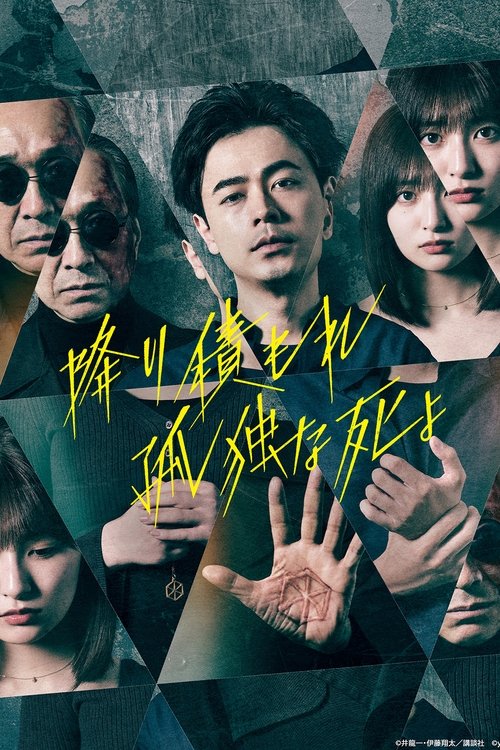
In 2024 Tokyo, a group of young people hang out in a place where they escape from society and families.
One of the girls suddenly goes missing.
The story turns back the clock seven years to 2017.
Abandoned corpses of thirteen imprisoned children are found in a certain mansion known as the Haikawa Residence.
Detective Jin Saeki from Yamanashi Prefecture arrives at the prominent estate residence in response to a tip and finds the skeletal remains.
A mysterious mark is left at the scene.
Saeki begins to investigate the Haikawa Residence Incident.
The suspect is Juzo Haikawa, the mysterious owner of the mansion who has gone missing.
Haikawa is believed to be the culprit.
The children who had lived with him before all deny Haikawa's possible wrongdoings.
Kanon Hasumi appears and claims to adore Haikawa as a father.
Saeki and Kanon investigate together.
They discover the trace of the real culprit.
Six survivors of the incident are involved in a mysterious communal life.
Layers of hidden truths unfold.
One mystery invites another mystery.
Multiple cases become tied together with new twists in each progression.
A completely different perspective emerges repeatedly.
The unfolding mysteries lead to an unpredictable ending.





What is the ending?
In the finale of A Suffocatingly Lonely Death, the layers of deception unravel as the true identity of "Father" is revealed among the survivors, leading to a confrontation that exposes the Haikawa Residence Incident's hidden truths, with the six survivors facing their fates in a web of betrayal and justice.
Now, let me take you through the ending, scene by scene, as the story builds to its unpredictable close in episode 10, aired September 8, 2024.
The episode opens in a dimly lit abandoned warehouse on the outskirts of the city, rain pounding against rusted metal roofs. Detective Hiroshi Kato, weary-eyed with stubble shadowing his jaw, stands over a table scattered with case files from the Haikawa Residence Incident seven years prior. He pores over photos of the skeletal remains of the 13 children, the mysterious mark--a crude circle with intersecting lines--etched into his memory. His hands tremble slightly as he connects it to recent murders mirroring the old pattern. Suddenly, his phone buzzes; it's a call from survivor Mika Tanaka, her voice hushed and urgent, whispering that she's found something in the old residence.
Cut to Mika arriving at the derelict Haikawa house, overgrown weeds choking the doorway, moonlight filtering through cracked windows. She clutches a faded journal, her breaths shallow, fingers white-knuckled on the cover. Inside, she navigates creaking floorboards, flashlight beam dancing over walls scarred with the same mysterious mark. She flips open the journal, revealing handwritten entries detailing the communal life: rules of isolation, punishments for dissent, and references to "Father" as protector and punisher. Her eyes widen as she reads a passage naming the real orchestrator--not the long-suspected cult leader, but someone from within the survivors.
Meanwhile, back at the police station, Kato briefs his partner, the younger Detective Sato, whose face is pale under fluorescent lights. They review survivor profiles: Mika, the quiet artist haunted by nightmares; Kenji Yamamoto, the charismatic handyman with a forced smile; Yumi Sato--no relation to the detective--the former nurse with bandaged wrists; Taro Ikeda, the reclusive scholar; Rei Nakamura, the defiant musician; and lastly, the enigmatic elder survivor, Grandmother figure Aiko. Kato points to inconsistencies in their alibis for the recent killings, his voice gravelly as he says the mark has reappeared at every new scene.
The scene shifts to a tense group gathering in a rundown community center, called by Mika. The six survivors sit around a scarred wooden table, shadows playing across their faces from a single hanging bulb. Mika slams the journal down, accusing Kenji of being "Father," citing entries matching his handwriting. Kenji laughs bitterly, sweat beading on his forehead, denying it while his eyes dart to Yumi. Taro interjects, voice quivering, pulling out old photos showing the children alive in the residence, their faces gaunt, eyes hollow from enforced silence and starvation disguised as purification.
Tension escalates as Rei stands, slamming her fist, revealing she found a hidden room in the residence basement filled with the children's personal effects--toys, drawings, bloodstained clothes. She accuses Aiko, the grandmotherly one, of enforcing the rules, her frail hands once wielding a belt for discipline. Aiko weeps silently, rocking in her chair, mumbling about protecting them from the outside world's cruelty.
Kato bursts in with Sato and uniformed officers, guns drawn, the room freezing. He reveals forensic matches: DNA from the recent mark traces to Taro's blood type, but Taro confesses it was planted--by Yumi, who admits under pressure that she was the nurse who drugged the children, one by one, suffocating the weakest to "spare them loneliness" under Father's orders. Yumi's face crumples, tears streaming as she describes the airless rooms, the children's final gasps echoing in her nightmares.
But the twist lands: Kenji rises, pulling a knife from his coat, his charming facade shattering into rage. He confesses he is "Father," having manipulated the communal life from the shadows, killing the 13 children not in ritual but to build a family loyal only to him, staging their deaths as suicides to evade detection. The survivors were his inner circle, complicit in silence. He lunges at Mika, who dodges, slashing her arm on a jagged table edge, blood dripping onto the floor.
Sato tackles Kenji, wrestling the knife away in a flurry of grunts and thuds against the wall. Kato cuffs Yumi as she collapses sobbing. Taro, revealed as having tried to sabotage Kenji anonymously with the new marks to draw police attention, is arrested for aiding after the fact. Rei punches Aiko, screaming about the enforced isolation that broke them all, before officers pull her back.
In the aftermath, outside under pouring rain, ambulances flash red and blue. Mika is bandaged, staring blankly at the center, her journal confiscated as evidence. She survives, but whispers to Kato she'll never paint again, the colors drained from her world. Kenji is dragged into a squad car, snarling that true family dies alone, his eyes dead as the door slams. Yumi is sedated and wheeled away, muttering apologies to ghosts, destined for life in a psychiatric ward. Taro bows his head in the rain, handcuffed, facing trial for conspiracy, his scholarly pursuits forever tainted. Rei kicks at the ground, uncuffed but shattered, vowing to expose every detail in music that no one will hear. Aiko, frail and wheezing, is arrested last, clutching a locket with a child's photo, her body giving out from a heart attack en route to jail--she dies alone in the ambulance, oxygen mask fogging with her final breath.
Kato watches them all go, lighting a cigarette in the downpour, the case closed but the weight of 13 lonely deaths pressing on his chest. The screen fades to black on the mysterious mark, now crossed out in red police tape.
Is there a post-credit scene?
I cannot find information about a post-credit scene in the available search results for the 2024 TV show "A Suffocatingly Lonely Death." The search results provide general information about the series' premise, cast, and reception, but do not contain details about post-credit scenes or what occurs after the episodes conclude.
To get an accurate answer about whether the show includes post-credit scenes, you would need to consult episode-specific reviews, fan discussions, or watch the series directly.
Is this family friendly?
A Suffocatingly Lonely Death is not family friendly and contains content unsuitable for children or sensitive viewers.
Based on the available information, the series deals with dark and sensitive subject matter. The show involves the discovery of abandoned corpses of imprisoned children found in a mansion, which establishes the core premise as inherently disturbing. The drama is explicitly described as a dark thriller that poses serious moral dilemmas and explores themes centered around family dysfunction and criminal investigation.
Potentially objectionable aspects for children and sensitive viewers include:
- Death and corpses of minors as central plot elements
- Child imprisonment and abuse themes
- Dark psychological thriller content with complex criminal investigations
- Eerie cinematography designed to create unsettling atmosphere
- Moral ambiguity and ethically complex situations
The series is rated for mature audiences and runs 55 minutes per episode across 10 episodes. While reviews note the show handles sensitive subjects in a deliberate manner rather than exploitatively, the fundamental subject matter involving crimes against children makes this inappropriate for younger viewers or those sensitive to such themes.