














Popular
What role does Tyrion Lannister play in the political landscape of Westeros?
What is the significance of the Iron Throne in the series?
How does the relationship between Jon Snow and Daenerys Targaryen evolve?
What are the motivations behind Cersei Lannister's actions throughout the series?
How does the character of Arya Stark develop throughout the series?
Should I watch it?
Ask Your Own Question

What is the plot?
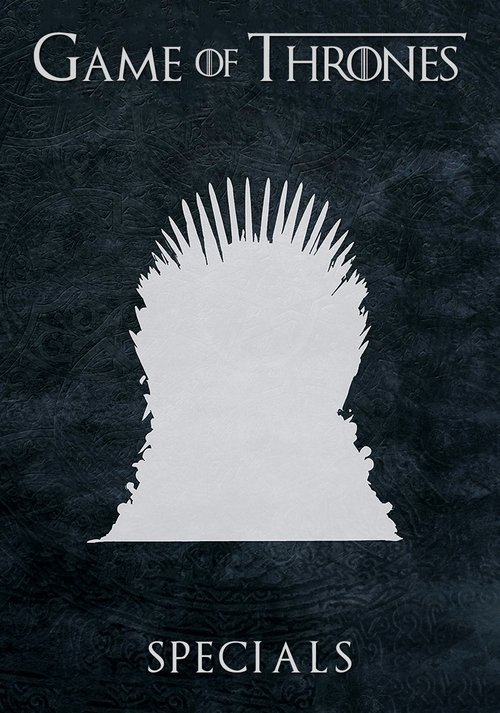
In the "Game of Thrones: Specials," the series begins with a behind-the-scenes look at the making of the show, featuring interviews with the cast and crew. The first segment introduces the world of Westeros, highlighting the complex political landscape and the various noble houses vying for power. The creators discuss the source material, George R.R. Martin's "A Song of Ice and Fire," and the challenges of adapting such a rich narrative for television.
The next segment focuses on the casting process, showcasing auditions and the selection of key characters. The actors share their experiences and the emotional weight of stepping into roles that have become iconic. The casting of characters like Jon Snow, Daenerys Targaryen, and Tyrion Lannister is emphasized, with insights into how the actors prepared for their roles and the chemistry they developed with one another.
Following this, the production design is explored in detail. The creators take viewers through the construction of sets, including Winterfell and King's Landing. They discuss the importance of authenticity in creating the medieval fantasy world, showcasing the intricate details of costumes, weapons, and props. The visual effects team also shares their work in bringing the dragons and battles to life, emphasizing the blend of practical effects and CGI.
The next segment delves into the themes of the series, such as power, loyalty, and betrayal. The writers and producers discuss how these themes are woven into the characters' arcs and the overall narrative. They highlight pivotal moments from the first season, explaining the motivations behind key decisions made by characters like Ned Stark, who struggles with his sense of honor versus the political machinations of the realm.
As the special progresses, it shifts focus to the music and score of the series. Composer Ramin Djawadi discusses his creative process and the emotional impact of the music on the storytelling. Viewers are treated to behind-the-scenes footage of the orchestra recording the iconic theme and other key pieces that underscore the drama and tension throughout the series.
The final segment of the special reflects on the impact of "Game of Thrones" on popular culture. The cast and crew share their thoughts on the show's reception and its legacy. They discuss the passionate fanbase and the global phenomenon that the series has become, culminating in a celebration of the storytelling that has captivated audiences around the world.
Throughout the special, there are glimpses of the actors in character, providing context for their performances and the relationships that develop over the course of the series. The emotional stakes are highlighted, showcasing the depth of the characters and the intricate web of alliances and rivalries that define the world of Westeros.







What is the ending?
The "Game of Thrones: Specials" does not have a traditional narrative ending as it is a collection of behind-the-scenes features, interviews, and insights into the making of the series rather than a continuation of the story itself. Therefore, it does not provide a conclusive ending to the plot or character arcs.
However, I can provide a detailed summary of the key points and character fates from the final season of "Game of Thrones," which is relevant to the context of the specials.
In the final season, the story culminates in a series of intense battles and political maneuvers. The Night King, leading the army of the dead, is ultimately defeated at Winterfell by Arya Stark, who delivers the fatal blow with a Valyrian steel dagger. This moment is pivotal, showcasing Arya's growth from a young girl into a skilled assassin, driven by her desire for vengeance and justice for her family.
Following the battle, the focus shifts to the Iron Throne and the power struggle between Daenerys Targaryen and Cersei Lannister. Daenerys, having lost many of her allies and her dragon Viserion, becomes increasingly ruthless in her quest for the throne. In a devastating display of power, she destroys King's Landing, resulting in massive civilian casualties. This act marks a significant turning point in her character, as her initial vision of breaking the wheel and liberating the oppressed becomes overshadowed by her tyrannical actions.
Jon Snow, torn between his love for Daenerys and his loyalty to his Stark heritage, ultimately confronts her after the destruction of King's Landing. In a heart-wrenching scene, he stabs Daenerys in the throne room, believing that her vision of a "better world" has become dangerously corrupted. This act of betrayal is fueled by his internal conflict and the realization that she has become a threat to the realm.
After Daeneryh's death, the remaining leaders of Westeros convene to decide the future of the realm. Tyrion Lannister, imprisoned for his role in advising Daenerys, suggests a new form of governance where the lords and ladies of Westeros choose their leader rather than relying on hereditary succession. Bran Stark is ultimately chosen as the new king, a decision that reflects the desire for a more democratic approach to leadership.
Sansa Stark declares the North an independent kingdom, becoming its queen, while Arya Stark sets sail to explore uncharted territories. Jon Snow is exiled back to the Night's Watch as a compromise for killing Daenerys, reflecting the ongoing themes of sacrifice and duty that have defined his character throughout the series.
In the end, the fates of the main characters are sealed: Bran Stark becomes king, Sansa rules the North, Arya seeks adventure beyond the known world, and Jon returns to the Wall, embodying the complex interplay of loyalty, power, and the consequences of choices made throughout the series. The story concludes with a sense of bittersweet resolution, leaving the audience to ponder the cost of power and the nature of leadership in a fractured world.
Is there a post-credit scene?
In the "Game of Thrones" specials from 2010, there is no post-credit scene. The specials primarily consist of behind-the-scenes footage, interviews with the cast and crew, and insights into the making of the series. They explore the world of Westeros, the characters, and the intricate details of the production, but they do not include any additional scenes or content that would typically be found in a post-credit sequence. The focus is on providing fans with a deeper understanding of the show's creation and the storytelling process rather than advancing the plot or introducing new elements.
What role does Tyrion Lannister play in the political landscape of Westeros?
Tyrion Lannister serves as a master strategist and advisor throughout the series. Initially underestimated due to his stature as a dwarf, he uses his intelligence and wit to navigate the treacherous political waters of King's Landing. His role as Hand of the King to Joffrey and later as Hand to Daenerys showcases his ability to influence events, often working behind the scenes to promote peace and stability, despite the chaos surrounding him.
What is the significance of the Iron Throne in the series?
The Iron Throne is the ultimate symbol of power in Westeros, representing the seat of the ruler of the Seven Kingdoms. Its creation from the swords of defeated enemies signifies the brutal history of conquest and the desire for dominance. Throughout the series, various characters, including Robert Baratheon, Joffrey Baratheon, and Daenerys Targaryen, are driven by their ambition to claim the throne, leading to political intrigue, betrayal, and war.
How does the relationship between Jon Snow and Daenerys Targaryen evolve?
Jon Snow and Daenerys Targaryen's relationship begins with mutual respect and shared goals, as both seek to unite their forces against the White Walkers. However, as they grow closer, Jon's true parentage is revealed, complicating their bond. Jon struggles with his loyalty to his Stark heritage and his feelings for Daenerys, while Daenerys grapples with the implications of Jon's claim to the Iron Throne, leading to tension and ultimately tragedy.
What are the motivations behind Cersei Lannister's actions throughout the series?
Cersei Lannister is driven by a fierce desire to protect her children and maintain her family's power. Her ruthless ambition leads her to manipulate and eliminate anyone who threatens her position. Cersei's actions are often fueled by a deep-seated fear of losing control, stemming from her experiences of betrayal and loss. This culminates in her willingness to engage in war and destruction to secure her legacy, showcasing her complex character as both a mother and a tyrant.
How does the character of Arya Stark develop throughout the series?
Arya Stark's journey is one of transformation and resilience. Starting as a tomboyish girl who rejects traditional gender roles, she faces immense trauma with the loss of her family. Her quest for vengeance leads her to train with the Faceless Men in Braavos, where she learns the art of assassination. Arya's internal struggle between her desire for revenge and her Stark identity shapes her character, ultimately leading her to reclaim her family name and confront her past.
Is this family friendly?
The "Game of Thrones: Specials" from 2010 contains several elements that may be considered objectionable or upsetting for children or sensitive viewers. Here are some aspects to be aware of:
-
Violence and Gore: The series often depicts graphic violence, including battles, executions, and other forms of brutality that may be disturbing.
-
Sexual Content: There are scenes that include nudity and sexual situations, which may not be appropriate for younger audiences.
-
Strong Language: The dialogue frequently includes profanity and harsh language that could be offensive.
-
Themes of Betrayal and Death: The narrative explores dark themes such as betrayal, loss, and the harsh realities of power struggles, which may be emotionally heavy for some viewers.
-
Mature Themes: The show delves into complex themes of morality, loyalty, and the consequences of ambition, which may be difficult for younger viewers to fully understand.
These elements contribute to the overall mature nature of the series, making it more suitable for adult audiences.