



























Popular
What are the main conflicts between Hürrem Sultan and Mahidevran in Season 3?
How does the relationship between Suleiman and Hürrem evolve in Season 3?
What role does Şehzade Mustafa play in the power struggles of Season 3?
What are the consequences of Hürrem's actions against Mahidevran in Season 3?
How does the character of Ibrahim Pasha change in Season 3?
Should I watch it?
Ask Your Own Question

What is the plot?
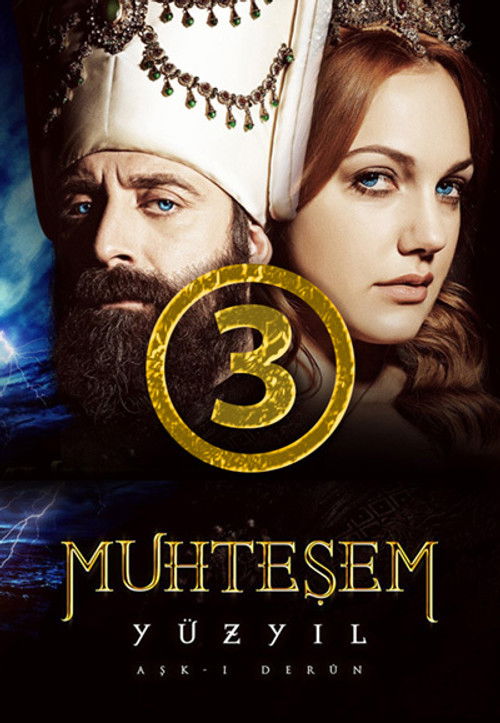
In the third season of "Magnificent Century," the story begins with the aftermath of the previous season's events, where Sultan Suleiman faces the consequences of his decisions regarding his family and the empire. The season opens with the tension between Suleiman and his son, Prince Mustafa, who is increasingly seen as a threat to the throne. Suleiman's affection for his son is evident, but he is also wary of the growing influence of his mother, Hafsa Sultan, who supports Mustafa.
As the season progresses, the political landscape becomes more complex with the introduction of new characters and alliances. The ambitious and cunning Roxelana, now known as Hürrem Sultan, continues to manipulate those around her to secure her position as the Sultan's favorite. She is determined to ensure that her children, particularly her son, Şehzade Mehmed, are positioned to inherit the throne. Hürrem's machinations lead her to sow discord between Suleiman and Mustafa, as she fears that Mustafa's popularity could overshadow her own children's prospects.
In a pivotal moment, Hürrem orchestrates a plan to discredit Mustafa by planting false evidence of his supposed treachery. She enlists the help of her loyal confidant, the scheming and ambitious İbrahim Pasha, who is also navigating his own precarious position as the Grand Vizier. İbrahim, torn between his loyalty to Suleiman and his growing affection for Hürrem, finds himself caught in a web of deceit. The tension escalates when Hürrem convinces Suleiman to confront Mustafa about the alleged conspiracy, leading to a dramatic confrontation where Mustafa vehemently denies the accusations.
As the season unfolds, the emotional stakes rise when Hürrem's actions lead to a tragic outcome. Suleiman, influenced by Hürrem's manipulations, makes the heart-wrenching decision to execute Mustafa, believing he is protecting the empire. This moment is filled with anguish as Mustafa, unaware of the true nature of the betrayal, faces his fate with dignity. The execution is a turning point for Suleiman, who is left to grapple with the consequences of his choice and the loss of his beloved son.
Meanwhile, the political intrigue continues as Hürrem's influence grows, but not without opposition. The loyalists of Mustafa, including his supporters within the palace, begin to plot against Hürrem and Suleiman. This leads to a series of clandestine meetings and secret alliances, as they seek to avenge Mustafa's death and restore his honor. The tension culminates in a dramatic confrontation where the loyalists attempt to overthrow Suleiman, leading to a fierce battle within the palace walls.
In the midst of this chaos, Hürrem's relationship with Suleiman is tested. She struggles with guilt over the role she played in Mustafa's death, yet she remains focused on securing her family's future. Suleiman, on the other hand, is consumed by grief and regret, questioning his decisions and the loyalty of those around him. This emotional turmoil creates a rift between him and Hürrem, as they navigate their complex relationship amidst the backdrop of political strife.
As the season nears its conclusion, the power dynamics shift once again. Hürrem's enemies within the palace, emboldened by the unrest, make their move. A coup is attempted, leading to a climactic showdown where loyalties are tested, and blood is shed. The palace becomes a battleground, with characters facing off in a desperate struggle for power and survival.
In the final episodes, the consequences of the season's events come to a head. Suleiman, now more isolated than ever, must confront the reality of his choices and the impact they have had on his family and the empire. Hürrem, while still holding significant power, begins to realize the fragility of her position as enemies close in. The season ends on a cliffhanger, leaving viewers questioning the fate of the characters and the future of the Ottoman Empire as the political landscape continues to shift dramatically.









What is the ending?
In the ending of "Magnificent Century" Season 3, the power struggles within the Ottoman court reach a climax. Sultan Suleiman faces betrayal and loss, leading to tragic consequences for several key characters. The season concludes with significant emotional turmoil, as love, loyalty, and ambition collide, ultimately resulting in the downfall of some and the survival of others.
As the final episodes unfold, the tension in the palace escalates. The season opens with the aftermath of the previous conflicts, where Sultan Suleiman is grappling with the betrayal of his trusted advisor, Ibrahim Pasha. Ibrahim, once a close friend and confidant, has become a target of suspicion and jealousy, particularly from the Sultan's wife, Hürrem Sultan. Hürrem's ambition to secure her children's future and her desire for power lead her to manipulate events against Ibrahim.
In a pivotal scene, Hürrem confronts Suleiman, planting seeds of doubt about Ibrahim's loyalty. She emphasizes the need for the Sultan to assert his authority and eliminate any threats to his reign. Suleiman, torn between his love for Ibrahim and the growing paranoia instigated by Hürrem, begins to question his long-standing friendship with the Grand Vizier.
As the plot thickens, Ibrahim's fate hangs in the balance. He is portrayed as a tragic figure, caught in a web of political intrigue and personal betrayal. Despite his loyalty to Suleiman, he becomes increasingly isolated as Hürrem's influence grows. In a heart-wrenching scene, Ibrahim pleads for his life, reminding Suleiman of their shared history and the battles they fought together. However, the Sultan, under immense pressure, ultimately decides to execute Ibrahim, marking a devastating turning point in the narrative.
The execution scene is laden with emotional weight. Ibrahim, stripped of his titles and dignity, faces his end with a mixture of defiance and sorrow. The visual imagery is stark, highlighting the brutality of power and the cost of betrayal. Suleiman, witnessing the execution, is engulfed in a storm of conflicting emotions--regret, anger, and a sense of loss for the friendship that has been irrevocably shattered.
In the aftermath, Hürrem's victory is bittersweet. While she has successfully removed a rival, the emotional toll on Suleiman is evident. He becomes increasingly isolated, burdened by the consequences of his decisions. Hürrem, now more powerful than ever, revels in her triumph but is also haunted by the darkness that her ambition has wrought.
The season concludes with a sense of foreboding. Suleiman, now more of a solitary ruler, reflects on the sacrifices made for power. The final scenes depict him gazing out over the empire, a man who has lost friends and allies in his quest for control. Hürrem, while triumphant, is left to ponder the true cost of her ambition and the fragile nature of loyalty.
As the credits roll, the fates of the main characters are sealed. Suleiman remains the Sultan, but at a great personal cost. Hürrem stands beside him, a queen who has secured her place but at the expense of her humanity. Ibrahim's legacy lingers, a reminder of the bonds of friendship that can be severed by ambition and betrayal. The season closes on a note of tragedy, encapsulating the themes of love, power, and the inevitable consequences of choices made in the pursuit of greatness.
Is there a post-credit scene?
In "Magnificent Century," Season 3, there are no post-credit scenes. The episodes conclude without additional content after the credits, focusing instead on the dramatic narratives and character developments throughout the episodes. The series maintains its storytelling within the main episodes, emphasizing the intricate relationships and political intrigues of the Ottoman Empire during the reign of Suleiman the Magnificent. Each episode wraps up its plotlines, leaving viewers to reflect on the unfolding drama without any additional scenes after the credits.
What are the main conflicts between Hürrem Sultan and Mahidevran in Season 3?
In Season 3 of Magnificent Century, the rivalry between Hürrem Sultan and Mahidevran intensifies significantly. Hürrem, now firmly established as the Sultan's favorite, seeks to undermine Mahidevran's position as the mother of the heir. The tension escalates as Hürrem employs cunning strategies to gain the Sultan's favor, including manipulating court politics and using her children to secure her status. Mahidevran, feeling threatened and desperate to protect her son, Şehzade Mustafa, becomes increasingly aggressive, leading to confrontations that are both emotionally charged and politically dangerous.
How does the relationship between Suleiman and Hürrem evolve in Season 3?
In Season 3, the relationship between Suleiman and Hürrem deepens, marked by both passion and conflict. Suleiman's affection for Hürrem grows as he recognizes her intelligence and political acumen, but he also grapples with the implications of her ambition. Hürrem, on the other hand, becomes more assertive, pushing for her children's rights and her own influence in the empire. Their love is tested by external pressures, including court intrigues and the threat posed by Mahidevran, leading to moments of both tenderness and tension.
What role does Şehzade Mustafa play in the power struggles of Season 3?
Şehzade Mustafa, the son of Mahidevran, plays a crucial role in the power dynamics of Season 3. As the legitimate heir to the throne, he becomes a focal point of contention between Hürrem and Mahidevran. His loyalty is tested as he navigates the treacherous waters of court politics, often caught between his mother's ambitions and Hürrem's manipulations. Mustafa's character is portrayed with a sense of honor and duty, but he is also vulnerable to the machinations of those around him, leading to a complex portrayal of a prince under pressure.
What are the consequences of Hürrem's actions against Mahidevran in Season 3?
Hürrem's actions against Mahidevran in Season 3 have significant consequences that ripple through the court. Her schemes to discredit Mahidevran and elevate her own children lead to increased animosity and a bitter rivalry. This not only affects their personal relationship but also has political ramifications, as Mahidevran's supporters rally against Hürrem. The tension culminates in dramatic confrontations that threaten to destabilize the court, showcasing Hürrem's willingness to go to great lengths to secure her family's future, even at the cost of her own moral integrity.
How does the character of Ibrahim Pasha change in Season 3?
In Season 3, Ibrahim Pasha undergoes a significant transformation, shifting from Suleiman's trusted advisor to a man caught in the web of court intrigue. Initially, he is portrayed as loyal and competent, but as Hürrem's influence grows, Ibrahim finds himself increasingly at odds with her ambitions. His internal conflict is palpable as he navigates his loyalty to Suleiman and the growing threat posed by Hürrem. This tension leads to moments of vulnerability, showcasing his struggle to maintain his position while dealing with the shifting allegiances within the palace.
Is this family friendly?
"Magnificent Century" is a historical drama that contains several elements that may not be suitable for children or sensitive viewers. Here are some potentially objectionable or upsetting aspects:
-
Violence and Warfare: The series depicts battles, political intrigue, and the consequences of war, which can include scenes of violence and injury.
-
Romantic Relationships: There are numerous romantic entanglements, including infidelity and power struggles within relationships, which may be complex and mature in nature.
-
Betrayal and Manipulation: Characters often engage in deceit, betrayal, and manipulation, which can create a tense and emotionally charged atmosphere.
-
Death and Loss: The show addresses themes of mortality, including the deaths of key characters, which can be emotionally heavy.
-
Political Intrigue: The series explores themes of power, ambition, and the darker sides of human nature, which may be difficult for younger viewers to fully understand.
-
Cultural and Historical Context: Some scenes may depict practices or societal norms from the historical period that could be unsettling or confusing for modern audiences.
These elements contribute to a narrative that is rich in drama but may not be appropriate for all viewers, particularly children.