
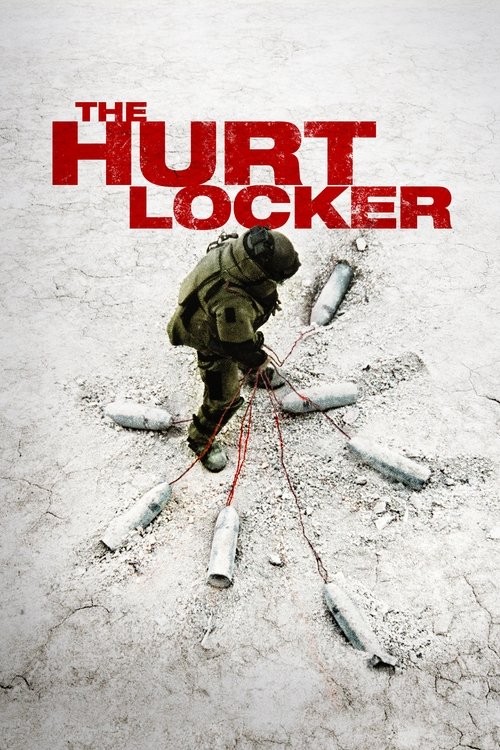




















Popular
What is the significance of the bomb disposal scenes in the film?
What motivates Sergeant William James to take risks while defusing bombs?
How does the relationship between Sergeant James and Sergeant Sanborn evolve throughout the film?
What role does Specialist Owen Eldridge play in the team dynamics?
How does the film portray the impact of war on the soldiers' mental health?
Should I watch it?
Ask Your Own Question

What is the plot?
Sorry, we aren't able to watch and write up a full detailed plot yet. Check back in a few days.


What is the ending?
In the ending of "The Hurt Locker," Sergeant William James returns home to his family after his tour in Iraq. However, he struggles to adjust to civilian life and feels disconnected from his wife and child. The film concludes with him feeling a deep sense of restlessness and returning to the battlefield, indicating his inability to find peace away from the adrenaline of war.
As the film approaches its conclusion, we find Sergeant William James back in the United States after his harrowing experiences in Iraq. The scene opens with him at home, surrounded by the comforts of civilian life. He is in the kitchen, where his wife and young son are present. The atmosphere is warm, yet there is an unmistakable tension in the air. James appears distant, his mind seemingly elsewhere, as he engages in mundane conversations about grocery shopping and family life. His wife tries to connect with him, but he is preoccupied, his thoughts lingering on the chaos and adrenaline of his recent deployment.
The next scene shifts to a stark contrast as we see James in a grocery store. He walks through the aisles, and the mundane nature of shopping feels foreign to him. He picks up a box of cereal, but the simple act of choosing a product becomes overwhelming. The camera captures his internal struggle; he is visibly uncomfortable, almost claustrophobic in this normal setting. The noise of the store, the chatter of other shoppers, and the bright lights seem to amplify his sense of alienation.
In the following scene, we witness a pivotal moment that encapsulates James's internal conflict. He is in the bathroom, and as he looks at himself in the mirror, the weight of his experiences in Iraq washes over him. The reflection staring back is not just a soldier but a man grappling with the ghosts of war. The silence is deafening, and the viewer can sense his longing for the thrill and purpose he found in the battlefield.
The film then transitions to a powerful final sequence. James is back in Iraq, suited up in his bomb disposal gear, preparing for another mission. The adrenaline rush is palpable as he steps into the chaos of war once more. The camera follows him closely, capturing the intensity of his focus and the familiar rush of danger that he craves. The sounds of gunfire and explosions echo around him, and for James, this is where he feels most alive.
As the film closes, we see James in the midst of a bomb disposal operation, his face a mask of concentration and determination. The screen fades to black, leaving the audience with a haunting sense of his choice to return to the battlefield. The final moments emphasize his struggle to reconcile his identity as a soldier with the demands of civilian life.
In terms of character fates, William James is left in a state of perpetual conflict, choosing the chaos of war over the tranquility of home. His fellow soldiers, like Sergeant J.T. Sanborn and Specialist Owen Eldridge, have their own arcs throughout the film, but the ending focuses primarily on James's inability to adapt to life outside of combat. Sanborn and Eldridge are not present in the final scenes, leaving James's fate as a solitary reflection of the toll that war takes on those who serve. The film concludes with a poignant reminder of the psychological scars that linger long after the physical battles have ended.
Is there a post-credit scene?
The Hurt Locker does not have a post-credit scene. The film concludes with a powerful final sequence that encapsulates the emotional and psychological toll of war on its main character, Staff Sergeant William James. After completing a tour in Iraq, James returns home to his family but struggles to adjust to civilian life. The film ends with him back in Iraq, preparing to defuse another bomb, highlighting his addiction to the adrenaline and chaos of war. This ending serves as a poignant commentary on the challenges faced by soldiers returning from combat, rather than providing any additional scenes or resolutions after the credits.
What is the significance of the bomb disposal scenes in the film?
The bomb disposal scenes are pivotal to the narrative, serving as intense, suspenseful moments that showcase the physical and psychological dangers faced by the characters. Each scene is meticulously crafted to build tension, reflecting the high stakes of their missions. These moments also reveal the characters' internal struggles, particularly James's thrill-seeking behavior and Eldridge's fear, emphasizing the personal costs of war.
What motivates Sergeant William James to take risks while defusing bombs?
Sergeant William James is driven by a complex mix of adrenaline addiction, a desire for control, and a deep-seated need to prove himself. His thrill-seeking behavior often puts him at odds with his team, as he seems to thrive in the chaos of war, finding a sense of purpose and identity in the high-stakes environment of bomb disposal.
How does the relationship between Sergeant James and Sergeant Sanborn evolve throughout the film?
Initially, Sergeant Sanborn is wary of James's reckless approach to bomb disposal, leading to tension and distrust. However, as they face life-threatening situations together, a bond forms between them, rooted in mutual respect and shared experiences. Sanborn's protective instincts clash with James's need for independence, creating a dynamic that highlights their differing coping mechanisms in the face of danger.
What role does Specialist Owen Eldridge play in the team dynamics?
Specialist Owen Eldridge serves as the emotional anchor of the team, often expressing fear and anxiety about their dangerous missions. His character illustrates the psychological toll of war, as he struggles with the pressure of his role and the trauma of their experiences. Eldridge's vulnerability contrasts sharply with James's bravado, highlighting the varying ways soldiers cope with the stress of combat.
How does the film portray the impact of war on the soldiers' mental health?
The Hurt Locker poignantly depicts the psychological impact of war through the characters' experiences. The film illustrates the constant state of anxiety and fear that soldiers endure, particularly through Eldridge's breakdown and Sanborn's growing frustration with James's recklessness. The portrayal of these mental health struggles highlights the often-overlooked emotional scars that accompany combat, emphasizing the lasting effects of their experiences.
Is this family friendly?
The Hurt Locker, produced in 2008, is not considered family-friendly due to its intense and mature themes. Here are some potentially objectionable or upsetting aspects that may affect children or sensitive viewers:
-
Graphic Violence: The film contains scenes of explosions and the aftermath of bomb detonations, which can be disturbing and intense.
-
War Trauma: Characters experience significant psychological stress and trauma related to their experiences in combat, which may be unsettling.
-
Strong Language: The dialogue includes frequent use of profanity, which may not be suitable for younger audiences.
-
Death and Injury: There are depictions of injuries and fatalities, including the emotional impact on soldiers and their families.
-
Tense Situations: The film is filled with suspenseful moments that can create anxiety, particularly during bomb disposal scenes.
-
Substance Use: There are instances of drug use among characters, which may be inappropriate for younger viewers.
These elements contribute to the film's rating and overall tone, making it more suitable for mature audiences.








