







Popular
How does Griffith's transformation into Femto affect his relationship with Guts?
What is the significance of Guts' Brand of Sacrifice in the story?
What role does Casca play in Guts' journey throughout the Specials?
How does the Eclipse event impact the characters involved?
What are the implications of the God Hand's influence on the world of Berserk?
Should I watch it?
Ask Your Own Question

What is the plot?
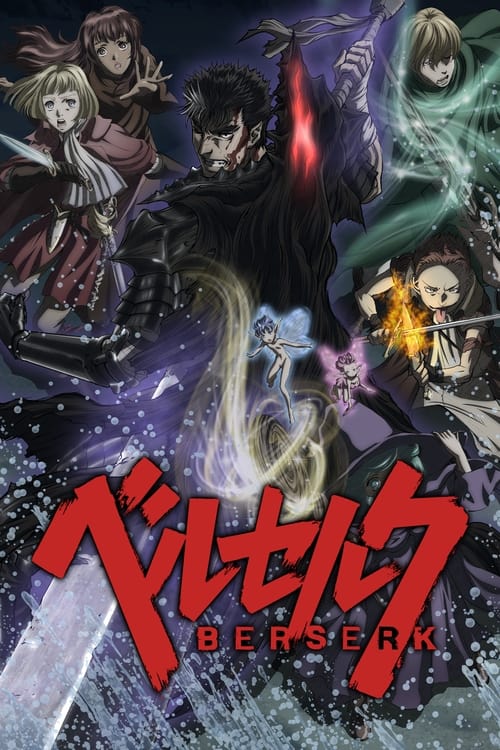
In the 2017 "Berserk: Specials," the story begins with a flashback to the past, focusing on Guts, the Black Swordsman, as he battles a group of demonic Apostles. The scene is set in a dark, foreboding landscape, filled with the remnants of a battlefield. Guts, wielding his massive sword, the Dragonslayer, displays his incredible strength and skill as he cuts through the Apostles with brutal efficiency. The atmosphere is tense, filled with the sounds of clashing steel and the cries of the fallen. Guts is driven by a deep-seated rage and a desire for vengeance against those who have wronged him.
As the battle rages on, Guts encounters a particularly powerful Apostle, who taunts him about his past and the loss of his comrades. This confrontation serves to highlight Guts' internal struggle with his own demons, both literal and metaphorical. The Apostle's words cut deep, reminding Guts of his painful history and the sacrifices he has made. Fueled by anger, Guts unleashes a ferocious attack, ultimately defeating the Apostle in a climactic moment that showcases his relentless determination.
Following this intense battle, the narrative shifts to Guts' journey as he continues to seek revenge against Griffith, the former leader of the Band of the Hawk, who betrayed him and caused the death of his friends. Guts is shown traveling through desolate landscapes, often haunted by visions of his past and the faces of those he has lost. His emotional turmoil is palpable, as he grapples with feelings of isolation and the burden of his quest for vengeance.
The story then introduces a new character, Schierke, a young witch who possesses knowledge of the supernatural. Schierke becomes intrigued by Guts and offers to help him understand the forces that are pursuing him. Their initial meeting is fraught with tension, as Guts is wary of trusting anyone after his past experiences. However, Schierke's genuine desire to assist him begins to break down his defenses. She explains the nature of the Apostles and the God Hand, the powerful entities that manipulate events from the shadows.
As Guts and Schierke form a tentative alliance, they encounter a group of mercenaries who are also hunting Apostles. This leads to a series of skirmishes where Guts showcases his combat prowess, fighting alongside the mercenaries against various demonic foes. The battles are intense and visceral, with Guts often taking the brunt of the attacks due to his overwhelming desire to protect those around him, despite his solitary nature.
In one pivotal scene, Guts faces off against a particularly formidable Apostle who has been terrorizing a nearby village. The fight is brutal, with Guts using every ounce of his strength and skill to overcome the creature. The Apostle taunts him, attempting to break his spirit by reminding him of his past failures. Guts, however, channels his pain into rage, ultimately defeating the Apostle in a bloody confrontation that leaves him physically and emotionally drained.
After the battle, Guts reflects on the cost of his quest for vengeance. He is haunted by memories of his fallen comrades and the choices he has made. Schierke, sensing his turmoil, encourages him to confront his past rather than run from it. This moment of vulnerability marks a turning point for Guts, as he begins to consider the possibility of healing and moving forward.
The narrative then shifts to Griffith, who is shown in a parallel storyline, continuing to build his power and influence. His charisma and ambition draw followers to him, and he is depicted as a complex figure, torn between his desires and the consequences of his actions. This juxtaposition between Guts and Griffith highlights the contrasting paths they have taken since their fateful separation.
As the Specials progress, Guts and Schierke delve deeper into the mystical aspects of their world, encountering various supernatural beings and uncovering the truth behind the God Hand's machinations. Their journey is fraught with danger, but it also serves as a means for Guts to confront his inner demons and the trauma of his past.
In the climax of the Specials, Guts faces a final confrontation with a powerful Apostle that tests his limits. The battle is fierce, with Guts pushed to the brink of exhaustion. However, with Schierke's guidance and the strength of his resolve, he manages to overcome the Apostle, solidifying his determination to continue his fight against the forces that seek to destroy him.
The Specials conclude with Guts standing at a crossroads, contemplating his future and the path he must take. The emotional weight of his journey is evident as he reflects on the sacrifices he has made and the friends he has lost. The final scenes leave viewers with a sense of anticipation for Guts' continued struggle against the darkness that surrounds him, setting the stage for future conflicts and character development.
Related Titles
Browse All Titles →


What is the ending?
In the ending of "Berserk: Specials," Guts continues his relentless journey, haunted by his past and the sacrifices he has made. The narrative culminates in a confrontation with Griffith, who has transformed into a powerful figure, embodying the God Hand's will. Guts faces overwhelming odds, driven by his desire for vengeance and the need to protect those he cares about. The story concludes with a sense of unresolved conflict, as Guts remains on his path of struggle, embodying the themes of perseverance and the fight against fate.
As the final scenes unfold, we find Guts standing on a desolate battlefield, the remnants of a fierce conflict surrounding him. The air is thick with tension, and the sky is painted in ominous shades of red and black, reflecting the turmoil within him. Guts, clad in his iconic black armor, grips the hilt of his massive sword, the Dragonslayer, his knuckles white with determination. His face is a mask of rage and sorrow, the scars of his past etched deeply into his features.
In the distance, Griffith stands atop a hill, radiating an otherworldly aura. He has ascended to a new level of power, now a member of the God Hand, and his presence is both mesmerizing and terrifying. The contrast between Guts and Griffith is stark; Guts embodies raw, unyielding human spirit, while Griffith represents the cold, calculated ambition of a god-like being. As Guts approaches, memories flood his mind--visions of camaraderie with the Band of the Hawk, the warmth of friendship, and the betrayal that shattered his world.
The scene shifts to a flashback, where we see Guts and his comrades fighting side by side, their laughter echoing in the air. This moment of joy is abruptly cut short by the haunting image of Griffith's betrayal, a pivotal moment that has driven Guts to this confrontation. The emotional weight of these memories fuels Guts' resolve, igniting a fire within him as he charges forward.
As Guts engages Griffith, the battle is fierce and chaotic. Guts swings his sword with all his might, each strike fueled by years of pain and loss. Griffith, however, moves with an ethereal grace, effortlessly dodging Guts' attacks, his laughter echoing like a haunting melody. The clash of their wills is palpable, a physical manifestation of their conflicting ideologies--Guts' desire for freedom and vengeance against Griffith's ambition to transcend humanity.
In the midst of their battle, Guts is momentarily overwhelmed, visions of his fallen friends flashing before his eyes. He sees Casca, the woman he loves, who has been left in a fragile state due to the trauma inflicted upon her. This moment of vulnerability strengthens Guts' resolve; he fights not just for himself, but for those he has lost and for Casca's sake. The emotional stakes are high, and Guts' determination becomes a beacon of hope amidst the darkness.
As the fight reaches its climax, Griffith reveals his true form, a manifestation of his god-like power. The landscape around them shifts, warping under the weight of their conflict. Guts, battered and bloodied, refuses to back down. He channels every ounce of his strength, embodying the spirit of a warrior who has faced insurmountable odds. The battle becomes a dance of life and death, each moment hanging in the balance.
In the end, the confrontation does not resolve in a clear victory or defeat. Guts, despite his relentless spirit, is left standing amidst the ruins of their battle, the weight of his journey heavy on his shoulders. Griffith, now fully transformed, gazes down at Guts with a mixture of pity and disdain, a reminder of the chasm that separates them. The scene fades, leaving Guts alone, a solitary figure against the backdrop of a world that continues to spiral into chaos.
The fate of the main characters is left ambiguous. Guts remains on his path of vengeance, driven by the ghosts of his past and the love he holds for Casca. Griffith, having achieved his ambitions, stands as a symbol of the sacrifices made in pursuit of power. The unresolved nature of their conflict serves as a poignant reminder of the struggles that define them, leaving viewers with a sense of anticipation for what lies ahead in their tumultuous journey.
Is there a post-credit scene?
In the 2017 "Berserk" Specials, there is indeed a post-credit scene that adds a layer of depth to the narrative. After the main credits roll, the scene opens with a dark, foreboding atmosphere, typical of the series' tone.
The camera pans over a desolate landscape, shrouded in mist, where the remnants of a battlefield can be seen. The ground is littered with broken weapons and the echoes of past conflicts linger in the air. This setting serves as a stark reminder of the violence and turmoil that permeates the world of Berserk.
As the scene unfolds, we see Guts, the Black Swordsman, standing alone, his massive sword, Dragonslayer, resting heavily on his shoulder. His expression is one of deep contemplation, reflecting the weight of his past and the burdens he carries. The scars on his body and the weariness in his eyes tell a story of relentless struggle and survival.
In this moment of solitude, Guts is confronted by memories of his fallen comrades and the haunting presence of Griffith, whose betrayal still lingers in his mind. The internal conflict is palpable; Guts grapples with feelings of rage, sorrow, and a desire for vengeance. The scene captures his emotional turmoil, showcasing the complexity of his character as he stands at the crossroads of his fate.
The post-credit scene concludes with a close-up of Guts' face, determination igniting in his eyes as he grips the hilt of his sword tighter. The screen fades to black, leaving viewers with a sense of anticipation for the battles yet to come and the unresolved tensions that define Guts' journey. This moment encapsulates the essence of Berserk, emphasizing themes of struggle, loss, and the relentless pursuit of one's destiny.
How does Griffith's transformation into Femto affect his relationship with Guts?
Griffith's transformation into Femto is a pivotal moment that shatters the bond between him and Guts. Once comrades, their relationship becomes one of profound betrayal and enmity. Guts feels a deep sense of loss and rage, as Griffith's ascension to a demonic being represents the ultimate betrayal of their shared dreams. This transformation ignites Guts' quest for revenge, driving him to confront the very embodiment of his former friend.
What is the significance of Guts' Brand of Sacrifice in the story?
The Brand of Sacrifice is a crucial symbol in Berserk, marking Guts as a target for demons and supernatural entities. It represents his cursed fate and the constant struggle he faces against the forces of darkness. The brand not only signifies his connection to the supernatural but also serves as a reminder of the sacrifices he has made and the relentless pursuit of vengeance against those who have wronged him.
What role does Casca play in Guts' journey throughout the Specials?
Casca serves as both a source of motivation and emotional turmoil for Guts. Her presence in the Specials highlights the depth of their relationship, showcasing moments of tenderness and vulnerability. However, her tragic fate and the trauma she endures also weigh heavily on Guts, fueling his determination to protect her and seek vengeance against Griffith. Casca's struggles reflect Guts' own battles, intertwining their fates and amplifying the stakes of his journey.
How does the Eclipse event impact the characters involved?
The Eclipse event is a catastrophic turning point that irrevocably alters the lives of the characters involved. It marks the moment when Griffith sacrifices his comrades to achieve his dream, leading to the brutal deaths of many, including the Band of the Hawk. This event leaves Guts traumatized and filled with rage, while Casca suffers a devastating fate that affects her mental state. The Eclipse serves as a catalyst for Guts' transformation into the Black Swordsman, driving him into a relentless pursuit of revenge.
What are the implications of the God Hand's influence on the world of Berserk?
The God Hand's influence is a dark and pervasive force that shapes the events of Berserk. They manipulate the destinies of individuals and entire nations, embodying the themes of fate and free will. Their actions during the Eclipse and their ongoing machinations create a world rife with despair and suffering. The God Hand's presence serves as a constant reminder of the struggle between humanity and the forces that seek to control it, impacting Guts' journey as he battles against their malevolent designs.
Is this family friendly?
"Berserk: Specials" is not family-friendly and contains several potentially objectionable or upsetting scenes that may be distressing for children or sensitive viewers. Here are some aspects to consider:
-
Graphic Violence: The series features intense and graphic depictions of violence, including battles with bloodshed and dismemberment, which can be quite disturbing.
-
Dark Themes: The narrative explores heavy themes such as betrayal, revenge, and the struggle against fate, which may be too complex or unsettling for younger audiences.
-
Sexual Content: There are scenes that include sexual violence and suggestive imagery, which can be inappropriate for children.
-
Emotional Trauma: Characters experience significant emotional pain, loss, and trauma, which may resonate deeply and be upsetting for sensitive viewers.
-
Monstrous Creatures: The presence of grotesque and terrifying creatures can be frightening, contributing to an overall dark atmosphere.
These elements combine to create a viewing experience that is more suitable for mature audiences.