


Popular
What motivates Harley Quinn to break up with the Joker in Season 1?
How does Harley Quinn's relationship with Poison Ivy develop in Season 1?
What role does the Legion of Doom play in Harley Quinn's journey in Season 1?
What is the significance of Harley's quest for her own identity in Season 1?
How does the character of Clayface contribute to the humor and dynamics of the group in Season 1?
Should I watch it?
Ask Your Own Question

What is the plot?
The series opens with Harley Quinn narrating her life as the Joker's girlfriend, showcasing her chaotic and dysfunctional relationship with him. She is deeply in love with the Joker, but he treats her poorly, often dismissing her and using her as a pawn in his schemes. After a particularly humiliating incident where the Joker throws her out of a window, Harley realizes that she needs to break free from his toxic influence. This moment of clarity is pivotal, as she decides to embrace her own identity and become a villain in her own right.
Harley attempts to prove herself to the criminal underworld of Gotham City, seeking to establish her reputation independent of the Joker. She decides to rob a bank, believing that a successful heist will earn her the respect she craves. She assembles a ragtag team of misfits, including her former psychiatrist, Dr. Harleen Quinzel, who becomes her sidekick, and a few other villains. However, the heist goes awry when they encounter the police, leading to a chaotic escape. Harley's impulsive nature shines through as she improvises during the robbery, showcasing her quick thinking and resourcefulness.
After the failed bank heist, Harley's team is captured by the police, and she is left to fend for herself. In a moment of desperation, she seeks out Poison Ivy, her best friend, who is initially reluctant to get involved in Harley's reckless plans. However, Ivy eventually agrees to help her, and they devise a plan to rescue Harley's team from prison. This sequence highlights the deep bond between Harley and Ivy, as Ivy often serves as the voice of reason to Harley's impulsive decisions.
The rescue mission is fraught with danger as Harley and Ivy infiltrate the prison. They encounter various obstacles, including guards and other inmates. Harley's chaotic fighting style is on full display as she takes down guards with a mix of acrobatics and sheer unpredictability. Ivy uses her plant-based powers to assist, creating distractions and incapacitating enemies. The duo's teamwork is effective, and they manage to free Harley's team, but not without drawing the attention of the Joker, who is furious at Harley's betrayal.
As Harley's reputation begins to grow, she faces challenges from other villains in Gotham, particularly from the likes of the Riddler and Two-Face, who see her as a threat. Harley's confidence swells, but so does her recklessness. She decides to confront the Joker directly, leading to a climactic showdown. In this confrontation, Harley stands her ground, asserting her independence and refusing to be treated as the Joker's sidekick any longer. The emotional stakes are high as she grapples with her feelings for him while trying to establish her own identity.
The season progresses with Harley and her team, now dubbed the "Harley Quinn Gang," taking on various criminal enterprises in Gotham. They engage in a series of misadventures, including a plot to steal a valuable artifact from a high-security museum. The heist is filled with comedic moments and showcases the unique dynamics of Harley's team, each member bringing their own quirks and skills to the table. The heist ultimately succeeds, further solidifying Harley's status as a formidable villain.
However, the Joker's influence looms large over Harley's journey. He orchestrates a plan to undermine her newfound power, leading to a series of confrontations that test her resolve. Harley's internal struggle becomes more pronounced as she grapples with her desire for acceptance and her need for independence. The emotional turmoil culminates in a dramatic showdown where Harley must choose between her old life with the Joker and her new path as a solo villain.
In the season finale, Harley faces off against the Joker in a high-stakes battle that takes place in a chaotic Gotham City. The confrontation is intense, filled with action and emotional weight as Harley fights not just for her life but for her identity. She ultimately defeats the Joker, symbolizing her break from his control. The season ends with Harley fully embracing her role as a villain, ready to carve out her own path in Gotham, setting the stage for future adventures and conflicts.


What is the ending?
In the ending of "Harley Quinn" Season 1, Harley finally asserts her independence from the Joker, leading to a climactic showdown with him. She and her friends, the "Injustice League," confront the Joker and his gang. In a dramatic turn, Harley chooses to embrace her identity as a villain on her own terms, ultimately defeating the Joker. The season concludes with Harley and her crew solidifying their bond and preparing for new adventures, while the Joker is left to contemplate his loss.
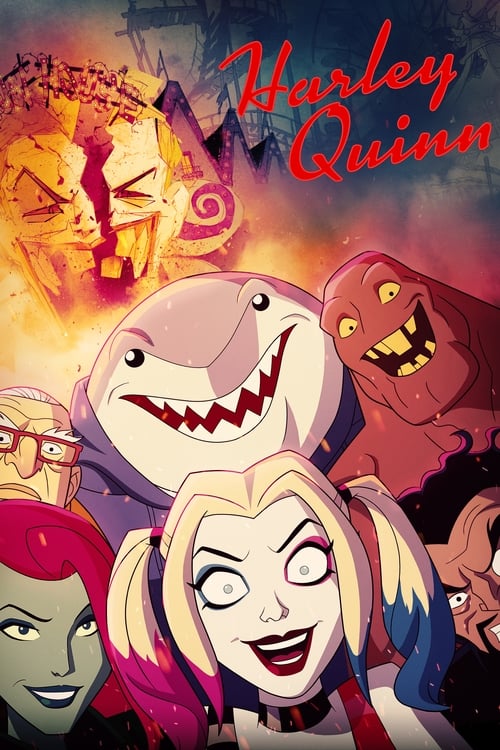
As the final episode unfolds, the tension is palpable. The scene opens with Harley Quinn, now fully embracing her identity as a villain, standing confidently in front of her makeshift crew, which includes Poison Ivy, Clayface, and King Shark. They are gathered in their hideout, a chaotic yet vibrant space filled with makeshift weapons and colorful decorations that reflect Harley's chaotic spirit. The air is thick with anticipation as they prepare to confront the Joker, who has been a looming figure throughout the season.
The camera cuts to the Joker, who is in his lair, surrounded by his henchmen. He is reveling in his power, but there is a flicker of concern as he learns that Harley is coming for him. The Joker's manic laughter echoes through the room, but it is tinged with a hint of desperation. He knows that Harley has grown stronger and more independent, and this realization fuels his rage.
Back at Harley's hideout, the crew is strategizing. Poison Ivy, with her calm demeanor, tries to keep everyone focused, while Clayface is excitedly morphing into various shapes, showcasing his powers. King Shark, with his brutish charm, is ready for a fight. Harley, however, is the center of attention, her eyes gleaming with determination. She expresses her desire to finally break free from the Joker's shadow, declaring that she is no longer his sidekick but a villain in her own right.
The scene shifts to the confrontation. Harley and her crew storm the Joker's lair, a chaotic battle ensues. The animation is vibrant and dynamic, with exaggerated movements and colorful explosions. Harley showcases her acrobatic skills, flipping and dodging attacks while dishing out her own brand of chaos. The crew fights valiantly, each character using their unique abilities to take down the Joker's henchmen.
As the battle reaches its climax, Harley faces off against the Joker. The tension is thick as they exchange barbs, revealing the emotional turmoil that has been building throughout the season. Harley's voice is steady, filled with a mix of anger and liberation as she confronts the Joker about their toxic relationship. The Joker, in his typical flamboyant style, tries to manipulate her, but Harley stands firm, her resolve unshaken.
In a pivotal moment, Harley uses her cunning and resourcefulness to outsmart the Joker. She sets a trap that ultimately leads to his downfall, showcasing her growth as a character. The Joker, realizing he has been bested, is left in a state of disbelief and rage. Harley's victory is not just physical; it symbolizes her emotional liberation from the Joker's control.
As the dust settles, Harley and her crew stand victorious. They share a moment of camaraderie, celebrating their triumph and solidifying their bond. Harley, now fully embracing her identity, declares that they are ready for whatever comes next. The camera pans out, showing the crew together, a united front against the chaos of Gotham.
In the final moments, the Joker is left alone in his lair, seething with anger and plotting his next move. His defeat marks a significant turning point, not just for him but for Harley as well. She has finally stepped out of his shadow, ready to carve her own path in the world of villains.
The season concludes with a sense of hope and excitement for the future, as Harley and her crew prepare for new adventures, leaving the audience eager for what lies ahead. Each character has evolved, with Harley emerging as a strong, independent figure, while the Joker is left to grapple with his loss of control over her.
Is there a post-credit scene?
In the first season of "Harley Quinn," there is no post-credit scene following the episodes. The show focuses on Harley's journey of self-discovery and her attempts to break free from the Joker's shadow, but it does not include any additional scenes after the credits in any of the episodes. Each episode concludes with a wrap-up of the storylines presented, leaving viewers to anticipate the next installment without any extra content in the credits.
What motivates Harley Quinn to break up with the Joker in Season 1?
In Season 1, Harley Quinn's motivation to break up with the Joker stems from her realization that he does not truly value her as an equal partner. After a series of events where the Joker treats her as a mere accessory to his villainy, including a particularly humiliating moment when he throws her into a vat of acid to prove a point, Harley feels disrespected and unappreciated. This culminates in her decision to leave him and seek her own identity as a villain.
How does Harley Quinn's relationship with Poison Ivy develop in Season 1?
Harley Quinn's relationship with Poison Ivy in Season 1 evolves from a friendship into a deeper bond. Initially, Ivy serves as Harley's confidante and voice of reason, often trying to steer her away from the Joker's toxic influence. As the season progresses, their interactions reveal a strong emotional connection, with Ivy supporting Harley's quest for independence and self-discovery. This relationship is marked by moments of humor, vulnerability, and mutual respect, showcasing Ivy's role as a grounding force in Harley's chaotic life.
What role does the Legion of Doom play in Harley Quinn's journey in Season 1?
The Legion of Doom plays a significant role in Harley Quinn's journey in Season 1 as it represents the ultimate goal for her to prove herself as a legitimate villain. Harley's desire to be accepted into this elite group drives many of her actions throughout the season. She believes that gaining membership will validate her identity and independence, leading her to undertake various schemes to impress the members, including Lex Luthor and other notorious villains. However, her attempts often backfire, highlighting her struggle to find her place in the villainous hierarchy.
What is the significance of Harley's quest for her own identity in Season 1?
Harley's quest for her own identity in Season 1 is significant as it marks her transformation from the Joker's sidekick to an independent villain. Throughout the season, she grapples with her self-worth and the need to be recognized for her own abilities rather than just as the Joker's girlfriend. This journey is illustrated through her various escapades, where she seeks to establish her own reputation and prove that she can be a formidable force on her own. Her struggles reflect her internal conflict and desire for autonomy, making her character arc compelling and relatable.
How does the character of Clayface contribute to the humor and dynamics of the group in Season 1?
Clayface contributes significantly to the humor and dynamics of the group in Season 1 through his unique abilities and comedic personality. As a shapeshifter, he often provides comic relief with his exaggerated transformations and misunderstandings of his powers. His attempts to fit in with Harley's crew, despite his insecurities about being a 'serious' villain, lead to humorous situations that highlight the absurdity of their adventures. Clayface's earnestness and loyalty to Harley and the group add depth to the ensemble, showcasing the importance of camaraderie amidst their chaotic lives.
Is this family friendly?
"Harley Quinn," season 1, is not considered family-friendly due to its mature themes and content. Here are some potentially objectionable or upsetting aspects that may occur for children or sensitive viewers:
-
Strong Language: The show features frequent use of profanity, which may not be suitable for younger audiences.
-
Violence: There are graphic depictions of violence, including fight scenes and injuries, which can be intense and unsettling.
-
Dark Humor: The series employs dark and often crude humor that may not resonate well with all viewers, particularly children.
-
Adult Themes: The show explores themes of mental health, toxic relationships, and betrayal, which may be complex and distressing for younger viewers.
-
Sexual Content: There are references to sexual situations and innuendos that are explicit and not appropriate for children.
-
Substance Use: Characters are shown engaging in drug use and other risky behaviors, which may be concerning for sensitive audiences.
These elements contribute to the show's rating and indicate that it is intended for a mature audience.