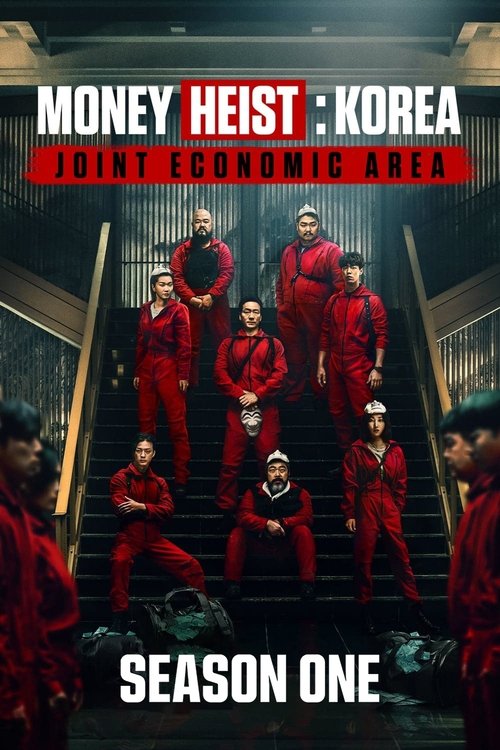



























Popular
How does the character Tokyo contribute to the heist and what are her personal struggles?
What is the significance of the relationship between Berlin and Tokyo?
What motivates the Professor in his plan to rob the mint in Money Heist: Korea - Joint Economic Area?
How does the character Inspector Raquel Murillo approach her investigation of the heist?
What role does the character Denver play in the dynamics of the heist team?
Should I watch it?
Ask Your Own Question

What is the plot?
In the opening scene of "Money Heist: Korea - Joint Economic Area," we are introduced to the character known as the Professor, who is orchestrating a heist on the Korean Mint. He gathers a group of skilled criminals, each with their own unique abilities and backgrounds. Among them are Tokyo, a skilled thief with a troubled past; Berlin, the Professor's older brother and a charismatic leader; and Nairobi, an expert in counterfeiting. The group is brought together under the guise of a shared goal: to print billions of won.
As the heist begins, the team infiltrates the Mint, taking control of the building and holding hostages, including the Mint's director and several employees. The tension escalates as the hostages are forced to comply with the robbers' demands. The Professor, who remains outside the Mint, communicates with the team through earpieces, guiding them and ensuring that everything goes according to plan. He reveals his meticulous strategy, which includes a detailed timeline and contingency plans for various scenarios.
Inside the Mint, the robbers face unexpected challenges. The police quickly respond to the situation, led by a determined negotiator named Inspector Kim. The robbers must navigate the complexities of managing the hostages while also dealing with the police's attempts to negotiate their release. Tensions rise as the hostages begin to form alliances and resist the robbers' control, leading to moments of conflict and emotional turmoil.
As the heist progresses, the robbers start to experience internal conflicts. Berlin's leadership style becomes increasingly authoritarian, causing friction with other members of the team, particularly Tokyo, who questions his decisions. Meanwhile, Nairobi tries to maintain morale among the hostages, showing her empathetic side. The dynamics within the group shift as personal motivations and past traumas come to the forefront, revealing deeper connections and rivalries.
The Professor's plan begins to unravel when a police officer, who has a personal connection to one of the hostages, becomes determined to rescue them. This officer's actions lead to a series of confrontations between the police and the robbers, escalating the stakes. The Professor must adapt his strategy on the fly, using his intelligence and resourcefulness to stay one step ahead of the authorities.
As the heist reaches its climax, the robbers face a critical decision point. They must choose between sticking to the original plan or making a risky move to secure their escape. The tension is palpable as they weigh their options, knowing that any misstep could lead to disaster. The emotional stakes are high, with each character grappling with their fears and desires.
In a dramatic turn of events, the robbers manage to secure a large sum of money, but not without significant losses. The police launch a full-scale assault on the Mint, leading to a chaotic confrontation. The robbers must fight their way out, using their skills and teamwork to overcome the obstacles in their path. The action is intense, with close calls and moments of bravery as they navigate through the chaos.
As the dust settles, the surviving members of the team make their escape, but not without consequences. The emotional toll of the heist weighs heavily on them, and they must confront the reality of their choices. The Professor, who has been orchestrating everything from behind the scenes, reflects on the outcome and the sacrifices made along the way.
In the final moments of the season, the surviving robbers regroup, contemplating their next move. The Professor reveals his long-term vision for their future, hinting at more elaborate plans to come. The season ends on a cliffhanger, leaving viewers eager to see how the characters will navigate the aftermath of the heist and the challenges that lie ahead.









What is the ending?
In the ending of "Money Heist: Korea - Joint Economic Area," the heist reaches a climax as the characters face intense confrontations and emotional turmoil. The Professor's plan unfolds with unexpected twists, leading to a standoff between the robbers and the authorities. Key characters make significant sacrifices, and the fate of the hostages and the robbers hangs in the balance. Ultimately, the heist concludes with a mix of triumph and tragedy, leaving the characters changed forever.
As the final episodes unfold, the tension escalates within the mint where the heist is taking place. The robbers, led by the Professor, have successfully printed a significant amount of money, but their victory is overshadowed by the growing pressure from the police and the emotional stakes involved.
Scene 1: The Standoff The atmosphere is thick with tension as the police surround the mint. The robbers, clad in their iconic red jumpsuits and masks, prepare for the inevitable confrontation. The Professor, who has been orchestrating the heist from behind the scenes, communicates with his team through earpieces, guiding them through the chaos. The hostages, including the mint's employees, are visibly frightened, caught between the robbers' desperation and the police's determination to restore order.
Scene 2: Internal Conflicts As the standoff continues, internal conflicts arise among the robbers. Each character grapples with their motivations and the moral implications of their actions. For instance, Tokyo, who has been a fierce advocate for the heist, begins to question the cost of their actions as she witnesses the fear in the hostages' eyes. Meanwhile, Berlin, the charismatic yet morally ambiguous leader, remains focused on the end goal, showcasing his complex personality as he balances ruthlessness with moments of vulnerability.
Scene 3: The Sacrifice In a pivotal moment, one of the robbers, who has developed a bond with a hostage, makes a selfless decision to protect them, leading to a tragic outcome. This act of sacrifice highlights the emotional depth of the characters and the human cost of their criminal endeavor. The scene is charged with raw emotion as the remaining robbers react to the loss, their resolve shaken but not broken.
Scene 4: The Escape Plan As the police begin to breach the mint, the Professor reveals a last-minute escape plan. The robbers execute a series of calculated moves, showcasing their teamwork and the trust they have built throughout the heist. The tension peaks as they navigate through the mint, dodging police and ensuring the safety of the hostages. The stakes are high, and every decision could mean life or death.
Scene 5: The Final Confrontation In the climax, the Professor faces off against the lead negotiator from the police force. Their exchange is filled with psychological warfare, as the Professor uses his intellect to outmaneuver the authorities. The scene is intense, with both characters revealing their motivations and the lengths they are willing to go to achieve their goals.
Scene 6: The Aftermath As the dust settles, the robbers manage to escape, but not without significant losses. The emotional toll of the heist weighs heavily on them. Each character reflects on their journey, with some choosing to disappear into the shadows while others confront the consequences of their actions. The fate of the main characters is revealed: Tokyo and Berlin have made it out, but at a great cost, while others face uncertain futures.
In the end, the heist serves as a catalyst for change, forcing each character to confront their past and the choices that led them to this moment. The series concludes with a sense of ambiguity, leaving viewers to ponder the true nature of justice and the complexities of human relationships in the face of adversity.
Is there a post-credit scene?
In "Money Heist: Korea - Joint Economic Area," Season 1, there is no post-credit scene. The season concludes without any additional scenes after the credits, leaving the audience with the final moments of the story as it wraps up the intense narrative and character arcs established throughout the episodes. The focus remains on the resolution of the heist and the fates of the main characters, providing a sense of closure without teasing future developments.
How does the character Tokyo contribute to the heist and what are her personal struggles?
Tokyo, or Yoo Jin, is a key member of the heist team, known for her impulsive nature and strong will. Throughout the series, she grapples with her past, including her tumultuous relationship with her former lover and the emotional scars from her life before joining the heist. Her narration provides insight into her motivations, revealing her desire for freedom and a sense of belonging, which she finds within the group, despite the chaos surrounding them.
What is the significance of the relationship between Berlin and Tokyo?
The relationship between Berlin, or Park Sun-woo, and Tokyo is complex and layered, marked by a mix of attraction, tension, and conflict. Berlin, who is charismatic yet morally ambiguous, often challenges Tokyo's decisions, leading to both friction and a deeper bond. Their interactions highlight themes of loyalty and betrayal, as Tokyo struggles to reconcile her feelings for Berlin with the reality of his ruthless nature and the risks he poses to the heist.
What motivates the Professor in his plan to rob the mint in Money Heist: Korea - Joint Economic Area?
The Professor, whose real name is Kim Ji-hoon, is driven by a deep-seated desire to challenge the socio-economic disparities in the Korean Peninsula. He is not only a master strategist but also has a personal vendetta against the system that he believes has wronged him and his family. His meticulous planning reflects his intelligence and his emotional turmoil, as he seeks to create a new world order where the oppressed can rise against the elite.
How does the character Inspector Raquel Murillo approach her investigation of the heist?
Inspector Raquel Murillo, portrayed as a determined and intelligent investigator, approaches the heist with a mix of professionalism and personal stakes. As she delves deeper into the case, her motivations become intertwined with her own emotional struggles, particularly her relationship with her estranged husband. Her relentless pursuit of the robbers showcases her dedication to justice, but also reveals her vulnerabilities as she faces the moral dilemmas posed by the heist.
What role does the character Denver play in the dynamics of the heist team?
Denver, or Kang Seok-jin, serves as both a muscle and a heart within the heist team. His character is defined by his loyalty and emotional depth, particularly in his relationship with Stockholm, which adds a layer of humanity to the otherwise tense atmosphere of the heist. Denver's struggles with his father's expectations and his desire to protect those he loves create a compelling narrative arc, showcasing his growth from a mere enforcer to a pivotal emotional anchor for the group.
Is this family friendly?
"Money Heist: Korea - Joint Economic Area" is not considered family-friendly due to its mature themes and content. Here are some potentially objectionable or upsetting aspects that may affect children or sensitive viewers:
-
Violence: The show contains scenes of armed robbery, hostage situations, and confrontations that can be intense and graphic, showcasing the use of weapons and physical altercations.
-
Emotional Distress: Characters experience significant emotional turmoil, including fear, anxiety, and trauma, which may be distressing for younger viewers.
-
Mature Themes: The narrative explores complex themes such as betrayal, loyalty, and moral ambiguity, which may be difficult for children to understand.
-
Language: There is the use of strong language and profanity throughout the series, which may not be suitable for younger audiences.
-
Death and Loss: The show addresses themes of death and loss, with characters facing life-threatening situations and the emotional fallout from these events.
-
Tension and Suspense: The high-stakes environment creates a constant sense of tension and suspense that may be overwhelming for sensitive viewers.
These elements contribute to the overall tone of the series, making it more appropriate for mature audiences.