






























Popular
Should I watch it?
Ask Your Own Question

What is the plot?
Sorry, we aren't able to watch and write up a full detailed plot yet. Check back in a few days.
More Movies Like This
Browse All Movies →







What is the ending?
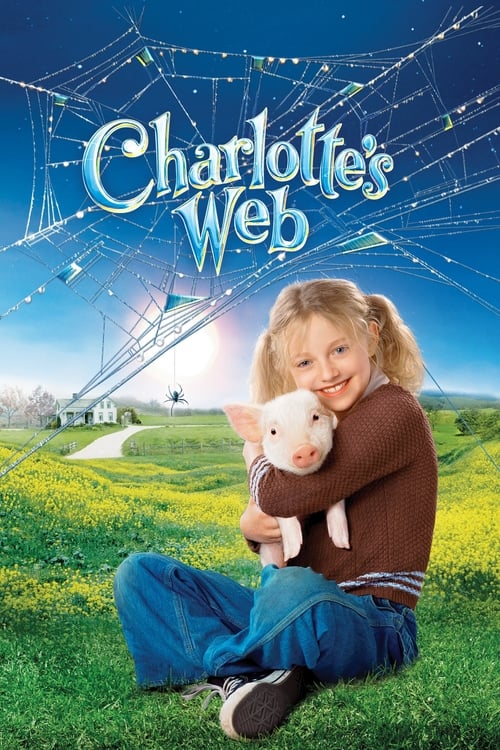
In the ending of the 2006 movie "Charlotte's Web," Wilbur the pig is saved from being slaughtered thanks to the efforts of his friend Charlotte, who spins words into her web to convince the farmer and the townspeople of Wilbur's uniqueness. After Charlotte lays her eggs and dies, Wilbur is heartbroken but continues to care for her offspring, ensuring that her legacy lives on.
As the story unfolds towards its conclusion, the atmosphere is filled with a mix of hope and sadness. Wilbur, now a celebrated pig, is preparing for the county fair, where he will compete for a special prize. Charlotte, who has been tirelessly working to save Wilbur, spins her final web, writing the words "Humble" and "Terrific," which capture the attention of the fairgoers. The townspeople are amazed by the extraordinary pig, and Wilbur wins a special prize, securing his safety.
However, the emotional weight of the story deepens as Charlotte reveals to Wilbur that she is nearing the end of her life. She has laid her eggs, and her time is running out. Wilbur is devastated by the news, feeling the impending loss of his dear friend. Charlotte reassures him that her legacy will continue through her children, and she encourages him to take care of them.
After the fair, Charlotte passes away, leaving Wilbur heartbroken. He mourns her loss but finds solace in the fact that her eggs will hatch, ensuring that her spirit lives on. When the eggs finally hatch, Wilbur is overjoyed to see Charlotte's children, and he promises to protect them, honoring Charlotte's memory. The film concludes with a sense of continuity and the enduring bond of friendship, as Wilbur embraces his new role as a guardian to Charlotte's offspring.
In this poignant ending, the fates of the main characters are intertwined with themes of friendship, sacrifice, and the cycle of life. Wilbur, once a frightened pig facing death, emerges as a hero, while Charlotte, despite her passing, leaves behind a legacy that will continue through her children. The story closes on a hopeful note, emphasizing the importance of love and remembrance.
Is there a post-credit scene?
In the 2006 film "Charlotte's Web," there is no post-credit scene. The movie concludes with a heartfelt resolution, focusing on the themes of friendship, life, and the cycle of nature. After the climax, where Charlotte's efforts to save Wilbur culminate in a touching farewell, the film wraps up with a sense of closure. The final scenes show Wilbur living a happy life on the farm, surrounded by friends, and the legacy of Charlotte's love and sacrifice is felt deeply. The film ends on a poignant note, celebrating the bond between Wilbur and Charlotte, without any additional scenes after the credits.
What motivates Wilbur to befriend Charlotte?
Wilbur, a young pig, is initially motivated by his fear of being slaughtered. He feels lonely and vulnerable in the barn, and when he meets Charlotte, a wise and kind spider, he is drawn to her gentle nature. His desperation for companionship and his instinct to survive drive him to form a deep bond with Charlotte, who becomes his protector and friend.
How does Charlotte come up with her plan to save Wilbur?
Charlotte devises her plan to save Wilbur after realizing that he is in danger of being slaughtered for Christmas dinner. She uses her intelligence and creativity to spin words into her web, such as 'Some Pig' and 'Terrific,' to convince the farmer and the community that Wilbur is extraordinary. Her motivation stems from her loyalty to Wilbur and her desire to ensure his safety, showcasing her selflessness and ingenuity.
What role do the other barn animals play in the story?
The other barn animals, including Templeton the rat, the sheep, and the goose, contribute to the story by providing comic relief and different perspectives on Wilbur's situation. While some are skeptical of Charlotte's plan, others support her efforts. Templeton, although initially self-serving, ultimately helps by gathering information and materials for Charlotte's web, highlighting the theme of friendship and cooperation among the animals.
How does Fern's relationship with Wilbur change throughout the film?
Fern's relationship with Wilbur evolves as she grows older. Initially, she is fiercely protective of him, treating him like a child and ensuring he is safe. However, as she matures, she begins to distance herself from the farm life and her bond with Wilbur. This shift reflects her transition from childhood innocence to the responsibilities of growing up, leaving Wilbur to rely more on his friendships with the other animals, particularly Charlotte.
What is the significance of Charlotte's final act before she dies?
Charlotte's final act before her death is to lay her eggs in a sac, ensuring the continuation of her legacy and the survival of her offspring. This moment is significant as it symbolizes her selflessness and the cycle of life. Despite her impending death, Charlotte's focus remains on Wilbur's future, demonstrating her deep love and commitment to him. Her passing is poignant, evoking a sense of loss but also hope for the new generation of spiders.
Is this family friendly?
"Charlotte's Web," produced in 2006, is generally considered a family-friendly film, suitable for children and audiences of all ages. However, there are a few scenes and themes that might be potentially objectionable or upsetting for some children or sensitive viewers:
-
Death and Mortality: The film addresses the theme of death, particularly concerning the fate of Wilbur the pig. This concept may be difficult for younger viewers to understand or accept.
-
Animal Treatment: There are scenes that depict the harsh realities of farm life, including the treatment of animals. Some viewers may find these moments distressing, especially when considering the fate of farm animals.
-
Emotional Moments: The film contains several poignant scenes that evoke strong emotions, such as moments of fear, sadness, and loss, particularly related to the friendship between Charlotte and Wilbur.
-
Isolation and Loneliness: Wilbur experiences feelings of loneliness and fear of being alone, which may resonate with sensitive viewers and evoke feelings of empathy or sadness.
-
Conflict: There are moments of tension and conflict, particularly involving the character of Fern's father, who is initially unsupportive of her attachment to Wilbur.
While these elements are integral to the story's emotional depth and character development, they may require parental guidance for younger viewers to help process the themes presented.









