


Popular
What role does Isaac Newton play in the episode 'Isaac Newton's Nemesis'?
How does Robert Hooke's character influence the story of Isaac Newton?
What specific events highlight the rivalry between Newton and Hooke?
How does the episode depict the impact of Newton's discoveries on his personal life?
What comedic elements are used to portray the historical figures in the episode?
Should I watch it?
Ask Your Own Question

What is the plot?
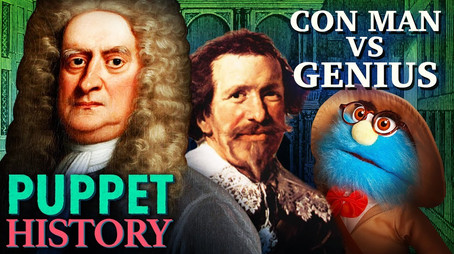
In the episode "Isaac Newton's Nemesis" from Puppet History, the narrative begins with the host introducing the audience to the concept of Isaac Newton's contributions to science, particularly his laws of motion and gravity. The host sets the stage for the story by highlighting Newton's prominence in the scientific community and his reputation as a brilliant mind. The scene is filled with vibrant puppetry, showcasing Newton as a distinguished figure, complete with a powdered wig and scholarly attire.
The story then shifts to the introduction of Newton's nemesis, Robert Hooke, who is depicted as a rival scientist. The host explains Hooke's own contributions to science, particularly his work on elasticity and microscopy. The puppetry illustrates Hooke as a more eccentric character, with exaggerated features and a quirky demeanor, contrasting sharply with Newton's serious persona. The tension between the two scientists is established, hinting at a fierce rivalry fueled by jealousy and competition.
As the narrative progresses, the host recounts a pivotal moment in their rivalry: a dispute over the nature of light and color. The scene transitions to a reenactment of a meeting between Newton and Hooke, where they engage in a heated debate. The puppets are animated with expressive gestures, showcasing their frustration and determination. Newton argues for his theories, while Hooke counters with his own ideas, leading to a dramatic standoff. The emotional stakes are high, as both characters are portrayed as deeply invested in proving their theories correct.
The plot thickens when the host reveals that Hooke accused Newton of plagiarism regarding his work on the inverse square law of gravitation. This accusation is depicted through a series of comedic yet tense puppet interactions, where Hooke confronts Newton in a public forum. The audience can feel the mounting pressure on Newton as he defends his work, while Hooke's relentless pursuit of recognition adds to the conflict. The puppetry captures the essence of their rivalry, with exaggerated facial expressions and body language that convey the intensity of their exchanges.
In a pivotal moment, the host narrates how Newton, feeling cornered by Hooke's accusations, decides to withdraw from public life for a time. This decision is illustrated through a scene where Newton retreats to his home, surrounded by books and scientific instruments. The atmosphere is somber, reflecting Newton's internal struggle and the weight of his reputation. The puppetry emphasizes his isolation, with shadows and dim lighting creating a sense of introspection.
The narrative then shifts to Hooke, who revels in his perceived victory over Newton. The host describes how Hooke's confidence grows, and he begins to gain recognition in the scientific community. This is depicted through a series of scenes where Hooke is celebrated at gatherings, receiving accolades and praise. The contrast between Hooke's rising fame and Newton's retreat into obscurity is stark, highlighting the emotional turmoil both characters experience.
However, the story takes a turn when Newton eventually re-emerges, determined to reclaim his place in the scientific world. The host describes Newton's return as a dramatic moment, filled with renewed vigor and determination. The puppetry showcases Newton's transformation, as he is depicted with a more assertive posture and a fiery expression. He begins to publish his findings, including the groundbreaking "Philosophiæ Naturalis Principia Mathematica," which solidifies his legacy.
As the episode progresses, the host reveals that Hooke's health begins to decline, and he becomes increasingly bitter about his rivalry with Newton. The puppetry illustrates Hooke's frailty, contrasting with Newton's resurgence. The emotional weight of their rivalry is palpable, as both characters grapple with their legacies and the impact of their scientific contributions.
In the climax of the episode, the host recounts the final confrontation between Newton and Hooke, where they are forced to confront their past grievances. This scene is filled with tension, as both characters express their frustrations and regrets. The puppetry captures the raw emotions, with close-ups on their faces as they argue passionately. Ultimately, the confrontation leads to a begrudging acknowledgment of each other's contributions, though the rivalry remains unresolved.
The episode concludes with a reflection on the lasting impact of both scientists on the field of science. The host summarizes their contributions, emphasizing the importance of their rivalry in shaping scientific discourse. The final scenes depict a whimsical celebration of their legacies, with puppets of both Newton and Hooke standing side by side, symbolizing the complex relationship between competition and collaboration in the pursuit of knowledge. The episode ends on a light-hearted note, leaving the audience with a sense of closure regarding the tumultuous relationship between these two historical figures.






What is the ending?
In the ending of "Isaac Newton's Nemesis," the episode culminates in a dramatic confrontation between Isaac Newton and his rival, Robert Hooke. The tension between the two characters reaches a peak as they engage in a battle of wits and scientific prowess. Ultimately, Newton's brilliance prevails, and Hooke is left in the shadows of history, overshadowed by Newton's legacy. The episode concludes with a reflection on the nature of rivalry and the impact of their contributions to science.
As the episode draws to a close, the scene shifts to a dimly lit room filled with scientific instruments and papers scattered about. Isaac Newton, portrayed as a determined and somewhat aloof figure, stands at a large wooden desk, deep in thought. His brow furrows as he contemplates the laws of motion and gravity, the weight of his discoveries pressing heavily on his shoulders. The atmosphere is thick with tension, underscoring the stakes of his rivalry with Robert Hooke.
In the next scene, Robert Hooke enters the room, his demeanor confident yet tinged with a hint of desperation. He approaches Newton, eager to assert his own theories and challenge Newton's ideas. The dialogue between them crackles with intensity, each man vying for intellectual supremacy. Hooke's motivations are clear; he seeks recognition and validation for his work, feeling overshadowed by Newton's growing fame.
As the confrontation escalates, the two engage in a series of exchanges that highlight their contrasting personalities. Newton, with his meticulous and methodical approach, counters Hooke's more flamboyant and assertive style. The tension builds as they debate the principles of light and motion, each trying to outsmart the other. The audience can feel the weight of their rivalry, a battle not just for scientific truth but for legacy.
In a pivotal moment, Newton presents a groundbreaking idea that shifts the course of their debate. The room falls silent as Hooke realizes the implications of Newton's discovery. The realization dawns on him that he may never achieve the recognition he desires. Hooke's expression shifts from confidence to despair, a poignant moment that captures the emotional stakes of their rivalry.
The final scene reveals the aftermath of their confrontation. Newton stands alone, surrounded by his notes and instruments, a look of determination etched on his face. He reflects on the sacrifices made in the pursuit of knowledge, aware that his victory comes at a cost. Meanwhile, Hooke exits the scene, his figure fading into the shadows, symbolizing his relegation to the background of history.
As the episode concludes, the narrator provides a brief commentary on the nature of rivalry and the complexities of scientific discovery. The audience is left with a sense of the enduring impact of Newton's work, while Hooke's fate serves as a reminder of the harsh realities faced by those who seek recognition in the shadow of giants. The screen fades to black, leaving viewers to ponder the legacies of both men and the relentless pursuit of knowledge that defines their stories.
Is there a post-credit scene?
In the episode "Isaac Newton's Nemesis" from Puppet History, there is indeed a post-credit scene. After the main content concludes, the scene opens with a whimsical and humorous tone, characteristic of the show. The puppets of Isaac Newton and his nemesis, Robert Hooke, are seen engaging in a light-hearted debate about their contributions to science.
As the camera zooms in, Newton, portrayed with a proud demeanor, boasts about his laws of motion and the universal law of gravitation. His puppet gestures animatedly, emphasizing his achievements with a sense of triumph. Hooke, on the other hand, appears slightly annoyed but maintains a witty retort, reminding Newton of his own contributions to optics and the concept of elasticity.
The playful banter escalates, with both puppets exchanging exaggerated insults and clever quips, showcasing their rivalry in a comedic light. The scene captures the essence of their historical conflict while infusing it with humor, leaving the audience with a sense of amusement.
As the scene wraps up, the puppets dramatically declare a "scientific duel," complete with mock swords made of rulers and protractors, before the screen fades to black. This playful conclusion reinforces the episode's themes of rivalry and the competitive nature of scientific discovery, leaving viewers with a smile and a chuckle.
What role does Isaac Newton play in the episode 'Isaac Newton's Nemesis'?
In the episode, Isaac Newton is portrayed as a brilliant yet complex figure whose groundbreaking work in physics and mathematics is juxtaposed with his intense rivalry with fellow scientist Robert Hooke. The narrative explores Newton's motivations, showcasing his ambition and the personal insecurities that drive him to prove his superiority.
How does Robert Hooke's character influence the story of Isaac Newton?
Robert Hooke is depicted as a significant antagonist to Newton, representing both a professional rival and a personal nemesis. His innovative ideas and critiques challenge Newton, leading to a fierce competition that fuels Newton's drive for recognition and success, ultimately shaping the course of scientific history.
What specific events highlight the rivalry between Newton and Hooke?
The episode details several key events, including Hooke's criticism of Newton's work on gravity and the public disputes that ensue. These confrontations are illustrated through humorous puppet reenactments, emphasizing the tension and animosity that characterized their relationship, culminating in Newton's eventual triumph in the scientific community.
How does the episode depict the impact of Newton's discoveries on his personal life?
The narrative reveals that while Newton's scientific achievements bring him fame and respect, they also lead to isolation and paranoia. The episode illustrates his emotional struggles, including his fear of being overshadowed by Hooke and his obsessive need for validation, which ultimately takes a toll on his personal relationships.
What comedic elements are used to portray the historical figures in the episode?
The episode employs a variety of comedic techniques, including exaggerated puppet designs and humorous dialogue that highlights the absurdity of the historical rivalry. The playful interactions between the puppets of Newton and Hooke serve to lighten the serious themes of competition and ambition, making the historical narrative accessible and entertaining.
Is this family friendly?
In the episode "Isaac Newton's Nemesis" from Puppet History, there are a few elements that may be considered potentially objectionable or upsetting for children or sensitive viewers:
-
Dark Humor: The show often employs dark humor, which may not be suitable for younger audiences. Some jokes may touch on themes of failure or rivalry in a way that could be interpreted as harsh.
-
Conflict and Rivalry: The episode explores the intense rivalry between Isaac Newton and his contemporaries, which may include scenes depicting jealousy, frustration, and competition that could be unsettling for some viewers.
-
Historical Context: The portrayal of historical figures and events may include references to their struggles and conflicts, which could be interpreted as negative or distressing.
-
Puppet Violence: As with many puppet shows, there may be exaggerated puppet violence or slapstick humor that, while comedic, could be perceived as inappropriate by some parents.
Overall, while the show is designed to be entertaining and educational, these elements may warrant consideration for family viewing.