
















































Popular
How does Donnie Wilson get involved with the Pantera crew and what role does he play in their diamond heist?
Why does Nick O’Brien go to Europe, and what is he trying to find out about Donnie?
What happens when Nick finally confronts Donnie in France?
What is the World Diamond Center heist, and how do Nick and Donnie prepare for it?
Who or what threatens Nick and Donnie after the red diamond theft?
Should I watch it?
Ask Your Own Question

What is the plot?
The film opens in Europe with a violent diamond robbery at an airport hangar and a grounded aircraft, and from that first burst of gunfire and motion, Den of Thieves 2: Pantera makes clear that the real game is no longer in Los Angeles but in the criminal underworld of the continent's diamond trade. Donnie Wilson is the man driving the theft, moving with a new crew under the Panther mafia's shadow, and the stolen red diamond quickly becomes more than loot: it is a problem that drags him into a widening war with the people he has stolen from.
Back in Los Angeles, Christian Gudegast reintroduces Big Nick O'Brien as a man who has lost almost everything except his obsession with Donnie. He is professionally broken, personally isolated, and reduced to living out of his car, cut loose from his job, his team, and the marriage that once anchored him; he still sees his children only occasionally, and the failure to bring Donnie down has hollowed him out. The authorities do not take his fixation seriously because, as the first film's ending left no missing cash trail, Nick has no clean case to hang on Donnie. That failure burns in him anyway, and when he learns that Donnie is involved in a diamond robbery in Europe, Nick decides the chase has to continue on foreign ground.
Nick travels to Nice, France, where Donnie and the Panther-connected thieves have set up shop. The city becomes the film's main operational base, a sunlit place of cafés, hotels, side streets, and hidden apartments that contrasts sharply with the brutality underneath. Nick tracks Donnie to his apartment and storms in with all the aggression of a man who has run out of patience. He flashes a defunct U.S. Marshals badge, a relic of the life he no longer fully inhabits, and uses it as a symbol of authority even though he is no longer in any position to enforce the law. The scene is not a neat arrest but a psychological collision: Nick intimidates Donnie, studies him, and then does something far stranger than taking him in. He tells Donnie, in effect, that the old chase is over for him, that he wants in. The hunter stops pretending he is still just the hunter.
Donnie is living under the alias Jean-Jacques to stay hidden, and his new identity shows how deeply he has embedded himself in the European criminal world. Rather than rejecting Nick, he lets him step into the orbit of the crew, and that choice changes the movie's engine completely. The relationship between the two men, once defined by pursuit, becomes one of wary cooperation, shared risk, and increasingly intimate understanding. Nick is no longer outside the heist; he is inside it, and the film leans into the uneasy chemistry between Gerard Butler's bruised lawman and O'Shea Jackson Jr.'s smooth, controlled thief.
The major job takes shape around the World Diamond Center, a heavily secured target where the crew plans to steal from the vault during a major event. The movie slows into heist-prep mode, with the Panther crew studying the building's defenses, mapping internal access, and looking for a way around the vault's systems. Donnie's crew relies on infiltration and human weakness more than brute force, and one of the key pieces of access comes through Chava, the wife of the bank manager, who is given the stolen diamond to keep safe. Jovanna introduces Donnie to Chava, and Chava brings him inside the building so he can scout the place from within, a quiet but crucial scene that turns the heist from a distant plan into a lived-in, dangerous reality.
As the planning deepens, the Panther mafia's role becomes impossible to ignore. The theft that started the movie was not a random score; it was the stealing of a red, high-value diamond that belongs to the mafia, and now Donnie is trapped by the consequences of taking what was never truly his to keep. The mob's demand is simple and fatal: return the diamond or die. That threat hangs over every conversation and every movement through Nice, making the heist feel less like a robbery than a forced maneuver inside a criminal ecosystem that is already closing its fist.
Nick's presence inside the crew shifts the tone of the film. He is still abrasive, still impatient, and still carries the instincts of a cop who has spent years breaking people down instead of blending in. That style creates friction, and he alienates at least two members of the Panther orbit, hardening tensions that were already thinly disguised. What makes the movie work as a long con is that Nick's hostility is partly an act and partly who he truly is; he can collaborate, but he cannot fully stop being a disruptive force. As he and Donnie work through the vault's defenses and talk over routes, timing, and contingencies, their conversations carry the sense that each man is trying to figure out not only the heist, but the other man's real allegiance.
The middle of the film also reveals the extent to which Donnie has committed himself to the Panther mafia world. He is not merely passing through Europe; he is embedded in a criminal structure large enough to stretch beyond a single theft, and the red diamond is part of that larger arrangement. The film's tension comes from the fact that Donnie is both valuable and compromised. He has the expertise the Panthers need, but he has also endangered their business by keeping the stolen stone. Nick, meanwhile, is the wild card who chooses criminal partnership not because he believes in the mission, but because he wants proximity to Donnie and the thrill of the chase that law enforcement no longer gives him. His badge may be dead metal, but the addiction to pursuit is alive.
The action breaks out in smaller bursts before the final job. One of the notable confrontations is a club fight, a noisy, crowded set-piece that cuts through the slickness of Nice with sudden violence. It is the kind of scene where bodies collide, music blares, and the threat of exposure is as dangerous as the fists and weapons flying around the room. These moments keep the pressure on, showing that the world around Nick and Donnie is restless and unstable even before the main heist begins. Every social space can become a battlefield; every ally can become an obstacle.
The night of the World Diamond Center operation arrives with the film leaning hard into tension and mutual dependence. The team moves with the confidence of criminals who have rehearsed the line between disaster and success too many times to turn back now. Nick and Donnie work their way into position, and despite the complications that have accumulated around them, they manage to acquire the target cache. The success is real, but it does not feel clean. The job is part precision, part improvisation, and part survival, because the theft has to be completed while the Panther mafia, the crew itself, and the French authorities are all circling in different directions.
Then the betrayal pressure snaps into focus. Two former members of the crew, Marko and Vuk, align themselves with rival gang elements and try to kill Nick and Donnie. The moment is a sharp pivot from uneasy teamwork to outright ambush, and it shows how fragile loyalty is in this world. Their move is not the last word, though, because the mafia intervenes first. Marko and Vuk are killed by the mafia before they can finish off Nick and Donnie, a brutal reminder that the larger criminal hierarchy has no patience for freelancing traitors. The deaths also underline how much of the film's danger comes not from hero-villain morality but from competing criminal codes colliding in the same narrow space.
The stolen diamond now has to be returned to satisfy the Panthers and their connected criminal network. The story keeps tightening, and it becomes clear that the diamond is the hinge on which everyone's fate turns. Nick's role becomes even murkier when he sells the crew out to a detective investigating them, resulting in the crew's arrest by French authorities. That betrayal is not framed as a simple flip back to law and order so much as one more tactical move in a game where no side is clean. Nick has helped the heist, helped the crew survive, and then cut them loose when the pressure becomes too hot. He remains impossible to read, which is exactly the point of the character by the time the final act arrives.
Even that arrest does not fully end things. Nick's influence reaches further still, and because he tips off the Italian mafia, Donnie is broken out of custody. The escape is a reminder that the movie is not really about whether Donnie can be caught; it is about who can be used, claimed, or absorbed by larger powers. Once free, Donnie is taken in by the mafia's boss, The Octopus, who recruits him to work for them. The reveal reframes the whole film's criminal geography. Donnie is no longer just a thief running from a gang; he is now a man being folded into a much larger organized structure, one with the reach to move him through arrests, prisons, and new assignments.
The ending is built like a promise rather than a conclusion. After the arrests, the breakout, and the recruitment, the narrative does not settle into a tidy resolution. Instead, Donnie texts Nick and tells him they will see each other again. That final message lands as a low, controlled threat and a personal invitation at the same time. It preserves the movie's central dynamic: the bond between Nick and Donnie is not over, only transformed. The film closes on a cliffhanger, with the implication that Donnie is now positioned for another heist under mafia influence and that Nick's loyalties remain unresolved, morally unstable, and potentially useful to whatever comes next. The story ends not with justice or victory, but with the sense that the real war has only just been organized.



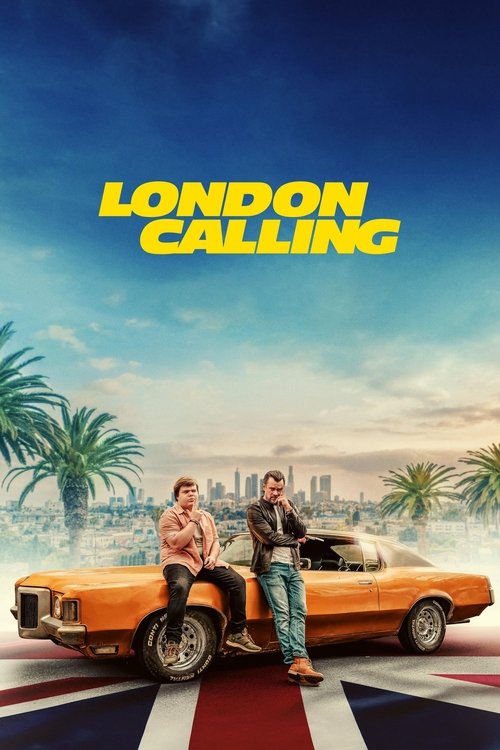


What is the ending?
Donnie gets away from the heist and ends the story still ahead of the law, while Big Nick's role shifts from pursuer to something more complicated and the film ends on a cliffhanger that points toward another job. The ending does not fully close the story; it leaves Donnie tied to the Panthers and the mafia, and it leaves Nick's true loyalties unclear.
The ending, scene by scene, runs like this: Donnie is in Europe, moving through the diamond-thief and Panther-mafia world while Big Nick closes in on him. The film builds toward the major heist at the world's largest diamond exchange, and most of the movie's action is saved for the final stretch. In the climax, the heist and the surrounding chaos resolve with Donnie surviving the operation and escaping the immediate net of the authorities, while the story keeps the Panthers' larger future open instead of wrapping them up cleanly.
After that, the film shifts into its final movement and makes the ending more about where the characters are headed than about a final defeat or victory. Nick is no longer just the man hunting Donnie; the ending positions him in a more ambiguous place, with his loyalties called into question and his connection to Donnie left unresolved. Donnie, meanwhile, is left at the center of the Panthers' criminal circle, and the ending strongly suggests that he will continue into another heist rather than retire from the life.
The main characters' fates at the end are these: Donnie remains alive and free enough to keep moving within the Panther-mafia world. Big Nick is left in an uncertain position, with the story treating him as a man whose side is no longer fully clear. The Panthers are not finished; the ending leaves their next move open, and one account specifically describes the film as ending with a setup for a third movie and another major heist. The mafia connection also remains active rather than resolved, with Donnie still linked to that world as the credits approach.
Is there a post-credit scene?
No. Den of Thieves 2: Pantera does not have a post-credit, mid-credit, or end-credit scene, so there is nothing extra to describe after the movie ends.
The available reports say the credits are just the normal credit roll and do not include a sequel tease, extra joke, or hidden payoff.
How does Donnie Wilson get involved with the Pantera crew and what role does he play in their diamond heist?
Donnie joins the Pantera crew in Europe and is shown taking part in the opening airport-hangar robbery in Antwerp, where the group steals a red diamond and files before escaping disguised as a SWAT team. The story then follows him as he becomes tied to the crew's next target, the World Diamond Center in Nice, France, making him the key bridge between the original film's criminal underworld and the sequel's larger heist.
Why does Nick O’Brien go to Europe, and what is he trying to find out about Donnie?
Nick goes to Europe because he is still chasing answers about Donnie's connection to the previous robbery and the new crew's activities. In the sequel, he is described as divorced, on leave, and fixated on tracking Donnie down after the Antwerp theft points him toward a larger diamond heist in Nice.
What happens when Nick finally confronts Donnie in France?
After Nick finds Donnie in Nice, he does not simply arrest him or stop the plan; instead, he tells Donnie he wants in on the heist. That encounter shifts the film into a partnership story, with the two men teaming up to case and then rob the World Diamond Center's hyper-secure vault.
What is the World Diamond Center heist, and how do Nick and Donnie prepare for it?
The World Diamond Center in Nice is the sequel's central target, described as a massively secure diamond exchange and vault. Nick and Donnie work together to study the security, build inside connections, and create the access needed for the robbery, turning the film into a detailed heist operation rather than a simple chase story.
Who or what threatens Nick and Donnie after the red diamond theft?
The Italian mafia becomes a major threat after the Antwerp robbery, because they want revenge for the stolen red diamond. Their pressure adds danger on top of the planned World Diamond Center job and complicates the uneasy alliance between Nick and Donnie.
Is this family friendly?
No, Den of Thieves 2: Pantera is not family friendly; it is rated R for pervasive language, some violence, drug use, and sexual references.
Potentially objectionable or upsetting content for children or sensitive viewers includes: - Violence and bloodletting, including shootouts and other crime-related danger. - Strong language, with frequent profanity. - Drug and alcohol use, including drinking, drunken behavior, and drug use. - Sexual references. - Smoking throughout the film. - Crime/deception themes, including theft, betrayal, and a generally threatening tone.
If you want, I can also give you a very short age-suitability recommendation by child age range.








