


Popular
What were the key events that led to Mansa Musa's rise to power?
How did Mansa Musa's pilgrimage to Mecca impact his legacy?
What role did trade play in Mansa Musa's wealth?
Who were the key figures in Mansa Musa's court, and what were their contributions?
What were the consequences of Mansa Musa's wealth on the Mali Empire and beyond?
Should I watch it?
Ask Your Own Question

What is the plot?
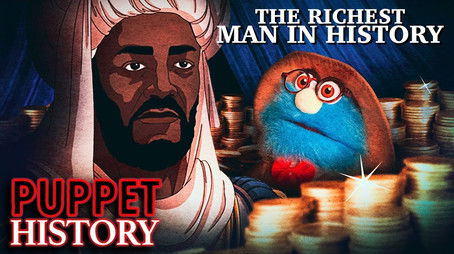
In the episode "Mansa Musa: The Richest Man Who Ever Lived," the story begins with a vibrant introduction to Mansa Musa, the 14th-century emperor of the Mali Empire. The puppets set the stage with a lively depiction of the wealth and grandeur associated with Musa, showcasing his vast riches and the opulence of his court. The narrator emphasizes the sheer scale of his wealth, which is said to be unmatched in history.
The scene transitions to Mansa Musa's early life, where viewers learn about his rise to power. The puppets illustrate his ascension to the throne after the death of his predecessor, with Mansa Musa initially focusing on consolidating his power and expanding the empire. The narrative highlights his strategic decisions, such as fostering trade routes across the Sahara, which would later contribute to his immense wealth.
As the story unfolds, the episode delves into Mansa Musa's famous pilgrimage to Mecca in 1324. The puppets depict the preparations for this grand journey, showcasing the lavish caravan he assembled, which included thousands of attendants, camels, and gold. The emotional weight of this pilgrimage is emphasized, as it represents not only a religious journey but also a display of wealth and power to the world.
During the pilgrimage, the episode captures the reactions of the people Mansa Musa encounters along the way. The puppets illustrate how he generously distributed gold to the poor and local rulers, causing inflation in the regions he passed through. This act of generosity is portrayed as both a reflection of his character and a strategic move to enhance his reputation.
The narrative then shifts to the aftermath of the pilgrimage, where the impact of Mansa Musa's wealth becomes evident. The episode highlights how his actions led to increased trade and cultural exchange in Mali, as well as the establishment of Timbuktu as a center of learning and commerce. The puppets depict scholars and traders flocking to the city, drawn by the empire's newfound prominence.
As the story progresses, the episode addresses the challenges Mansa Musa faced in maintaining his empire. The puppets illustrate the internal strife and external threats that arose, including rival kingdoms and the need to manage the vast wealth that had been accumulated. Mansa Musa's internal struggles are portrayed, showcasing his determination to protect his legacy and the empire he built.
The climax of the episode focuses on Mansa Musa's legacy after his death in 1337. The puppets reflect on how his wealth and the cultural advancements he promoted continued to influence the region long after his passing. The narrative emphasizes the lasting impact of his reign on African history and the world, solidifying his status as one of the richest men to ever live.
In the concluding scenes, the episode wraps up with a reflection on Mansa Musa's life and the lessons learned from his story. The puppets celebrate his achievements while acknowledging the complexities of his reign, leaving viewers with a sense of awe at the scale of his influence and the richness of his legacy.






What is the ending?
In the ending of "Mansa Musa: The Richest Man Who Ever Lived," the episode concludes with a reflection on Mansa Musa's legacy and the impact of his wealth on the world. The puppet characters summarize the key points of Mansa Musa's life, emphasizing his immense wealth, his pilgrimage to Mecca, and the cultural and economic influence he had on the Mali Empire and beyond. The episode wraps up with a humorous twist, as the characters engage in a light-hearted discussion about the nature of wealth and its effects on society.
As the episode draws to a close, the scene transitions to a puppet representation of Mansa Musa, adorned in lavish attire, standing proudly as he surveys his kingdom. The narrator's voice resonates, recounting the monumental journey Mansa Musa undertook to Mecca, where he distributed gold generously, causing inflation in the regions he passed through. The puppets illustrate the awe and admiration of the people he encountered, showcasing their reactions to his wealth and generosity.
The scene shifts to a depiction of the Mali Empire flourishing under Mansa Musa's rule. The puppets dance and celebrate, symbolizing the cultural and educational advancements that occurred during his reign. The audience witnesses the establishment of universities and the promotion of arts and sciences, highlighting Mansa Musa's commitment to enriching his people's lives.
As the narrative progresses, the puppets reflect on the consequences of Mansa Musa's wealth. They humorously debate the idea of wealth and its potential to corrupt or uplift society. The characters express a mix of admiration and caution regarding the pursuit of riches, ultimately leading to a comedic yet insightful conclusion about the nature of wealth.
In the final moments, the puppets gather for a farewell, each character sharing their thoughts on Mansa Musa's legacy. The narrator emphasizes that while Mansa Musa may have been the richest man in history, his true wealth lay in the cultural and educational advancements he fostered. The episode ends with a playful reminder that wealth can take many forms, and the impact one leaves behind is what truly matters.
The fate of the main characters, represented by puppets, concludes with them reflecting on their own lives and aspirations, humorously pondering what they would do with immense wealth, while ultimately recognizing the importance of using resources for the greater good. The episode closes with laughter and a sense of inspiration, leaving the audience with a lasting impression of Mansa Musa's extraordinary life and legacy.
Is there a post-credit scene?
In the episode "Mansa Musa: The Richest Man Who Ever Lived" from Puppet History, there is indeed a post-credit scene. After the main narrative concludes, the scene shifts to a whimsical and humorous moment featuring the puppet characters. The scene showcases a playful interaction between the puppets, where they engage in a light-hearted discussion about wealth and riches, referencing Mansa Musa's legendary fortune.
One puppet humorously boasts about their own "wealth," which turns out to be a collection of silly items, like rubber ducks and old coins, contrasting sharply with Mansa Musa's immense riches. The other puppets react with exaggerated disbelief and laughter, emphasizing the comedic tone. This playful banter serves to reinforce the episode's themes of wealth and legacy while leaving the audience with a light-hearted feeling as the credits roll. The scene encapsulates the show's blend of education and entertainment, providing a fun conclusion to the historical exploration of Mansa Musa's life.
What were the key events that led to Mansa Musa's rise to power?
The episode details Mansa Musa's ascension to the throne of the Mali Empire after the death of his predecessor, which was marked by his strategic military conquests and the expansion of trade routes across West Africa. His leadership style, characterized by generosity and a focus on education and culture, is highlighted as pivotal in establishing his wealth and influence.
How did Mansa Musa's pilgrimage to Mecca impact his legacy?
Mansa Musa's pilgrimage to Mecca is depicted as a transformative journey that not only showcased his immense wealth but also solidified his reputation as a powerful leader. The episode illustrates how his lavish spending during the pilgrimage, including distributing gold along the way, caused inflation in regions he passed through, leaving a lasting impression on the world about his riches.
What role did trade play in Mansa Musa's wealth?
The episode emphasizes the significance of trade, particularly in gold and salt, as the backbone of Mansa Musa's wealth. It explains how the Mali Empire became a central hub for trade across the Sahara, allowing Mansa Musa to accumulate vast riches and establish economic ties with other regions, which further enhanced his power.
Who were the key figures in Mansa Musa's court, and what were their contributions?
The episode introduces several key figures in Mansa Musa's court, including scholars and architects who played crucial roles in the cultural and educational advancements of the empire. Their contributions to the establishment of centers of learning, such as the famous University of Timbuktu, are highlighted as part of Mansa Musa's vision for a prosperous and enlightened society.
What were the consequences of Mansa Musa's wealth on the Mali Empire and beyond?
The episode explores the consequences of Mansa Musa's wealth, including the cultural flourishing of the Mali Empire and its influence on neighboring regions. However, it also touches on the challenges that arose, such as the economic instability caused by the influx of gold and the envy it generated among rival states, which ultimately shaped the future of the empire.
Is this family friendly?
In the episode "Mansa Musa: The Richest Man Who Ever Lived" from Puppet History, there are a few elements that may be considered potentially objectionable or upsetting for children or sensitive viewers.
-
Historical Context of Wealth and Poverty: The episode discusses the vast wealth of Mansa Musa and contrasts it with the poverty of others, which may lead to discussions about inequality that could be heavy for younger audiences.
-
Depictions of Historical Events: There are references to historical events that involve conflict and the struggles of different cultures, which might be intense for some viewers.
-
Humor and Satire: The show employs humor that may include dark or satirical elements, which could be misinterpreted by younger viewers.
-
Visual Representations: Some puppet representations may include exaggerated features or scenarios that could be unsettling to sensitive viewers.
Overall, while the episode is designed to be educational and entertaining, these aspects may require parental guidance for younger audiences.