


Popular
What motivates Saint Olga to seek revenge against the Drevlians?
How does Saint Olga execute her plan for revenge against the Drevlians?
What role do the Drevlians play in the story, and how do they respond to Olga's actions?
What symbolic significance does the burning of the Drevlians' city hold in the narrative?
How does the episode depict the transformation of Saint Olga from a grieving widow to a vengeful leader?
Should I watch it?
Ask Your Own Question

What is the plot?
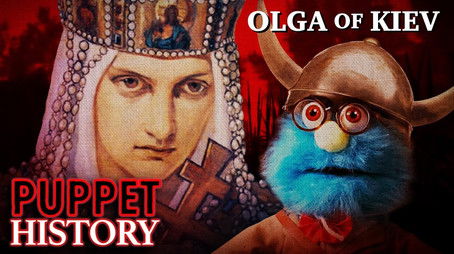
The episode begins with a brief introduction to Saint Olga of Kiev, a historical figure known for her fierce and strategic revenge against those who wronged her. The narrator sets the stage by explaining that Olga was the widow of Igor, the Prince of Kiev, who was killed by the Drevlians, a neighboring tribe. This act of violence sets the tone for the bloody tale that is about to unfold.
Following the introduction, the scene shifts to the moment of Igor's death. The Drevlians, led by their prince Mal, ambush Igor during a tribute collection. They capture him and, after a brief negotiation, brutally kill him by impaling him. This shocking act of violence is depicted with dramatic visuals, emphasizing the brutality of the Drevlians and the deep sense of loss that Olga will soon experience.
In the aftermath of Igor's death, Olga learns of her husband's murder. The emotional weight of this moment is palpable as she mourns her loss, her face a mixture of grief and simmering rage. Determined to avenge her husband, she begins to plot her revenge against the Drevlians. The narrator highlights her intelligence and cunning, foreshadowing the lengths she will go to exact her vengeance.
Olga sends a message to the Drevlians, inviting them to Kiev for a funeral for Igor. The Drevlians, believing they can manipulate the situation to their advantage, accept the invitation. This decision is pivotal, as it sets the stage for Olga's elaborate plan. The scene captures the Drevlians' arrogance, showcasing their underestimation of Olga's resolve and capabilities.
When the Drevlians arrive in Kiev, Olga greets them with feigned sorrow and hospitality. She offers them a lavish feast, which is depicted with rich visuals of food and drink. As the Drevlians indulge, Olga secretly prepares for the next phase of her revenge. The atmosphere is tense, filled with the contrast between the Drevlians' revelry and Olga's hidden intentions.
After the feast, Olga reveals her true intentions. She orders her guards to capture the Drevlians while they are still in a drunken stupor. The scene is chaotic as the guards swiftly apprehend the unsuspecting guests. The Drevlians are taken prisoner, and Olga's cold determination is evident as she watches them struggle against their fate.
With the Drevlians in her grasp, Olga decides to execute them in a brutal manner. She orders them to be buried alive, a gruesome punishment that reflects her desire for revenge. The visuals are stark and haunting, emphasizing the horror of the act. The Drevlians' pleas for mercy fall on deaf ears, showcasing Olga's transformation from grieving widow to vengeful leader.
The episode then shifts to Olga's next move. She sends a message to the Drevlians, demanding that they send their best warriors to her as a sign of submission. The Drevlians, fearing for their lives, comply and send a group of their strongest men. This decision further illustrates their underestimation of Olga's resolve and the precariousness of their situation.
When the Drevlians arrive, Olga has another plan in mind. She orders her guards to prepare a massive pit and, under the guise of a celebration, invites the Drevlians to join her. The scene is filled with tension as the Drevlians, still unaware of their fate, gather around the pit. Olga's demeanor is calm and collected, masking the storm of vengeance brewing within her.
As the Drevlians approach the pit, Olga reveals her true intentions once again. She commands her guards to push the Drevlians into the pit, where they meet a gruesome end. The visuals are graphic, showcasing the chaos and horror of the moment. Olga stands above, a figure of power and vengeance, as the Drevlians realize too late the extent of their miscalculation.
The episode concludes with Olga solidifying her power in Kiev. She emerges as a formidable leader, having avenged her husband's death and eliminated the threat posed by the Drevlians. The final scenes depict her reign, highlighting her strength and determination as she leads her people with a fierce resolve. The narrator wraps up the tale, emphasizing the legacy of Saint Olga and her place in history as a symbol of vengeance and power.







What is the ending?
In the ending of "The Bloody Revenge of Saint Olga of Kiev," Olga successfully avenges her husband's death by orchestrating a brutal retaliation against the Drevlians. She lures their leaders into a trap, leading to their demise. Ultimately, Olga's actions solidify her legacy as a fierce and vengeful ruler, and she is later canonized as a saint.
As the episode unfolds towards its conclusion, the tension escalates dramatically. The scene opens with Olga, now filled with a mix of grief and rage after the murder of her husband, Igor. Her internal conflict is palpable; she is determined to avenge him but must also navigate the political landscape of her kingdom. The Drevlians, who have wronged her, are unaware of the storm that is about to be unleashed.
In the next scene, Olga devises a cunning plan. She sends a message to the Drevlians, inviting their leaders to a meeting under the pretense of discussing peace. The Drevlians, confident in their victory over Igor, accept her invitation, believing they can manipulate her further. This moment highlights their arrogance and underestimation of Olga's resolve.
As the Drevlians arrive, the atmosphere is tense yet deceptively cordial. Olga greets them with a facade of hospitality, but her eyes betray her true intentions. She leads them to a grand hall, where they are treated to a feast. The scene is rich with visual detail--the lavish decorations, the sumptuous food, and the contrasting dark undertones of Olga's vengeful spirit.
Once the Drevlians are sufficiently distracted, Olga reveals her true colors. She orders her guards to seize the leaders, and chaos erupts. The Drevlians, caught off guard, realize too late the trap they have fallen into. The scene is filled with frantic movements, shouts of betrayal, and the clashing of weapons as Olga's guards swiftly execute her orders. The visceral nature of the violence underscores the depth of Olga's fury and the lengths she is willing to go to reclaim her power.
Following this brutal confrontation, the narrative shifts to Olga's next move. She decides to take her revenge a step further by leading a campaign against the Drevlians. The episode depicts her rallying her troops, her face set with determination and a fierce resolve. The visuals capture the intensity of her leadership as she inspires her warriors to fight for their queen and avenge Igor's death.
In the climactic battle, Olga's forces clash with the Drevlians in a brutal and chaotic scene. The animation vividly portrays the chaos of war--the sounds of clashing swords, the cries of warriors, and the smoke rising from the battlefield. Olga fights with a ferocity that reflects her inner turmoil, embodying both a grieving widow and a vengeful queen.
As the dust settles, the fate of the Drevlians is sealed. Olga's forces emerge victorious, and the remnants of the Drevlians are left in disarray. The episode concludes with Olga standing amidst the aftermath of her revenge, her expression a mix of triumph and sorrow. She has avenged her husband, but the cost of her vengeance weighs heavily on her heart.
In the final moments, the narrative hints at Olga's legacy. The episode closes with a reflection on her eventual canonization as a saint, a testament to her complex character--a ruler who balanced vengeance with the burdens of leadership. The audience is left with a sense of the duality of her nature: a fierce warrior and a tragic figure, forever marked by the bloodshed she orchestrated in the name of love and revenge.
Is there a post-credit scene?
In the episode "The Bloody Revenge of Saint Olga of Kiev" from Puppet History, there is indeed a post-credit scene. After the main narrative concludes, the scene shifts to a humorous and light-hearted moment featuring the puppet characters. The character of the historian, portrayed as a puppet, engages in a playful banter with the audience, reflecting on the intense and bloody events of Olga's revenge.
He humorously contrasts the grim historical events with modern-day scenarios, suggesting that perhaps Olga could have handled her enemies with a more diplomatic approach, like sending them a strongly worded email instead of resorting to violence. This comedic twist serves to lighten the mood after the heavy themes of the episode, allowing viewers to leave with a smile while still acknowledging the historical significance of Olga's actions. The scene encapsulates the show's blend of education and entertainment, reminding the audience of the absurdity that can be found even in the darkest of histories.
What motivates Saint Olga to seek revenge against the Drevlians?
Saint Olga's motivation for revenge stems from the brutal murder of her husband, Igor, by the Drevlians. Her deep sense of betrayal and grief drives her to take extreme measures to avenge his death, showcasing her fierce loyalty and determination.
How does Saint Olga execute her plan for revenge against the Drevlians?
Saint Olga cleverly orchestrates her revenge by first feigning acceptance of the Drevlians' proposal for marriage. She invites their leaders to her city, where she then has them killed, demonstrating her cunning and strategic thinking.
What role do the Drevlians play in the story, and how do they respond to Olga's actions?
The Drevlians are portrayed as the antagonists in the story, having killed Igor. Their response to Olga's actions is one of shock and horror as they realize the extent of her vengeance, leading to further conflict and chaos.
What symbolic significance does the burning of the Drevlians' city hold in the narrative?
The burning of the Drevlians' city symbolizes the complete destruction of their power and the finality of Olga's revenge. It serves as a visual representation of her wrath and the lengths she will go to protect her husband's legacy.
How does the episode depict the transformation of Saint Olga from a grieving widow to a vengeful leader?
The episode illustrates Saint Olga's transformation through her emotional journey, showcasing her initial sorrow and helplessness, which gradually evolves into a fierce resolve. Her character development is marked by strategic planning and decisive actions that highlight her strength and leadership.
Is this family friendly?
"Puppet History," particularly in the episode "The Bloody Revenge of Saint Olga of Kiev," contains themes and scenes that may not be suitable for all children or sensitive viewers. Here are some potentially objectionable aspects:
-
Violence and Revenge: The episode centers around themes of revenge and retribution, which may include graphic descriptions of violent acts and historical brutality.
-
Death and Murder: The narrative involves the deaths of characters, including discussions of murder and the consequences of violent actions.
-
Historical Context: The portrayal of historical events may include dark themes related to war, conquest, and the suffering of individuals, which could be upsetting for some viewers.
-
Emotional Turmoil: Characters experience intense emotions such as grief, anger, and betrayal, which may resonate deeply and evoke strong feelings.
-
Dark Humor: The show often employs dark humor, which may not be appropriate for younger audiences or those sensitive to such comedic styles.
These elements contribute to a narrative that, while educational and engaging, may require parental discretion for younger viewers.