
















Popular
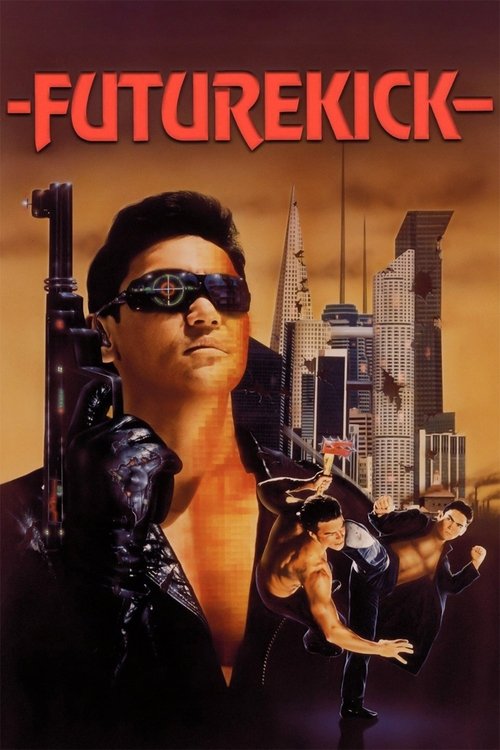
Who is the main protagonist in Future Kick and what motivates him throughout the film?
What role does the character of the villain play in Future Kick and how does he impact the protagonist's journey?
How does the setting of the future dystopia influence the characters and their actions in Future Kick?
What is the significance of the relationship between Kick and his daughter in Future Kick?
What are some key action sequences in Future Kick that define the film's tone and style?
Should I watch it?
Ask Your Own Question

What is the plot?
Sorry, we aren't able to watch and write up a full detailed plot yet. Check back in a few days.


What is the ending?
In the ending of "Future Kick," the protagonist, a former cop named Johnny, confronts the villainous organization that has been exploiting people for their body parts. After a series of intense battles, Johnny manages to defeat the main antagonist, reclaiming his humanity and saving the remaining victims. The film concludes with Johnny walking away, having avenged his past and found a sense of closure.
Now, let's delve into the ending in a more detailed narrative fashion:
As the climax of "Future Kick" unfolds, Johnny, portrayed by Don "The Dragon" Wilson, finds himself in a high-tech facility where the nefarious organization, led by the ruthless Dr. K, conducts its sinister operations. The atmosphere is tense, filled with the hum of machinery and the distant sounds of struggle from the captives. Johnny's heart races, fueled by a mix of anger and determination as he navigates through the dimly lit corridors, each step echoing his resolve to put an end to the exploitation of innocent lives.
In a pivotal scene, Johnny confronts Dr. K in a sterile, metallic room lined with glass containers housing the stolen body parts of victims. The air is thick with the stench of antiseptic and desperation. Dr. K, with a cold, calculating demeanor, taunts Johnny, revealing the extent of his operations and the fate of those who have been taken. Johnny's fists clench, his jaw tightens as he processes the horror before him. The emotional weight of his past failures and the lives lost fuels his rage.
The confrontation escalates into a fierce battle. Johnny, drawing on his training and sheer willpower, engages in a brutal fight with Dr. K's henchmen. Each punch and kick is a release of pent-up frustration and sorrow, as he fights not just for himself but for all those who have suffered. The choreography is intense, showcasing Johnny's martial arts prowess against the backdrop of flashing lights and the sounds of combat.
As the fight reaches its peak, Johnny finally faces Dr. K one-on-one. The villain, armed with advanced technology and a ruthless mindset, underestimates Johnny's resolve. In a climactic moment, Johnny taps into his inner strength, overcoming the odds. With a final, decisive blow, he defeats Dr. K, sending him crashing to the ground. The victory is bittersweet; Johnny stands over his fallen foe, breathing heavily, the weight of his actions settling in.
In the aftermath, Johnny frees the captives, who are weak but grateful. The camera captures their expressions of relief and hope as they emerge from the darkness of the facility into the light of freedom. Johnny, though battered and bruised, feels a sense of redemption wash over him. He has not only avenged the wrongs of the past but has also reclaimed his own humanity.
As the film draws to a close, Johnny walks away from the facility, the sun setting in the background, casting a warm glow over the scene. He reflects on his journey, the losses he has endured, and the lives he has saved. The final shot lingers on his face, a mixture of sorrow and hope, as he steps into a future that, while uncertain, is filled with the promise of new beginnings.
The fates of the main characters are sealed in this moment. Johnny emerges as a hero, having faced his demons and triumphed over the darkness. Dr. K lies defeated, a symbol of the corruption and exploitation that Johnny has fought against. The captives, now free, represent the resilience of the human spirit, having survived the horrors inflicted upon them. The film concludes with a sense of closure, leaving the audience with the lingering message of the fight against oppression and the quest for redemption.
Is there a post-credit scene?
The movie "Future Kick," produced in 1991, does not have a post-credit scene. The film concludes without any additional scenes or content after the credits roll. The story wraps up with the main character, a former cop named Johnny, having faced off against the corrupt forces in a dystopian future where humans are hunted for their body parts. The ending focuses on the resolution of the conflict and the fate of the characters involved, leaving no further narrative to explore in a post-credit sequence.
Who is the main protagonist in Future Kick and what motivates him throughout the film?
The main protagonist in Future Kick is a character named Kick, played by Don Wilson. Kick is a former cop who is driven by a deep sense of justice and a desire to protect the innocent. His motivation intensifies when he learns that his daughter has been kidnapped by a ruthless gang involved in illegal activities. This personal stake propels him into a dangerous world where he must confront his past and fight against the corrupt forces that threaten his family.
What role does the character of the villain play in Future Kick and how does he impact the protagonist's journey?
The primary antagonist in Future Kick is a character named The Boss, portrayed by a menacing figure who embodies the corruption and brutality of the future society. The Boss is a powerful crime lord who orchestrates the kidnapping of Kick's daughter, serving as the catalyst for Kick's transformation from a retired cop to a vengeful fighter. The Boss's ruthless tactics and his control over the criminal underworld create significant obstacles for Kick, forcing him to confront not only the physical challenges of battling henchmen but also the emotional turmoil of facing a formidable enemy who threatens everything he holds dear.
How does the setting of the future dystopia influence the characters and their actions in Future Kick?
The setting of Future Kick is a bleak, dystopian future characterized by rampant crime, societal decay, and advanced technology that often serves nefarious purposes. This environment deeply influences the characters, particularly Kick, who must navigate a world where law enforcement is ineffective and corruption is rampant. The oppressive atmosphere heightens the stakes for Kick, as he is not only fighting for his daughter's safety but also against a system that has failed to protect its citizens. The gritty urban landscape, filled with neon lights and dark alleys, serves as a backdrop for the intense action sequences and reflects the desperation of the characters as they struggle for survival.
What is the significance of the relationship between Kick and his daughter in Future Kick?
The relationship between Kick and his daughter is central to the emotional core of Future Kick. Their bond is portrayed as one of love and protection, with Kick's paternal instincts driving him to take extreme risks to rescue her from the clutches of The Boss. This relationship adds depth to Kick's character, showcasing his vulnerabilities and the lengths he will go to for family. The stakes are raised as the film progresses, with each encounter highlighting the emotional turmoil Kick experiences, torn between his past as a cop and his present as a father fighting against overwhelming odds.
What are some key action sequences in Future Kick that define the film's tone and style?
Future Kick features several key action sequences that define its tone and style, emphasizing high-octane martial arts and intense confrontations. One notable scene involves Kick infiltrating a gang hideout, showcasing his combat skills as he takes on multiple henchmen in a choreographed fight that blends martial arts with the gritty realism of the dystopian setting. Another significant sequence occurs during a high-speed chase through the city, where Kick utilizes advanced technology and his agility to evade capture. These action scenes not only serve to propel the plot forward but also highlight Kick's determination and resourcefulness, establishing the film's identity as a thrilling action adventure.
Is this family friendly?
"Future Kick," produced in 1991, is not considered family-friendly due to several potentially objectionable elements. Here are some aspects that might be upsetting for children or sensitive viewers:
-
Violence: The film features graphic violence, including intense fight scenes and the use of weapons, which may be disturbing to younger audiences.
-
Gore: There are scenes that depict blood and injury, contributing to a sense of horror and brutality.
-
Adult Themes: The narrative includes themes of crime, betrayal, and survival in a dystopian future, which may be complex and unsettling for children.
-
Language: The dialogue contains strong language that may not be appropriate for younger viewers.
-
Sexual Content: There are suggestive scenes and adult situations that could be considered inappropriate for children.
-
Dystopian Setting: The overall atmosphere of a bleak, oppressive future may be frightening or distressing for sensitive individuals.
These elements combine to create a film that is more suitable for mature audiences rather than families or children.








