








Popular
What is the significance of the climactic confrontation in the film?
How does the relationship between Jake and his partner evolve throughout the film?
How does the film portray the theme of betrayal through its characters?
What role does the character of the police chief play in the story?
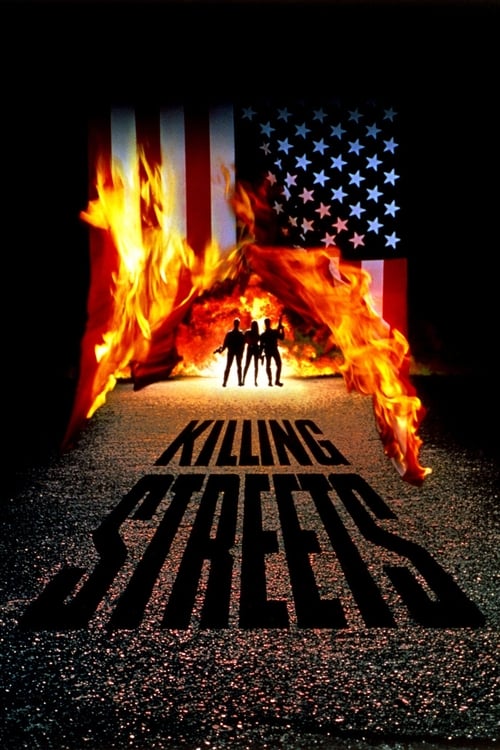
Who is the main protagonist in Killing Streets and what motivates him throughout the film?
Should I watch it?
Ask Your Own Question

What is the plot?
Sorry, we aren't able to watch and write up a full detailed plot yet. Check back in a few days.


What is the ending?
In the ending of "Killing Streets," the protagonist, a former cop named Jack, confronts the main antagonist, a drug lord named Kwan, in a final showdown. After a fierce battle, Jack manages to defeat Kwan, but not without significant personal cost. The film concludes with Jack reflecting on his choices and the toll of violence, as he walks away from the chaos, leaving behind the life he once knew.
As the climax of "Killing Streets" unfolds, the tension escalates in a gritty urban landscape, where Jack, portrayed with a rugged determination, prepares for the inevitable confrontation with Kwan. The scene is set in a dimly lit warehouse, filled with the remnants of a drug operation. Shadows dance across the walls as Jack, armed and resolute, steps cautiously through the debris, his heart pounding with a mix of fear and resolve. He knows that this is not just a fight for survival but a battle for redemption.
As Jack moves deeper into the warehouse, flashbacks of his past life as a cop flood his mind. He recalls the moments that led him to this point--the betrayal, the loss of his partner, and the descent into a world of crime and violence. Each memory weighs heavily on him, fueling his determination to end Kwan's reign of terror. The emotional stakes are high; Jack is not just fighting for himself but for the memory of those he has lost.
The confrontation with Kwan is explosive. The two men engage in a brutal fight, exchanging blows that echo through the empty space. Kwan, a formidable opponent, taunts Jack, reminding him of his failures and the darkness that surrounds him. Jack's anger boils over, and he fights with a ferocity born from years of pent-up frustration and grief. The choreography of their fight is raw and visceral, showcasing the desperation of both men.
As the battle rages on, Jack gains the upper hand, using his training and instincts to outmaneuver Kwan. In a climactic moment, he disarms Kwan and holds him at gunpoint. The tension hangs thick in the air as Jack grapples with the choice before him--whether to pull the trigger and end Kwan's life or to walk away, breaking the cycle of violence that has consumed him. The internal struggle is palpable, and the audience can feel Jack's conflict as he wrestles with his own morality.
In a moment of clarity, Jack lowers his weapon, choosing to spare Kwan's life. This decision is not without its consequences; it signifies Jack's desire to reclaim his humanity and reject the path of vengeance. However, Kwan, in a final act of desperation, lunges at Jack, forcing him to react. In the ensuing chaos, Jack is forced to shoot Kwan, who falls to the ground, defeated.
With Kwan's demise, the weight of the moment settles heavily on Jack. He stands over Kwan's lifeless body, a mix of relief and sorrow washing over him. The victory feels hollow, as he realizes that the violence has not truly solved anything. The camera lingers on Jack's face, capturing the turmoil within him as he grapples with the reality of his actions.
As the film draws to a close, Jack walks away from the warehouse, the sounds of sirens approaching in the distance. He is a man changed, burdened by the choices he has made and the lives he has affected. The streets that once felt like home now seem foreign and unwelcoming. Jack's fate is left ambiguous; he is free from Kwan's grip but remains haunted by his past. The final shot of Jack walking into the night serves as a poignant reminder of the cost of violence and the struggle for redemption in a world filled with darkness.
Is there a post-credit scene?
The movie "Killing Streets," produced in 1991, does not have a post-credit scene. The film concludes without any additional scenes or content after the credits roll. The story wraps up with the resolution of the main plot, focusing on the characters' fates and the consequences of their actions throughout the film.
What is the significance of the climactic confrontation in the film?
The climactic confrontation in Killing Streets is significant as it serves as the culmination of Jake's journey. It is a high-stakes showdown that not only tests his physical abilities but also forces him to confront his inner demons and the consequences of his choices, ultimately leading to a resolution of his personal vendetta.
How does the relationship between Jake and his partner evolve throughout the film?
Jake's relationship with his partner is initially one of camaraderie and trust, but as the plot unfolds, it becomes strained due to differing moral compasses. Jake's relentless pursuit of justice puts his partner in a difficult position, leading to moments of tension and conflict that highlight their contrasting approaches to law enforcement.
How does the film portray the theme of betrayal through its characters?
Betrayal is a recurring theme in Killing Streets, particularly illustrated through the actions of characters who are not what they seem. Key figures in Jake's life, including his partner and the police chief, reveal their true loyalties at critical moments, impacting Jake's quest for justice and deepening the emotional stakes of the narrative.
What role does the character of the police chief play in the story?
The police chief in Killing Streets serves as a complex figure who embodies the corruption within the police force. He is both an antagonist and a reluctant ally to Jake, often torn between his duty to uphold the law and the pressures from the criminal elements that threaten his position.
Who is the main protagonist in Killing Streets and what motivates him throughout the film?
The main protagonist in Killing Streets is a character named Jake, a former cop who is drawn back into the violent world of crime and corruption. His motivation stems from a personal vendetta against the criminal underworld that wronged him and his family, driving him to seek justice and redemption.
Is this family friendly?
"Killing Streets," produced in 1991, is not considered family-friendly due to its content. The film contains several potentially objectionable or upsetting aspects, including:
-
Violence: The movie features intense action sequences, including hand-to-hand combat and gunfights, which may be graphic and disturbing for younger viewers.
-
Death: There are scenes depicting death and injury, which can be emotionally impactful and unsettling.
-
Language: The dialogue includes strong language that may not be suitable for children.
-
Themes of Crime and Corruption: The narrative revolves around crime, betrayal, and moral ambiguity, which may be complex and distressing for sensitive viewers.
-
Emotional Turmoil: Characters experience significant emotional struggles, including loss and revenge, which may resonate deeply and provoke discomfort.
These elements contribute to a mature tone that is likely inappropriate for children or those who are sensitive to such themes.







