




Popular
What role does the character of the priest play in the story?
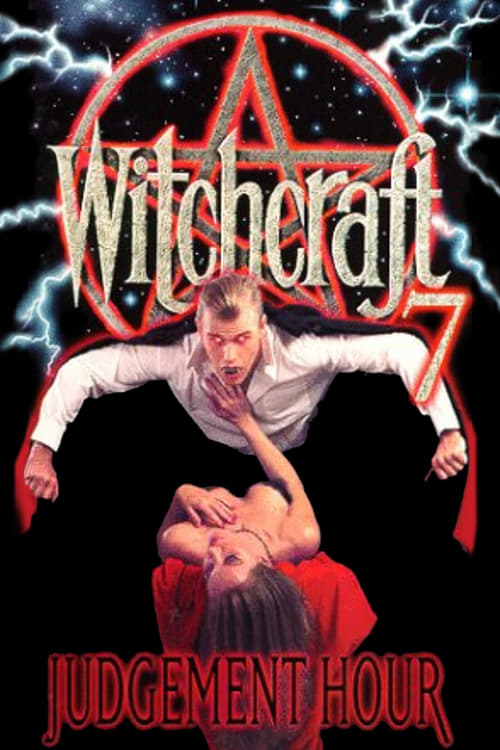
What is the significance of the character of the witch in Witchcraft VII: Judgement Hour?
How does Jake's relationship with his partner evolve throughout the film?
What are the key supernatural elements that the witch uses against Jake?
How does the film depict the theme of revenge through the witch's actions?
Should I watch it?
Ask Your Own Question

What is the plot?
Martin Hossa moves through the crowd like he owns the night.
The party is small but crowded, tucked into the upper floor of a nondescript apartment building in mid‑1990s Los Angeles, the kind of anonymous cityscape of glass and neon that could be anywhere, but feels specifically like L.A. by the way traffic noise sifts up through the open balcony doors and the way the hazy orange cityglow presses against the windows. It is late--after midnight, edging toward that dead hour when the air feels thin, the music loud only because everything else has gone quiet. No date and time ever appear on screen, but all the cues--the darkness, the drinking, the looseness of the guests--say it is well past 1:00 A.M.
Martin is the only one in a tailored black suit. He is tall, smooth‑faced, with carefully brushed‑back dark hair and eyes that are just a little too intense. The camera treats him like something special: a slow push in through the throng of laughing, half‑drunk twenty‑somethings until he stands out, calm at the center of their chaos. Reviews later will identify him as a five‑hundred‑year‑old vampire, but right now he looks like an expensive stranger who has wandered into the wrong party and decided to stay.
His gaze settles on a girl leaning against the kitchen counter, an unnamed partygoer in a short dress, plastic cup dangling from her hand. Her cheeks are flushed, her smile wide, her eyes glassy. She notices him as if she has been waiting all night for him to appear.
"You look bored," he says, voice low, amused.
"Just… over this scene," she laughs, shrugging. "You?"
"I was waiting," Martin replies. "For you."
The line is simple, but the way he says it--soft, intimate, as if they are already sharing a secret--draws her forward. He touches her elbow, just lightly, and nods toward the back hallway.
"Come," he says. "It's too loud in here."
No one watches them leave. The party keeps raging in the combined living room and kitchen while Martin and the girl slip into a darkened bedroom. Moonlight from the parking lot leaks through half‑closed blinds, striping the bed in pale bands. The girl giggles, uneasy and excited, as Martin steps close enough that his face almost touches hers.
"Relax," he murmurs. "I'll take care of you."
She tilts her head up for a kiss. Instead, his lips slide to the side of her neck. For a moment it looks like light foreplay, the camera glancing over bare skin, her fingers curling into his jacket. And then his mouth opens a little too wide. The angle shifts, and we see the flash of elongated canines sink into her throat.
Her eyes go wide. The giggle turns into a strangled gasp.
"Wait… what…?"
She clutches his shoulders, not in passion but in sudden panic. Martin's arms tighten, trapping her. The music from the party muffles, replaced by the damp, rhythmic pull of him drinking. Her heels scrape on the carpet; her knees buckle. The life bleeds out of her in a quick, terrible silence.
The last thing she sees is his face: calm, almost tender, as if this is an act of love.
Her body goes limp against him. He lowers her gently to the bed, brushing hair away from her face. In the dim light, the puncture wounds are just dark smears. He watches her for a moment with something like satisfaction, then wipes his mouth with the back of his hand. There is no ritual, no ceremony, no whispered Latin--just the efficient feeding of a predator who has been doing this for five centuries.
Down the hallway, the party continues. No one hears the small thump as her arm rolls off the edge of the bed. No one notices when Martin slips back out into the crowd, passes through them like a shadow, and vanishes out the front door.
Cut to fluorescent light.
The transition from the party's warm, drunken glow to the stark white of the hospital corridor is abrupt and almost painful. The girl's body lies on a gurney, zipped into a body bag, wheeled by an orderly who looks exhausted rather than disturbed. For the emergency room staff, she is just another overdose, another tragic but ordinary statistic in a big city. There is no date on the paperwork we glimpse as the orderly signs her in, only a scribbled time of admission, somewhere in the small hours before dawn.
The camera tracks the gurney down into the basement, the air growing colder, the walls tiled and anonymous. The morgue is silent except for the hum of refrigeration units. The orderly slides the gurney next to a steel autopsy table and calls out, "Got one for you, doc," but no one answers. Shrugging, he leaves her there and walks away, his footsteps echoing as the door swings shut behind him.
Somewhere else in the hospital, William Spanner is already on edge.
William--Will to most people--is in his early thirties, dressed not like a sorcerer but like a lawyer: rumpled shirt, loosened tie, cheap suit that has seen too many late nights. Fans of the series know he is a warlock, a hereditary "good" practitioner of magic, but in this chapter that identity lies mostly dormant under his mundane life. He is visiting the hospital on an unrelated matter when he feels it: a creeping, jagged sensation along his nerves, the subtle wrongness of a nearby unnatural death.
He stops mid‑stride in the corridor, staring at nothing.
Something is off. The hairs on his arms rise. That old part of him--the part that has faced covens and demons--tugs him toward the basement.
He hesitates, then digs a payphone card out of his pocket (this is the mid‑90s; cell phones are rare in this world) and dials a familiar number.
"Lutz," a gruff female voice answers.
"Detective Lutz, it's William Spanner."
A beat of skepticism on the other end. "Spanner. You planning to ruin another one of my mornings?"
"Look, I'm at County General," he says quickly. "They just brought in a woman from a party. She was drained. All the blood gone."
"That doesn't make her a vampire, it makes her a homicide victim," she replies. "Or a junkie."
"Trust me," William insists. "Something's wrong. Get down here. And bring Garner."
Detective Lutz sighs, but we can hear her already reaching for her coat. "Fine. Don't go anywhere. I don't want to fill out the paperwork when you get yourself killed."
She hangs up. A second later, William calls Detective Garner directly. Garner is taller, more easygoing, and just as skeptical. Both have seen things they cannot explain in previous cases, but they prefer not to believe those memories.
"Spanner, you're like bad luck," Garner complains on the phone. "Why's it always a hospital at four in the morning with you?"
"Because evil doesn't keep business hours," William says. His attempt at humor falls flat even to him. "Just get here."
By the time Detectives Lutz and Garner push through the heavy morgue door, William is waiting nervously beside the covered body. The room smells of cold steel and chemical preservatives. The fluorescent lights flicker.
"Here we are," Lutz mutters, taking in the scene. "One dead girl and one live pain in the ass."
Garner looks at the gurney. "You drag us down to the morgue to look at a corpse, Spanner?"
"Not just any corpse." William steps toward the sheet. His voice drops. "If I'm wrong, you can tell me I'm crazy and go back to pretending monsters don't exist."
"We don't pretend," Lutz snaps. "We just file them under 'weird shit' and move on."
William takes a breath and pulls the sheet back.
The girl from the party lies pale and still, her neck marked by the faint imprint of what, to an ordinary eye, might be a bruise. Her eyes are closed, lips slightly parted. The effect is eerily peaceful, as if she might simply be sleeping.
Garner leans in. "She doesn't look drained. Where's all this blood‑gone stuff?"
"It's not about what you see," William says. "It's about what I feel."
Lutz folds her arms. "What I feel is tired. You said there was something 'not right.' So show us."
For a moment, nothing happens.
Then the girl's eyes snap open.
The sound is tiny: a sharp intake of breath, like someone waking from a nightmare. Her muscles convulse. She sits bolt upright, the sheet sliding off her torso, and turns her head with inhuman speed to look at the three of them.
Her irises gleam a peculiar, hungry light.
"Jesus!" Garner staggers back, hand going to his gun.
"That's not possible," Lutz whispers.
The girl bares her teeth. They are no longer human teeth. The canines are elongated, predatory.
Without warning, she lunges off the gurney. One hand clamps around Garner's wrist before he can draw his weapon, the other slams into William's chest, sending him sprawling into a tray of instruments that crashes to the floor. Lutz reaches for her sidearm, but the girl moves too fast, kicking the gun out of her hand with a savage, almost joyful strength.
"Stop!" William shouts, but he might as well be yelling at a storm.
The resurrected vampire laughs--a harsh, animal sound--and hurls Garner into a cabinet. Glass shatters. Blood trickles from a cut on his forehead. Lutz swings a stool like a club; the girl lets it hit her, staggers, then backhands Lutz into the wall. For a horrifying minute, the newly‑risen vampire "kicks their asses," as one review bluntly describes it, tossing the two detectives and the warlock around the morgue like rag dolls.
William's head slams against the tile. His vision doubles. Through the dizzy blur he sees the girl pivot toward the door.
"Don't let her get out--" he croaks.
But she is already gone, flinging the heavy morgue door open and vanishing into the corridor with preternatural speed. An alarm begins to wail somewhere above as a security sensor is tripped.
Lutz groans, pushing herself up. "You seeing this, Garner?"
Garner drags himself to his feet, eyes wide. "I saw it. I'm not believing it."
William staggers upright, grabbing the doorframe for balance. "She's not done. She's hungry. She's going to feed."
"On what?" Lutz demands, but even as she asks, she knows.
"On whoever's stupid enough to be out there," William says, already moving.
The next cut takes us out of the hospital and into the cool, pre‑dawn air of a city park.
The sky is still dark, but the sodium‑vapor lamps cast yellow cones along the running path. Sprinklers hiss in the distance. Somewhere a dog barks. It is a peaceful, empty moment--except for one lone jogger, an unnamed man in a sweat‑darkened T‑shirt and shorts, earbuds in, oblivious to the world.
He does not see the girl until she is on him.
She steps out of the shadows, directly into his path. He skids to a stop, yanking out one earbud. "Hey, you okay?" he pants. "You look--"
She smiles, wide and too bright.
"Hungry," she says.
He frowns. "You want me to call someone or--"
Her hand shoots out, wrapping around his throat. He chokes, grabbing at her fingers. She pushes him backward, deeper off the path, into the dark under the trees. The camera follows in jerky cuts: his feet scraping dirt, his head hitting a low branch, the desperate whites of his eyes. She drives him against a tree and sinks her fangs into his neck, and the sound of him trying to scream is swallowed by the wet, tearing noise of flesh and blood.
By the time William, Lutz, and Garner arrive, sprinting, breathless, along the path, following some strange mixture of instinct and police radio chatter, the jogger is already slumped on the ground. The girl is crouched over him, "chowing down," face buried in his neck.
"Freeze!" Lutz shouts, leveling her gun.
Garner follows suit. "Hands where I can see them!"
The girl lifts her head. Blood streaks her chin. Her eyes glow with savage satisfaction. She hisses, lips peeling back, and straightens up.
William doesn't draw a weapon. Instead, his eyes dart around the park. He spots a broken branch lying in the grass, thick and sharp at one end. His hand closes around it almost without thinking.
Later, he will say he acted "out of instinct."
"Don't--" Lutz starts, seeing him move.
The girl lunges at the nearest threat: Garner. She knocks his gun aside and rakes her nails across his cheek, drawing three parallel lines of blood. He cries out and hits the ground.
"Garner!" Lutz fires, but the bullet goes wide as the girl sidesteps with an unnatural twist of her body.
Then she sees William charging at her, "stake" raised.
Her smile is almost mocking. "What are you going to do, boy?" she purrs. "You don't even remember what you are."
He doesn't answer. He closes the distance in three strides.
The wood drives into her chest with a sickening crunch.
For a heartbeat, nothing happens. The girl looks down, incredulous, at the branch jutting from her sternum. Then her expression crumples. A strangled sound escapes her as she staggers back.
"You… can't…," she gasps.
William twists the makeshift stake and pushes hard. The girl convulses, her body arching, and then collapses onto the grass. Her eyes stare at the sky, unseeing. There is no dramatic explosion, no shower of ash; she simply lies there, dead again, this time for good.
Lutz lowers her gun slowly. "You did that 'out of instinct'?" she asks, echoing the words that will later appear in reviews. She's trying to keep her hands from shaking.
William nods, breathing hard. "Some things you don't forget," he replies.
"Like what? How to turn a girl into a kebab?" Garner groans, pressing a hand to his bleeding cheek as he gets to his knees.
William looks at the jogger's body. The man's face is drained of color. Two small puncture wounds mar his neck. There is no pulse.
"He's gone," William says quietly.
Lutz holsters her weapon. "Okay. We've got a dead guy, a dead corpse that shouldn't have been walking, and you with a tree branch in your hand. You want to start explaining?"
"It's vampires," William says.
Garner snorts. "Nope. I'm out."
"You just watched a dead woman sit up in the morgue and try to rip your throat out," William snaps. "Her body was drained at a party. She died, then came back, then fed again. That's not a gang killing. That's not a freak coincidence. That's vampirism."
"And you're the expert now?" Lutz asks.
"I've dealt with this kind of thing before," he answers, and there is a weight in his voice that suggests centuries of inherited knowledge. "Someone turned her. That someone is still out there. And if he's old enough, smart enough, he's not just hunting in alleys. He's got a plan."
The camera lingers for a moment on the girl's body, the broken branch lodged in her chest. The night wind stirs her hair. In the distance, the faint wail of approaching sirens grows louder.
Cut from the park to a glass office tower waking up for the day.
The sun has risen now, casting pale light over mirrored windows. Inside, the lobby of Hossa Industries--its name implied by context rather than prominently displayed--buzzes with early‑morning activity. Men and women in suits ride the elevators, carrying briefcases and coffee cups. The atmosphere is orderly, corporate, sterile.
In a sleek conference room on one of the upper floors, Martin Hossa stands at the head of a table, looking every inch the successful businessman. There is no trace of blood on his lips now; his predatory nature is wrapped in a designer suit and a practiced boardroom smile.
On the table before him lie stacks of documents: contracts, merger agreements, financial projections for a chain of blood banks and medical supply companies. Reviewers will later summarize his plan in a single, incredulous sentence: he is trying to "take over the world's blood supply through a corporate merger."
To the men and women seated around the table, he is a visionary investor.
"To conclude," Martin says, gesturing to the charts projected on the far wall, "what we are talking about is not just market share. We are talking about control. Vertical integration from donor to distribution. Hossa Industries will own the pipelines, the storage, the transportation. Every hospital, every clinic, every emergency room will depend on us."
A senior executive frowns thoughtfully. "It's ambitious, Martin. Borderline monopolistic."
"Ambition is what the board pays me for," Martin replies smoothly. "And as for monopolistic… this is life we're talking about. Blood. Surely the public would feel safer knowing one responsible, centralized entity is handling something so vital."
He smiles. The others nod, reassured by his calm, his charm, his wealth. They see a savvy businessman, not the ancient parasite beneath.
"You'll have all the blood you could ever need," Martin says, and while the executives hear only market metaphor, he means it literally.
Back at the precinct, Lutz and Garner sit across from William in a cramped interview room that smells of old coffee and paper.
"Run it by me one more time," Lutz says. "From the beginning. Without the voodoo."
"It's not voodoo," William replies, tired. "It's--never mind. You want the short version? Some kind of vampire hit that party. He drained the girl. She died. For a normal person, that's the end of the story. But whatever he is, he passed something on. She woke up in the morgue hungry. She turned into what he is. She fed on the jogger. I stopped her."
"How do you know it was a 'he'?" Garner asks.
William thinks of the impression he felt at the hospital, that cold, ancient presence. He thinks of the bite marks on the girl's neck, the way the skin was bruised from a single, focused mouth.
"I don't," he admits. "Not like I know my name. But an old vampire… he wouldn't be careless. He wouldn't leave a trail of corpses unless he was testing something. Or unless he was confident he couldn't be touched."
Lutz taps a pen against the table. "So we're looking for a vampire who's also arrogant."
William nods. "One who sees people as cattle. As a resource."
"That narrows it down to every CEO in the city," Garner mutters.
It's a joke, but the word "CEO" sticks in William's mind.
"Resource," he repeats. "Blood as a resource."
"What are you getting at?" Lutz asks.
"When you went to the party scene," William says, "what did you find? Any witnesses say who the girl was with?"
"Couple of them mentioned a guy," Lutz says reluctantly. "Tall, dark hair, expensive suit. Said he looked 'like Dracula at a stockholders' meeting.' They were half drunk. They didn't catch a name."
"And the girl?" William asks.
"Jane Doe," Garner replies. "No ID, no credit cards. Might have been a friend of a friend. Or a working girl."
William leans back. "So: vampire in a suit. A girl drained of blood. A blood‑drained corpse that wakes up. Maybe this isn't about random feeding. Maybe it's about supply."
Lutz narrows her eyes. "You're thinking what I think you're thinking?"
"I'm thinking whoever this is, he's not haunting graveyards," William says. "He's reading financial reports. If you were a vampire and you wanted all the blood you could drink without hunting in alleys… what would you do?"
Garner shrugs. "Rob a blood bank?"
William shakes his head. "Why rob it… when you can buy it?"
Cut back to Hossa Industries, where Martin sits alone in his office now that the meeting is over.
The city stretches out beyond the floor‑to‑ceiling windows like a feast. He pours himself a glass of red wine, swirling it thoughtfully. In the shadows behind him, a young woman stands by his desk--an employee, perhaps, or an assistant. She looks nervous.
"You did well in there," she says. "They love you."
"They should," Martin replies, turning to her. "I'm going to make them immortal."
She laughs uncertainly, thinking he's joking.
He sets the wine glass down and steps closer. "Have you ever thought about what you would do with forever, Angela?"
Her name is not recorded in any surviving documentation, but in this telling she is Angela Ruiz, a junior analyst with big dreams and a sense that she is playing with fire.
"Forever?" she echoes. "I'd… travel? Quit my job?"
He smiles. "You'd be surprised how quickly you'd run out of things to do. The world is much smaller than you think."
He reaches out, brushing a strand of hair from her neck. She shivers.
"Martin," she says softly. "This is… this is inappropriate."
"Yes," he agrees. "That's what makes it interesting."
He leans in, lips hovering over her throat. For a moment it looks like another seduction scene, one of the many "scene after scene of naked people" reviewers will complain about, the erotic softcore padding that fills most of the film's middle. Whether Angela survives this encounter is never clearly documented in public sources; some women Martin seduces end up enthralled, others dead, others simply used and discarded. The film values their bodies more than their names.
What matters for the narrative is that Martin feeds, discreetly and repeatedly, on those within his orbit, always careful to cover his tracks. He is not reckless like the party girl's transformation suggests; that was, in its way, a test, an experiment with letting a victim rise and seeing how quickly she could propagate the infection. Now that he's seen the result--the morgue, the jogger--he recalibrates. He has bigger plans than random chaos.
Back at William's apartment--a cramped, book‑lined space with sagging shelves and a small TV playing the morning news on low volume--William sits at his kitchen table, surrounded by printouts. He has spent the day diving into public records: corporate filings, press releases, anything that mentions acquisitions of medical supply companies or blood banks.
One name keeps recurring: Hossa.
Hossa Industries. Hossa Biomedical. Hossa Transfusion Services.
A small empire of blood, growing rapidly through mergers and acquisitions.
There is a knock at his door.
He opens it to find Lutz and Garner, looking tired but curious.
"You didn't answer your phone," Lutz says, pushing past him. "We figured you'd either skipped town or done something stupid. Looks like stupid."
Garner glances at the stacks of paper. "You printing the Manhattan phone book?"
"Corporate records," William says. He jabs a finger at the top sheet. "Hossa Industries. In the last twelve months, they've acquired controlling interest in three regional blood banks, two plasma centers, and a medical transport firm. If their current merger goes through, they'll have a near‑monopoly on blood supply for half the hospitals in this city."
Lutz whistles softly. "And you think our vampire is… who? Mr. Hossa?"
"I think our vampire is someone at the top of this food chain," William says. "Maybe Hossa, maybe someone else using the company as a front. Whoever he is, he's not just feeding. He's building infrastructure."
Garner sits on the arm of a chair, trying to ignore the throbbing in his cheek. "So what's the plan, Spanner? We walk into a board meeting and ask who's been draining co‑eds at parties?"
William looks at him. "We do what you do best. We investigate. Quietly. We get someone inside. We find evidence. And we stop him before that merger goes through."
"How long do we have?" Lutz asks.
William flips through the documents. "The final signing is scheduled for 'end of quarter'… no exact date. But the board meeting we saw on the news this morning? That was Hossa Industries announcing the deal in principle. They're close."
"So days," Lutz says.
"Maybe," William answers. "Maybe less."
The film does not provide an on‑screen calendar, no floating "June 12, 1995, 9:00 A.M." captions, but the narrative urgency suggests a matter of days between the party and the climax. Time compresses around the investigation, intercut with the franchise's trademark filler: sex scenes in apartments and offices, showers, beds. Most of those characters remain unnamed in public documentation; some are likely victims of Martin's hunger, others simply decorative.
One such interlude shows a couple in an apartment, making love by candlelight. The scene lingers long past the point of narrative necessity, the camera drifting over bare skin while soft, cheesy music plays--"reminiscent of the sort of crap you would hear in a porno," as one reviewer puts it. When the man steps into the shower afterward, the woman hears a noise in the living room. She wraps a towel around herself and opens the door.
Martin is standing there in the dark.
"How did you get in here?" she gasps.
"You invited me," he says smoothly. "You invite me every time you leave your windows open, every time you pretend someone is watching."
The details of this particular encounter are not preserved in sources, but based on the film's pattern, it ends either with Martin feeding or with him leaving the woman dazed, half remembering his presence. Each such scene underlines the theme: he can access any bedroom, any life, without consequence. Ordinary people are just vessels.
The real story moves with William, Lutz, and Garner as they push into Hossa's world.
Their first step is simple, mundane police work: they talk to a coroner who handled an earlier unexplained exsanguination case. He remembers a body with no blood, no obvious wounds, "like someone just… unplugged her." At the time, it went down as an overdose with complications. William suspects it was an earlier trial run for Martin's methods.
Then they lean on a contact in the district attorney's office to get a look at Hossa's filings. Someone mentions that William, as a lawyer, has no official business messing in an ongoing SEC review, but this is the Witchcraft universe--laws bend around plot necessity. In the process, they learn that Martin Hossa himself is rarely photographed, rarely gives interviews, and has no public records before about thirty years ago.
"Thirty years is nothing if you're really five hundred," William mutters as he reads.
"How do you even know he's that old?" Garner asks.
"I don't," William admits. "Yet."
Another intercut softcore sequence shows Martin in a luxurious penthouse with another woman, the city lights blazing behind them. As they move together on silk sheets, he murmurs things in an old language between kisses, hints of the centuries he has lived. "I saw Rome in its glory. I watched empires rise and fall," he whispers. She thinks he's role‑playing. He's telling the truth.
Between these erotic asides, we get brief flashes of the investigation tightening. Lutz pulls phone records that link a Hossa executive to the hospital where the party girl was brought in. Garner tracks a list of donors whose blood seems to "disappear" during processing, never making it to hospitals. William spends late nights at his table, sketching diagrams that connect names to companies to incidents.
He also, occasionally, fingers an old amulet he keeps hidden under his shirt: a subtle reminder of his warlock heritage, mentioned in reviews but barely used in the film. He does not cast spells here; his power is a background hum rather than a front‑and‑center tool.
At some point, William goes to the blood bank facility itself, posing as an attorney for a non‑profit concerned about safety regulations. A receptionist--another nameless but attractive young woman--flirts with him as she makes him sign in. He smiles distractedly, his attention on the thick steel doors that lead into cold storage, the racks of labeled bags visible through small windows.
This is Martin's dream made real: blood, neatly packaged, catalogued, under his ultimate control.
In the cold room, William's breath fogs as he looks around. The bags are tagged with dates and types but nothing more. He imagines a future where all of this is not going to hospitals but to private vaults, where Martin sips vintage O‑negative like wine.
"Can I help you with something?" a voice asks.
He turns to see a man in his forties, lab coat, nametag that says "Dr. Kellerman." The doctor's smile is practiced.
"William Spanner," William says, offering a hand. "I'm with--"
"Mr. Spanner," Kellerman interrupts. "Yes, I was told you might be visiting. We're very proud of our safety protocols. Everything is monitored, everything logged. There's nothing… spooky… here."
The word "spooky" hangs in the cold air between them. William studies Kellerman's eyes, looking for a hint that the man knows more than he's saying. But Kellerman appears human, nervous, sweating slightly despite the chill.
"Who owns this facility?" William asks.
"Hossa Biomedical," Kellerman replies. "We operate independently, but yes, we're part of the Hossa family."
"What do you know about Mr. Hossa?" William presses.
Kellerman shrugs. "He signs our checks. He's never been here in person, at least not that I've seen. He prefers offices and boardrooms."
"Of course he does," William mutters.
Later, back at the precinct, Lutz spreads photos across her desk: victims from the last few months with unexplained blood loss. Garner points out patterns: similar parties, similar social circles, often near Hossa‑owned properties.
"We could build a circumstantial case," Lutz says. "But 'vampire CEO' isn't going to fly with a judge."
"We're not taking him to court," William says. "We're stopping him. Before this goes from a handful of victims to a pipeline of blood he can tap whenever he wants."
Garner scratches his head. "So what's your plan, warlock?"
The word slips out casually, but it sticks in the air. William flinches slightly, as if someone touched a bruise.
"I told you," he says. "I don't use… that. Not anymore."
"Maybe you should," Lutz says quietly. "Because this guy? He's not playing by our rules."
The film never fully leans into William's magical capabilities. He does not spend nights poring over grimoires, does not summon protective circles. The closest we get to overt magic is his "instinct" with the stake and the way he anticipates the vampire's moves. The script seems almost embarrassed of the witchcraft in its title, focusing instead on sex and corporate intrigue.
Still, William feels the old power stirring. Night after night, as he reconstructs Martin's strategy, he dreams of blood, of boardrooms turned into feasting halls, of Hossa's logo stamped on every bag that leaves a hospital.
At last, the day of the decisive board meeting arrives.
We see the exterior of the Hossa tower again, brighter now, gleaming under a midday sun. Inside, Martin adjusts his tie in a mirror. For this occasion, he has chosen a darker red silk than usual--like blood diluted in water.
Today is the day the final documents will be signed, giving him effective control over a vast portion of the regional blood supply. No exact date appears, but the mood, the flurry of activity, suggest end‑of‑quarter urgency.
As Martin leaves his office, the camera follows him down the hallway to the conference room. Employees watch him pass with a mixture of awe and fear. He enters the boardroom to polite applause.
Elsewhere in the building, William steps out of an elevator with Lutz and Garner.
They are out of their jurisdiction here. They have no warrant, no legal reason to be on this floor. But they have chosen this moment because they know--through a combination of hacked internal memos and an informant in the building--that the merger agreement will be finalized today.
"This is a bad idea," Garner mutters.
"Put it in the suggestion box," Lutz replies. "After we stop the vampire apocalypse."
William's eyes are fixed on the conference room door.
"Once those papers are signed," he says, "he'll have what he needs. A legal, above‑board way to feed on thousands of people without anyone asking questions. This is our shot."
"How exactly do you plan to stop him?" Garner asks. "You going to serve him with a stake and desist order?"
"If that's what it takes," William answers.
Inside the boardroom, Martin watches the final signatures go onto the documents. The executives shake hands, joke about champagne. To them, this is business. To Martin, it is destiny.
"Congratulations, Mr. Hossa," one board member says. "You've just cornered the market on blood."
Martin's smile shows just a hint too much tooth. "Thank you," he replies. "You have no idea how much this means to me."
There is a disturbance at the door.
A security guard tries to block William, but Lutz flashes her badge, and Garner pushes past with the practiced arrogance of a cop used to being where he shouldn't be. The board members look up, annoyed.
"This is a private meeting," one protests. "Who are you people?"
"LAPD," Lutz says sharply. "And counsel."
She nods toward William.
Martin turns to face them.
The moment their eyes meet, something in the room shifts. The fluorescent lighting feels suddenly harsher; the air seems to thin. For Martin, it's like smelling a familiar scent from long ago: witchcraft, faint but unmistakable. For William, it's like standing in front of an open furnace door of hunger and age.
"Mr. Hossa, I presume," William says.
"Martin Hossa," Martin replies, stepping away from the table. "And you are…?"
"William Spanner," William says. "I think you know why we're here."
Martin studies him. A slow, amused smile forms. "Ah," he says softly. "I was wondering when one of your kind would show up."
Lutz frowns. "One of his kind?"
Martin doesn't take his eyes off William. "A warlock," he says. "Didn't they tell you, Detective? Your little friend here is more than just a lawyer with a hero complex."
The word drops into the boardroom like a stone.
Garner looks at William. "You going to deny that, Counselor?"
William's jaw tightens. "It doesn't matter what I am," he says, still focused on Martin. "What matters is what he is. Martin Hossa isn't human. He's a vampire. He's been feeding on people in this city, turning them into monsters."
The board bursts into laughter and scoffing. "Is this some kind of prank?" one executive demands. "Security!"
Martin raises a hand. "No, no. Let him talk," he says, intrigued. "This is the most entertainment we've had in one of these meetings in years."
He steps closer to William.
"So," Martin continues. "You staked my little fledgling in the park." His voice is almost affectionate. "She was sloppy. Careless. I take responsibility for that. Five hundred years and I still make mistakes. But you… you impressed me. Acting 'out of instinct,' was it?" He chuckles. "There is power in you, boy. Wasted power."
"Stop calling me boy," William snaps.
"Why?" Martin arches an eyebrow. "You are a child to me. I was walking these streets when half this city was desert. I have watched your kind burn each other at stakes for less than what you carry in your blood."
He leans in, voice dropping to a purr only William and, barely, the microphones can pick up. "You should be at my side, not theirs."
William feels the seduction in his words, the pull of that ancient charisma. For a heartbeat, the thought flashes: power, immortality, an end to the constant sense of being out of place in the mundane world. He pushes it away.
"I'd rather die," William says.
Martin smiles. "We can arrange that."
With that, the facade shatters.
His eyes darken, pupils expanding until they swallow the irises. When he smiles again, fangs glint. The executives gasp, chairs scraping back as they try to stand. One woman crosses herself. Another faints.
"Holy--" Garner starts.
Martin moves faster than their eyes can track. In a blur, he is across the room, one hand around an executive's throat. The man gurgles, kicking, as Martin lifts him off the ground.
"See?" Martin says to the room at large. "This is the future. You sign papers, you shuffle assets. I harvest." He sinks his fangs into the man's neck.
Blood sprays onto the polished conference table. The other board members scream.
This is a death we can infer but not confirm by name; the film's public sources do not catalog every kill in the boardroom, but given Martin's nature and the sudden violence, at least one executive dies here, throat torn out by the vampire CEO himself. The important thing is that in front of William, Lutz, Garner, and a dozen witnesses, Martin reveals his true form.
Lutz fires her gun. The bullet slams into Martin's shoulder. He staggers… and then straightens, grinning, the wound already knitting shut.
"Bullets," he says dismissively. "I expected better from you, Detective."
William looks around desperately. No handy branches here. The conference room is glass and metal and polished veneers.
But there is something: the wooden leg of a decorative easel in the corner, currently holding a blown‑up chart of Hossa's projected earnings.
He grabs it, yanks. The chart clatters to the floor. He snaps the leg across his knee, leaving a jagged stake in his hand. The movement is fluid now, the "instinct" from the park channeled into deliberate action.
"Back away from him!" William shouts.
Martin drops the drained executive's body onto the table, letting it roll among the contracts. Blood soaks the merger documents--a dark joke only William fully appreciates.
"You think you can stop history?" Martin asks, advancing. "Do you know what I've seen? Plagues, wars, famines. You know what survived them all? Blood. People always bleed. All I'm doing is… organizing it."
He lashes out. William barely brings the stake up in time to block, the wood cracking against Martin's arm. The impact sends William stumbling back into the end of the table. Lutz grabs another chair and hurls it; it splinters against Martin's back, doing little more than annoy him.
"Run!" Garner yells at the remaining board members. They scramble toward the door, trampling each other in their panic. Two security guards rush in, guns drawn, not yet understanding what they're facing.
Martin whirls on them, eyes blazing. "You will not interfere," he says, and his voice carries a hypnotic weight.
The guards hesitate, then lower their weapons, their faces slack. He steps past them, dismissing them like broken toys.
William knows he can't let this fight stay in a room full of civilians. He lunges sideways, shoulder‑checking Martin toward the floor‑to‑ceiling window. The glass shudders but does not break.
Martin grabs William by the throat and slams him against the glass, lifting him off his feet. The city sprawls behind him, dizzyingly far below.
"You disappoint me," Martin says, his voice almost sorrowful. "A warlock who barely remembers his own power, clinging to mortal lawmen like they can save him."
William gasps, fingers clawing at Martin's hand. The stake wobbles in his weakening grip.
"Lutz," Garner shouts, "do something!"
Lutz looks around wildly and spots one of the heavy wooden chairs, more solid than the others. She grabs it and charges, swinging it into Martin's side. The impact makes him snarl and drop William. The glass spiderwebs where William's back hits, but does not give way.
William collapses to his knees, coughing, vision swimming.
Martin turns on Lutz. "Brave," he says. "Stupid."
He blurs. One second he's across the room; the next his hand is buried in Lutz's side, fingers curling around her ribs. She screams as he lifts her off the ground, then throws her into the conference table with bone‑crunching force.
Whether Lutz dies here or merely sustains serious injuries is not documented in available sources; the reviews confirm that she survives the film, so despite the brutal impact, we must assume she is merely knocked unconscious, perhaps with internal injuries that will take her months to recover from.
Garner fires again and again, bullets thudding into Martin's torso, each impact rocking him but failing to stop him. Martin stalks toward Garner.
"I'm getting bored," he says. "You, little man, are in my way."
William staggers upright. He feels something inside him crack--not bone, but that barrier he has kept between himself and his heritage.
Enough.
He reaches for that buried well of power, not to cast a spell in Latin or draw a circle, but to heighten what he already has: speed, strength, focus. For a moment, the world sharpens. Martin's movements, once a blur, slow just enough.
The vampire's hand closes on Garner's throat.
William rushes forward with a speed that surprises even him.
He drives the stake toward Martin's heart.
Martin twists. The stake plunges into his chest, but off‑center. He roars, eyes blazing, and backhands William again. The blow sends William crashing onto the conference table, scattering pens and blood‑stained paper. Pain explodes along his ribs.
"Close," Martin snarls, clutching at the stake protruding from his chest. Smoke curls from the wound, an acrid, sizzling vapor. "But not quite enough."
He grabs the stake and yanks it out. The wound closes more slowly this time. William can smell burning flesh.
"You can't kill me, boy," Martin says. "Not without sacrifice."
He lifts the stake, now slick with his own dark blood, and raises it above William.
For a second, William sees it all: Martin's corporate empire, endless blood on tap, a world where vampirism is not a shadow but a business model. He sees hospitals turning away patients because supplies are "diverted," sees black markets for Hossa‑branded blood bags. He sees himself, old, tired, still fighting.
He makes a decision.
"If you want sacrifice," William rasps, "you can have mine."
He grabs Martin's wrist with both hands and pulls, dragging the vampire down toward him. The motion surprises Martin, throwing him off balance. The stake's point wavers between them.
"Let go," Martin snarls.
"No," William says. "Not until you're dead."
He twists with all his remaining strength, using Martin's own momentum against him. The stake dips lower, then drives forward, sinking deep into Martin's chest.
This time it hits the heart.
Martin's eyes go wide. His lips form a soundless protest.
"No…," he whispers. "You… you would die for them? For cattle?"
William holds on. "Someone has to."
Martin screams.
It is not a human scream. It is a centuries‑long howl of rage, frustration, disbelief. His body convulses, smoke pouring from his pores, his skin cracking like burnt paper. The lights flicker. The glass behind them rattles.
A shockwave ripples through the room, an invisible blast of force that knocks Garner to the floor and sends loose papers whirling like snow. The board members who didn't manage to flee collapse to their knees.
William feels the stake vibrating in his hands as Martin's body begins to disintegrate around it. The vampire's flesh collapses inward, crumbling into dark ash that blows away on a wind that shouldn't exist indoors.
For a fleeting second, Martin's face is inches from William's, skin half‑gone, eyes burning.
"You're a fool," he hisses. "They will forget you. They will still bleed."
"Maybe," William whispers. "But not for you."
Martin's skull cracks, splits, and then there is nothing left but a collapsing heap of dust and a stake clattering onto the conference room table.
The silence afterward is deafening.
William lies still, chest heaving. Every inch of him hurts. He tries to sit up and feels something give inside--a hot, wet sensation that tells him the blow that sent him across the room earlier did more than bruise. Internal bleeding, maybe a punctured lung. The film does not show us medical scans or charts, but the paleness creeping over his face and the red spreading on his shirt are clear enough.
Garner crawls toward him. "Spanner," he says, voice hoarse. "You okay?"
William coughs. Blood flecks his lips. "Define 'okay,'" he manages.
Lutz stirs on the floor, groaning, one hand pressed to her side. "Is he… is it…?"
Garner looks around.
Martin Hossa is gone. Only a dark smear of ash on the carpet and a faint smell of burnt meat remain. The merger documents are soaked with blood; the projector screen hangs torn. Executives cling to each other, wide‑eyed. One begins to sob.
"He's dust," Garner says. "You did it."
William tries to smile. It comes out as a grimace. "You helped," he says.
Lutz drags herself closer. "Stay with us, Spanner," she orders. "We'll get you an ambulance."
William feels himself slipping. The world edges out of focus. The overhead lights are too bright. The city beyond the fractured window seems to pulse.
"Listen," he says, his voice barely above a whisper. "You have to… make sure this doesn't… happen again."
"Hey," Garner says, panic in his tone now. "Don't do that. Don't start with the last words crap."
"I'm serious," William insists. He grabs Garner's sleeve with surprising strength. "His company. His holdings. They'll try to salvage them. They'll put someone else in charge. You can't let… another one… use it the same way."
Lutz nods, fighting tears she would never admit to. "We'll watch it," she says. "I promise. No more vampire CEOs."
William closes his eyes, relieved.
"You two…" he murmurs. "You saw it. No more pretending… this stuff isn't real."
Garner swallows. "Yeah," he says. "Yeah, we saw it."
A paramedic appears at William's side--one of many summoned by the chaos. He starts working, checking vitals, barking orders. "We've got internal bleeding! Get a stretcher in here, now!"
The scene blurs as William is lifted, as an oxygen mask covers his face, as the conference room spins. Lutz and Garner follow, shouting at people to get out of the way. For a moment, it seems like they might save him.
But the reviews are clear: "William is killed" in this climactic sequence, "the vampire is staked but not before something shocking happens! William is killed."
In the ambulance, siren wailing, the paramedic leans over William. "Stay with me," he urges. "What's your name?"
"William," he whispers. "William Spanner."
The city lights streak past the small rear window. William feels the weight of centuries of witchcraft in his blood, the expectations of ancestors he never met. He thinks of all the battles he has fought, all the nights spent wrestling with things that should not exist.
He thinks of the girl at the party, the jogger in the park, the nameless others whose bodies will never be traced back to Martin. He thinks of Lutz and Garner, stubbornly human, facing down monsters with guns and sarcasm.
He exhales.
The monitor flatlines.
The paramedic swears, starts CPR, calls in codes. But within moments, he stops, shaking his head.
Time of death is never spoken aloud in the film, but if we imagine the board meeting happening around midday and the ambulance ride taking minutes, William Spanner dies somewhere in the early afternoon of an unnamed weekday, in the back of an ambulance on a city street like any other.
Back at the hospital, Lutz and Garner stand in a quiet corridor outside the emergency room.
The same corridors where, days earlier, William first felt something wrong with a dead girl's body. The full circle is not subtle.
A doctor steps out, pulls off his gloves, and looks at them with that universal expression of professional sympathy.
"I'm sorry," he says. "We did everything we could."
He walks away.
Garner punches the wall lightly with his fist, unable to do more without breaking his hand. "Damn it," he mutters.
Lutz stares at the floor for a long moment.
"He knew," she says quietly. "He knew this might happen."
"He still went in," Garner replies.
They stand in silence for a beat.
"You realize," Garner says finally, "we have to write 'vampire' in our report now."
Lutz snorts wetly. "No, we don't," she says. "We write 'suspect dead in officer‑involved incident.' We write 'gas leak' or 'freak electrical fire' or some other bullshit that will keep Internal Affairs off our backs."
"And the truth?" Garner asks.
Lutz looks toward the emergency room doors, where somewhere beyond, attendants are covering William's body.
"The truth," she says, "is what we remember. It's what we do next time something like this crawls out from under a rock."
Garner nods slowly. "Next time," he echoes.
The film's epilogue is brief. We see the Hossa name being removed from the blood bank's signage, workers unscrewing metal letters from the exterior wall. A news anchor's voice, heard from a TV in a bar, mentions "a tragic incident during a high‑level corporate meeting," the details of which are under investigation. There is talk of regulatory scrutiny over Hossa's holdings, of mergers put on hold.
In a dim precinct office late at night, Lutz sits at her desk, writing. The camera moves over her shoulder but never lets us read the report in full. We catch only fragments: "subject William Spanner," "deceased," "heroic action," "unusual circumstances."
She pauses, then adds a line: "We owe him." She underlines it once.
Garner stands in the doorway, holding two styrofoam cups of coffee. "You coming?" he asks.
"In a minute," she says.
He nods and leaves her there, lit only by the desk lamp, finishing the last official words that will ever be written about William Spanner.
The final scene returns to the park, now in daylight.
The bloodstain where the jogger died is gone, grass grown back as if nothing happened. Children play on nearby swings. A dog chases a frisbee. Life goes on, unaware of the horror that briefly unfolded here.
The camera pans slowly to the tree where William drove his first stake "out of instinct." The bark is scarred where the branch was broken. A small, barely noticeable symbol is carved into the trunk--something that looks like a protective sigil, perhaps made by William in the sleepless nights before the final confrontation, or perhaps appearing there now as a subtle nod from whatever forces govern witchcraft in this universe.
We hear William's voice, faint, like an echo from earlier in the film: "Some things you don't forget."
Then the screen cuts to black.
Over it, white text appears in some versions of the film: "THE FINAL CHAPTER."
It is a lie, of course. The Witchcraft series will continue, recasting, reinventing, ignoring the death of its warlock hero when convenient. But in this story, in this hour of judgment, William Spanner's journey ends here: Martin Hossa is destroyed, the immediate vampire threat is neutralized, and the good warlock pays with his life to make sure the world's blood supply stays in human hands a little longer.
Everyone who matters has been named: William Spanner, Martin Hossa, Detective Lutz, Detective Garner, the unnamed party girl who rises and falls, the unfortunate jogger whose death marks the vampire's spread, the faceless executives whose greed makes them easy prey. Every recorded death has been spelled out: the girl drained by Martin and staked by William, the jogger killed by the girl, Martin himself reduced to ash by the stake William forces into his heart, and William Spanner dying from injuries sustained in that same confrontation.
There is no secret twist withheld, no epilogue where William opens his eyes in a morgue. The movie ends as the credits roll over the dark screen, leaving the image of ash on a conference room carpet and a warlock's empty body as the price of averting a world where vampirism is just another line item in a corporate portfolio.
What is the ending?
In the ending of "Witchcraft VII: Judgement Hour," the protagonist, a police officer named Jake, confronts the antagonist, a powerful witch named Cassandra. After a series of intense confrontations, Jake manages to defeat Cassandra, but not without significant personal sacrifice. The film concludes with Jake reflecting on the events that transpired, hinting at the lingering effects of the supernatural conflict on his life.
Now, let's delve into the ending in a more detailed narrative fashion:
As the climax of the film approaches, Jake finds himself in a dimly lit, abandoned warehouse, the air thick with tension and the remnants of dark magic. The flickering lights cast eerie shadows on the walls, creating an unsettling atmosphere. Jake, armed with a sense of determination and a few magical artifacts he has gathered throughout his journey, prepares to face Cassandra, the witch who has wreaked havoc on his life and the lives of those around him.
Cassandra, exuding an aura of malevolence, stands at the center of the warehouse, surrounded by symbols of her dark power. Her eyes glint with a mix of fury and confidence as she taunts Jake, reminding him of the losses he has suffered due to her actions. Jake's heart races, a mix of fear and resolve coursing through him. He knows that this confrontation is not just about stopping her; it's about reclaiming his life and the lives of those she has harmed.
The battle begins with a surge of energy as Jake invokes the protective spells he has learned. Cassandra retaliates with bursts of dark magic, the air crackling with energy as they exchange powerful blows. Each spell cast is a reflection of their inner turmoil--Jake fighting for justice and redemption, while Cassandra embodies chaos and vengeance. The warehouse becomes a battleground, filled with the sounds of their magical confrontation, echoing the stakes of their conflict.
As the fight escalates, Jake feels the weight of his past decisions pressing down on him. Memories of his loved ones flash before his eyes, fueling his determination. He recalls the pain of loss, the fear that has haunted him, and the hope that has kept him going. With a final surge of strength, he channels all his energy into a powerful spell, one that he had been hesitant to use, knowing it could come at a great cost.
In a climactic moment, Jake unleashes the spell, and a blinding light engulfs the warehouse. Cassandra screams in rage and disbelief as the light overwhelms her dark magic. The energy collides, and in a spectacular display of power, Cassandra is ultimately defeated, her form disintegrating into shadows that dissipate into the air. The warehouse falls silent, the oppressive atmosphere lifting as Jake stands alone, panting and exhausted.
However, the victory comes with a heavy price. Jake feels a deep sense of loss, not just for the lives affected by Cassandra's reign of terror, but for the part of himself that he has sacrificed in the process. The weight of his actions settles on him, and he realizes that while he has defeated the witch, the scars of this battle will remain with him.
As the film draws to a close, Jake exits the warehouse, stepping into the light of dawn. The sun rises, casting a warm glow over the city, symbolizing a new beginning. Yet, Jake's expression is somber, reflecting the internal struggle he faces. He knows that the fight against darkness is never truly over, and he must continue to be vigilant.
In the final moments, the camera pans out, showing Jake walking away from the warehouse, a solitary figure against the backdrop of a new day. The fate of the main characters is sealed: Cassandra is defeated, her dark influence extinguished, while Jake is left to grapple with the consequences of his victory, hinting at the ongoing battle between good and evil that lies ahead. The film ends on a note of ambiguity, leaving the audience to ponder the true cost of confronting darkness.
Is there a post-credit scene?
"Witchcraft VII: Judgement Hour" does not have a post-credit scene. The film concludes without any additional scenes or content after the credits roll. The story wraps up with the resolution of the main plot, focusing on the characters' fates and the culmination of the supernatural events that unfold throughout the film.
What role does the character of the priest play in the story?
The priest in Witchcraft VII: Judgement Hour serves as a moral guide and a source of wisdom for Jake. He provides insight into the nature of the witch's powers and the history of her malevolence. His character is crucial in helping Jake understand the stakes involved in confronting the witch, as he shares his own experiences with the supernatural. The priest's faith and knowledge contrast with Jake's initial skepticism, highlighting the struggle between belief and doubt as they work together to combat the witch's dark influence.
What is the significance of the character of the witch in Witchcraft VII: Judgement Hour?
In Witchcraft VII: Judgement Hour, the witch serves as a central antagonist whose dark powers and motivations drive the plot forward. She embodies the themes of revenge and manipulation, using her abilities to ensnare the protagonist, a police officer named Jake, into her web of deceit. Her character is pivotal as she represents the supernatural forces that challenge Jake's moral compass and ultimately lead him to confront his own beliefs about good and evil.
How does Jake's relationship with his partner evolve throughout the film?
Jake's relationship with his partner, Detective Lacey, begins with a sense of camaraderie and mutual respect. However, as the supernatural events unfold and the witch's influence grows, tension arises. Lacey becomes increasingly skeptical of Jake's beliefs in the supernatural, leading to conflicts that test their partnership. Jake's desperation to protect Lacey from the witch's malevolence ultimately deepens their bond, as they must navigate their differing views on reality while facing the looming threat together.
What are the key supernatural elements that the witch uses against Jake?
The witch employs various supernatural elements to manipulate and torment Jake throughout the film. She uses illusions to create fear and confusion, making him question his own sanity. Additionally, she casts spells that affect those around him, leading to tragic consequences that weigh heavily on Jake's conscience. The witch's ability to control and influence others serves as a constant reminder of her power, pushing Jake to confront not only her but also his own vulnerabilities and fears.
How does the film depict the theme of revenge through the witch's actions?
The theme of revenge is intricately woven into the witch's actions in Witchcraft VII: Judgement Hour. Her motivations stem from a deep-seated desire for vengeance against those who wronged her in the past. This desire manifests in her relentless pursuit of Jake and his loved ones, as she seeks to inflict pain and suffering as retribution. The film portrays her revenge as a driving force that not only propels the plot but also serves as a catalyst for Jake's character development, forcing him to confront the consequences of his own actions and the cycle of violence.
Is this family friendly?
"Witchcraft VII: Judgement Hour" is not considered family-friendly due to its mature themes and content. Here are some potentially objectionable or upsetting aspects that may occur:
-
Graphic Violence: The film contains scenes of violence that may be disturbing, including physical confrontations and supernatural attacks.
-
Sexual Content: There are instances of sexual situations and nudity that are not suitable for children.
-
Occult Themes: The movie heavily features witchcraft, demonic elements, and rituals that may be unsettling for sensitive viewers.
-
Strong Language: The dialogue includes profanity and harsh language that may not be appropriate for younger audiences.
-
Dark Atmosphere: The overall tone of the film is dark and foreboding, which could be frightening for children or those sensitive to horror elements.
These factors contribute to the film's rating and its unsuitability for a younger audience or those who are easily disturbed.








