






Popular
What motivates the main character, Lisa, to seek revenge?
How does Lisa's relationship with her best friend, Sarah, evolve throughout the film?
What role does the character of Mark play in Lisa's revenge plot?
What specific actions does Lisa take to execute her revenge?
How does the film depict the consequences of Lisa's revenge on her own psyche?
Should I watch it?
Ask Your Own Question

What is the plot?
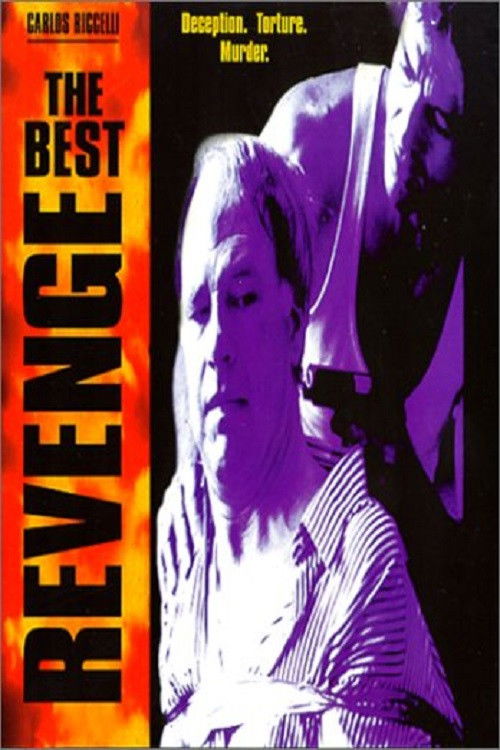
Carlos, a Salvadoran writer hardened by the civil war, slips illegally into Los Angeles carrying a single purpose: find the American military advisor he knows only as "Mr. Smith," the man he believes tortured him and murdered his wife. From the first moments, the film frames him as a man already consumed by grief and certainty, someone who has crossed a border not to build a life, but to finish a death sentence that the war never allowed him to carry out. The city around him is unfamiliar, vast, and indifferent, but Carlos moves through it like a predator driven by memory, hunting a ghost whose name may itself be a lie.
Los Angeles is already under strain from the riots, and the unrest becomes more than background noise. It mirrors Carlos's internal state and gives the story a brittle, unpredictable energy. Sirens, smoke, crowds, and broken streets turn the city into a moral battleground where identities blur and everyone seems half-hidden. In this chaos Carlos begins his search for the man who destroyed his life, and the uncertainty of the city feeds the uncertainty of his mission. He is angry, suspicious, and relentless, but he is also operating on trauma and incomplete knowledge. The film's tension comes from that instability: Carlos believes he knows exactly who he wants, yet every step toward revenge risks exposing how little he truly knows.
Along the way, Carlos encounters an activist in Los Angeles who is also hunting for Mr. Smith. This meeting matters because it gives Carlos a possible ally and a new thread to follow, but it also complicates the hunt. Instead of a clean path to the target, Carlos is pushed into a wider political and personal web. The activist helps steer him toward David Miller, an aspiring politician whose polished public identity immediately raises suspicion. Miller seems like the kind of man who could hide dangerous truths behind respectable language and civic ambition, and Carlos begins to consider him a possible answer to the mystery. Still, Miller insists he is innocent, and that denial only deepens the tension. The story is not simply about revenge now; it becomes a test of truth, guilt, and the reliability of Carlos's own memory.
Carlos closes in on Miller and takes him captive in Miller's own home as the riots rage outside. The confinement scene is the movie's core pressure cooker: a private interrogation sealed inside a house while the city around it burns with public disorder. Carlos believes he has finally cornered the man who tortured him and killed his wife, and the house becomes a makeshift courtroom where rage substitutes for law. He presses the captive for answers, forcing him to confront accusations that may or may not be true. The exact details of the exchanges are not fully preserved in the available plot material, but the emotional shape is clear: Carlos is trying to make the man in front of him confess to atrocities committed in another place and another life, while the captive insists on his innocence. Every silence, every denial, every burst of anger pushes the situation tighter. The riot noise outside contrasts cruelly with the intimate violence of the interrogation inside.
What makes the scene especially unnerving is that Carlos's certainty begins to crack. The man he has taken may not be Mr. Smith after all. That possibility does not immediately free anyone; instead, it makes Carlos more dangerous, because now he is trapped not only with a possible enemy, but with the unbearable prospect of having built his whole revenge on the wrong foundation. He has come across a continent to confront the face of trauma, and now the face may be wrong. The film uses this uncertainty as a psychological knife twist. Carlos's hatred has given him direction, but once that direction becomes questionable, he has to face the possibility that revenge itself may be a trap, one that war has planted inside him and now the city is forcing open.
The key revelation arrives late and changes everything. Carlos concludes that he has made a mistake and has the wrong man. At that point he does not simply walk away; he tries "one more ruse," a final attempt to expose the truth and force the hidden identity into the open. This last deception is the story's pivot, the move that turns a straightforward revenge setup into a surprise ending. The available summaries do not spell out every beat of the ruse in scene-by-scene detail, but they do make clear that it is the mechanism by which the film lands its final twist. Whatever Carlos does at that moment, it is not a surrender. It is a desperate, intelligent gamble from a man who can no longer trust his own assumptions but still cannot abandon the hunt.
The ending's power comes from the fact that the revenge target is tied to a political context of torture, civil war, and obscured responsibility. "Mr. Smith" is less a normal name than a mask for state violence, and the film's final revelation recontextualizes the entire chase. What Carlos thought was a personal vendetta against one killer becomes something far more unsettling: a confrontation with the slipperiness of culpability itself. The surprise ending is meant to be the "best revenge" because it transforms Carlos's understanding of who is responsible and what revenge can actually accomplish. Instead of a simple kill or confession, the conclusion forces a reckoning with mistaken identity, with the machinery of political violence, and with the emotional cost of living inside a wound that never really closed.
No character deaths are confirmed in the available plot summaries, so the film's most explicit violence is psychological and interrogative rather than fatal. Carlos's wife is remembered as murdered before the story begins, and that offscreen loss is the emotional engine of everything that follows. The man Carlos believes to be the torturer is held captive and threatened, but the summaries do not confirm that he dies. Likewise, David Miller survives long enough to insist on his innocence, and the activist's fate is not specified in the available material. The focus remains on revelation rather than body count, and that makes the film more eerie: the damage is already done before the story starts, and the central question is not who falls during the chase, but who has been hidden behind the violence all along.
In the final stretch, Carlos's fury is no longer clean or triumphant. He is forced to confront the possibility that revenge cannot restore what was taken from him, and that the person he has pursued may not even be the right embodiment of his pain. The riots continue to churn outside the house, giving the climax a sense of history spilling over into private ruin. Inside, the truth finally surfaces in a way that changes Carlos forever. The surprise ending lands not as a simple victory, but as a devastating adjustment of reality. Carlos's entire mission is reshaped by what he learns, and the film closes on that altered understanding rather than on a cathartic kill. The title becomes ironic and unsettling: the "best revenge" is not merely punishment, but the collapse of illusion, the moment when revenge is exposed as a path that can only be completed by discovering how wrong you have been.
By the end, Carlos remains the story's emotional center, but he is no longer the same man who entered Los Angeles driven by certainty. He begins as a victim seeking an enemy and ends as someone forced to face the instability of his own truth. The city, the riots, the activist, the politician, and the mysterious "Mr. Smith" all converge to create a final revelation that redefines the hunt. The film does not offer comfort. It offers a last, sharp turn of the knife: the man Carlos has been pursuing may not be the man who ruined his life, and the answer to his suffering is not the simple satisfaction he imagined. Instead, the ending leaves him with the brutal clarity that war, torture, and revenge have made identity itself a battlefield.

What is the ending?
In the ending of "The Best Revenge," the protagonist, a woman named Lisa, confronts her past and the people who have wronged her. After a series of intense confrontations, she ultimately finds a way to reclaim her power and move forward, leaving behind the pain and betrayal she experienced.
As the climax unfolds, Lisa stands at a pivotal moment in her life. The scene opens with her in a dimly lit room, the tension palpable as she prepares to face her adversaries. The air is thick with anticipation, and her heart races, reflecting her inner turmoil. She knows that this confrontation is not just about revenge; it's about reclaiming her identity and strength.
The first confrontation occurs when Lisa meets her former friend, who betrayed her. The friend, visibly shaken, tries to justify her actions, but Lisa, with a newfound resolve, confronts her with the truth of their past. The dialogue is sharp and emotional, revealing the depth of Lisa's hurt and the betrayal she felt. As the conversation escalates, Lisa's voice grows stronger, embodying her journey from victimhood to empowerment. The friend, overwhelmed by guilt, ultimately breaks down, unable to defend her actions any longer.
Next, Lisa faces the man who played a significant role in her suffering. The scene shifts to a tense encounter in a secluded location, where the atmosphere is charged with unresolved conflict. Lisa stands her ground, her posture firm and unwavering. She articulates the pain he caused her, her words laced with both anger and sorrow. The man, initially defensive, begins to realize the impact of his actions. As Lisa speaks, her emotional state shifts from rage to a sense of liberation. She understands that holding onto the past only chains her to the pain, and in this moment, she chooses to let go.
The climax reaches its peak when Lisa finally confronts the circumstances that led to her suffering. In a powerful monologue, she reflects on her journey, the lessons learned, and the strength she has gained. The camera captures her face, illuminated by a soft light, symbolizing her transformation. As she walks away from her past, the weight of her burdens seems to lift, and a sense of peace washes over her.
In the final scenes, we see Lisa moving forward with her life. She is shown in a new environment, surrounded by supportive friends who uplift her. The contrast between her past and present is stark; she is no longer the victim but a woman who has reclaimed her narrative. The film closes with a shot of Lisa smiling, a symbol of hope and resilience, as she embraces her future.
The fates of the main characters are intertwined with Lisa's journey. The former friend, having faced the consequences of her betrayal, is left to grapple with her guilt and the loss of their friendship. The man, confronted with the reality of his actions, is left to reflect on the damage he has caused, hinting at a potential change in his character. Lisa, however, emerges as the true victor, having transformed her pain into strength and finding a path toward healing and self-acceptance.
Is there a post-credit scene?
The movie "The Best Revenge," produced in 1996, does not have a post-credit scene. The film concludes its narrative without any additional scenes or content after the credits roll. The story wraps up with the resolution of the main plot, focusing on themes of betrayal, revenge, and the consequences of one's actions, leaving the audience with a sense of closure regarding the characters' arcs.
What motivates the main character, Lisa, to seek revenge?
Lisa, portrayed by actress Jennifer Beals, is driven by a deep sense of betrayal and heartbreak after discovering that her boyfriend, who she believed was committed to her, has been unfaithful. This emotional turmoil fuels her desire for revenge, as she feels wronged and seeks to reclaim her sense of power and control.
How does Lisa's relationship with her best friend, Sarah, evolve throughout the film?
Initially, Lisa and Sarah share a close bond, with Sarah supporting Lisa through her heartbreak. However, as Lisa's quest for revenge intensifies, it strains their friendship. Sarah becomes increasingly concerned about Lisa's obsession and the moral implications of her actions, leading to tension and conflict between them.
What role does the character of Mark play in Lisa's revenge plot?
Mark, played by actor Michael Woods, is the object of Lisa's revenge. He represents the betrayal and emotional pain that Lisa has suffered. As Lisa devises her plan, Mark becomes increasingly unaware of the consequences of his actions, ultimately serving as a catalyst for Lisa's transformation from a heartbroken woman to someone who is willing to go to great lengths to make him feel the same pain.
What specific actions does Lisa take to execute her revenge?
Lisa meticulously plans her revenge by first gathering information about Mark's life and relationships. She then orchestrates a series of events designed to humiliate him, including sabotaging his new relationships and exposing his infidelities. Each action is calculated to inflict emotional pain, reflecting her internal struggle and desire for vindication.
How does the film depict the consequences of Lisa's revenge on her own psyche?
As Lisa enacts her revenge, the film delves into her internal conflict. Initially, she feels empowered and vindicated, but as her actions escalate, she begins to grapple with guilt and the realization that her quest for revenge is consuming her. This emotional turmoil is visually represented through her increasingly erratic behavior and the strain it places on her relationships, particularly with Sarah.
Is this family friendly?
"The Best Revenge," produced in 1996, contains several elements that may not be suitable for children or sensitive viewers. Here are some potentially objectionable aspects:
-
Violence: The film includes scenes of physical confrontations and threats, which may be intense for younger audiences.
-
Mature Themes: The storyline revolves around revenge and betrayal, exploring darker emotional states that may be unsettling.
-
Language: There are instances of strong language that could be inappropriate for children.
-
Emotional Turmoil: Characters experience significant emotional distress, including themes of loss and anger, which may be upsetting for sensitive viewers.
-
Romantic Situations: There are elements of romantic relationships that may include tension or conflict, which could be complex for younger viewers to understand.
These aspects contribute to a tone that may not be considered family-friendly, particularly for younger children or those who are sensitive to such themes.







