














Popular
What is the relationship between the main character, Officer Jake Wilder, and his police dog, Jerry Lee?
How does Jake Wilder's character evolve throughout the film?
What role does the antagonist, a criminal named 'The Ripper', play in the plot?
What specific challenges do Jake and Jerry Lee face while trying to solve the case?
How does the film depict the training and skills of police dogs like Jerry Lee?
Should I watch it?
Ask Your Own Question

What is the plot?
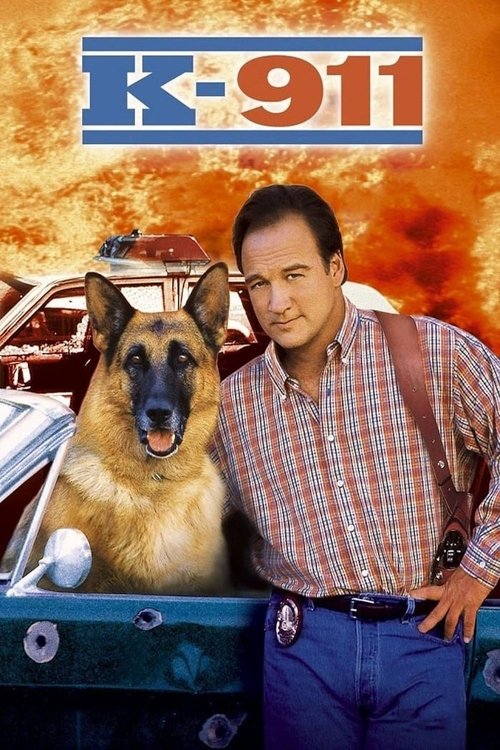
Detective Michael Dooley and his German Shepherd partner Jerry Lee are back on the streets of Los Angeles in a story that begins with partnership, age, and unease. They have worked side by side for nearly ten years, long enough to feel less like a cop and his dog than a single battered unit, and the film immediately leans into the strain that time has put on them. Jerry Lee is still loyal, still alert, still clearly the same smart and stubborn police dog he has always been, but he is no longer as fast or physically reliable as he once was. His body is beginning to betray him, and Dooley's superiors notice it. The suggestion hangs in the air early: maybe Jerry Lee should be retired from active duty.
Dooley does not want that. Jerry Lee is not just a working dog to him; he is a partner and a best friend, the kind of bond built over thousands of dangerous moments and ordinary hours alike. But the issue is no longer abstract, because someone is actively trying to kill Dooley. What first looks like a simple stalking case quickly becomes a lethal game of cat and mouse as an unknown gunman repeatedly puts Dooley in his sights. The threat feels personal from the start, and the story frames it as a vendetta rather than random violence.
That tension becomes sharper when Jerry Lee fails to keep pace during a chase and shootout. The exact action is less important than the emotional effect: the dog cannot quite do what he once did, and that failure forces the department to bring in younger muscle. Captain Byers assigns Dooley and Jerry Lee to work with a new K-9 team: Sergeant Wendy Welles and her Doberman Pinscher, Zeus. Welles is professional, tough, and aggressive, while Zeus is younger, stronger, and more disciplined than Jerry Lee. Their arrival creates immediate friction. Dooley resists being shuffled into a new team, and Jerry Lee, unsurprisingly, does not love sharing the spotlight with another dog who is faster, fresher, and better at the physical side of the job.
Welles also brings a small but memorable detail that reflects her control over Zeus: she says he was trained in the Netherlands and obeys commands in Dutch, though one source notes the commands are actually in German. The point is less linguistic accuracy than the image it creates--Welles is the commanding professional, Zeus is the highly trained weapon, and Jerry Lee stands as the older, wiser veteran who no longer has the same reserve of physical strength. The film uses that contrast repeatedly, not just for comedy but to underline the emotional center of the story: age is changing the shape of competence, and everyone around Dooley has to reckon with it.
As the investigation deepens, Dooley starts chasing dead ends. At one point, he futilely investigates a convict he once busted, hoping the old arrest might connect to the attack on his life, but it goes nowhere and only distracts him from the real threat. The breakthrough comes not from Dooley's intuition alone but from the dogs' noses and the teamwork between old and new. Jerry Lee and Zeus help sniff out a storage locker tied to the case. Inside, the police find the evidence that finally puts a name to the mystery: Devon Lane.
Devon is not just some faceless assassin. He is a disgruntled, psychotic crime novelist whose violence is rooted in obsession and humiliation. The revelation of his identity transforms the plot from a stalker thriller into a deeply personal revenge story. Devon believes that Tracy Dooley, Michael Dooley's late wife, loved him more than she loved her husband, and the catalyst for that delusion is painfully small: she once told him he "had talent." That compliment becomes, in Devon's warped mind, an emotional contract. He turns a polite acknowledgment into proof of secret devotion, and then turns that fantasy into rage when reality refuses to conform. He also believes Dooley was responsible for Tracy's death. The result is a mind that is both wounded and dangerous, convinced that it has been wronged by everyone and justified in lashing out.
The storage locker matters because it gives shape to that delusion. The room contains one of Devon's manuscripts, and that manuscript reveals his intent to make Dooley "suffer for his words." His violence is literary in its own twisted way: he is not merely trying to kill; he is trying to author punishment, to stage revenge as a kind of narrative correction. That idea makes him more threatening than a random shooter, because he sees himself as the injured genius of a story Dooley ruined.
The pressure escalates when Devon stops lurking in the shadows and strikes directly. He invades the police precinct and takes Sergeant Wendy Welles hostage. The move is brazen, theatrical, and meant to humiliate the police as much as terrorize them. It also shows how dangerous Devon has become: he is willing to walk into the lion's den and use a police officer as leverage. The precinct, usually a place of procedure and control, becomes the scene of chaos and fear.
Welles is trapped, and the old and new K-9 teams are forced into a rescue under maximum strain. Zeus becomes essential in the immediate response. One source notes that he attacks Devon through a window and knocks him down, breaking the hostage situation just long enough for the confrontation to shift. Devon then flees upward, and the chase moves to the roof of a building or the police station rooftop, depending on the summary, but in either case the setting is high, exposed, and final-feeling. The city is below them, the wind is up, and the tension has no more room to spread. This is where the movie stops being about investigation and becomes about survival.
On the rooftop, Devon and Dooley finally face each other in the open. Devon's obsession has narrowed to a single target, and he attacks with the fury of someone who has built his entire identity around grievance. In the climax, he beats Dooley and shoots him in the leg or knee area, depending on the summary, forcing the detective to absorb the pain of the confrontation physically as well as emotionally. The wound is especially important because it confirms that Devon is not bluffing; this is not symbolic intimidation but a genuine attempt to murder Dooley in front of everyone and finish the revenge he has been imagining.
Then the emotional and comic core of the franchise asserts itself. Jerry Lee, the aging dog everyone has been worrying about, jumps in at precisely the crucial moment and attacks Devon from behind. He tackles him, knocks him down, and, in one summary's delightfully undignified phrasing, even covers him in slobber while taking him out. The scene is both triumphant and affectionate: Jerry Lee is old, yes, but he is still Jerry Lee, still brave, still ferocious when it matters, and still willing to throw himself into danger for Dooley. The whole film's emotional arc snaps into place there. The movie does not simply say that old age makes Jerry Lee obsolete; it proves the opposite. His body may be slower, but his heart and instincts are still decisive.
Devon is arrested after being brought down, ending the immediate threat. No major named character is confirmed to die during the film itself. Tracy Dooley is already dead before the story begins, and her death functions as background motivation rather than an on-screen event in this installment. Devon's murder attempts fail, and Dooley survives the final attack, though he is wounded badly enough that he has to be taken to the hospital for his gunshot injury. The story closes not with procedural satisfaction alone but with emotional reassurance: the people who matter are still here, and the bond at the center of the movie has not been broken.
The ending is deliberately warm after the violence. One version of the final scene says Dooley and Jerry Lee hold hands in an intimate moment, a funny and touching image that captures the entire franchise's tone: absurd on the surface, sincere underneath. Another summary says the film ends with video footage of Jerry Lee and Dooley exercising together, reinforcing the idea that their partnership continues even after the case is over. Either way, the message is the same. Jerry Lee is not sent away, not reduced to a relic, and not replaced by the newer team. Welles and Zeus have done their part, and they remain useful, but the final emotional note belongs to the old pair.
That resolution also completes Devon Lane's arc. He begins as a hidden stalker, a voice behind threats and gunfire, then emerges as a delusional writer who believes his compliment from Tracy Dooley made him her true emotional partner. He thinks he is avenging love and correcting injustice, but in reality he is acting out self-pity and psychosis. By the time he is dragged away in custody, the fantasy has collapsed. Dooley is alive, Tracy's memory is no longer available for Devon to weaponize, and Jerry Lee--despite age, despite all the warnings, despite every suggestion that he should be put out to pasture--has once again done the one thing only he could do: save his partner at the exact instant the case turns deadly.
The film's final image leaves that partnership intact and emotionally unbroken. Dooley's wound is real, the danger is over, Devon is neutralized, and the old dog has proven that he still belongs in the field. The story ends where it began, with the detective and his dog, but now the strain has a clearer meaning: they have survived the pressure of time, the threat of replacement, and the violence of a man who wanted to turn grief and resentment into murder.

What is the ending?
In the ending of K-911, the main characters, Detective Jake Rodger and his canine partner, Jerry Lee, successfully thwart a dangerous criminal plot involving a stolen bomb. They manage to save the day, and Jake's relationship with his girlfriend, who had been strained, is rekindled. The film concludes with a sense of camaraderie and triumph as Jake and Jerry Lee celebrate their victory.
Now, let's delve into the ending in a more detailed, chronological narrative.
As the climax of K-911 unfolds, Detective Jake Rodger and his loyal dog, Jerry Lee, find themselves in a tense standoff with the film's antagonist, a criminal mastermind who has stolen a bomb. The atmosphere is thick with suspense as Jake, fully aware of the stakes, races against time to prevent a disaster. The scene is set in an abandoned warehouse, dimly lit and echoing with the sounds of distant sirens, creating a palpable sense of urgency.
Jake's heart pounds in his chest as he navigates through the shadows, his instincts heightened. He knows that failure is not an option; the lives of many innocent people hang in the balance. Jerry Lee, ever the faithful companion, stays close by Jake's side, his keen senses alert to any danger. The bond between them is evident, showcasing their years of partnership and trust.
As they confront the villain, a tense exchange occurs. The antagonist, confident and menacing, taunts Jake, revealing his plan to unleash chaos. Jake's determination solidifies; he cannot let this man win. In a moment of bravery, he charges forward, and Jerry Lee instinctively follows, ready to protect his partner. The ensuing struggle is intense, filled with action as Jake and Jerry Lee work in tandem, showcasing their training and teamwork.
In a pivotal moment, Jerry Lee uses his agility and intelligence to outmaneuver the criminal, allowing Jake to gain the upper hand. The scene is filled with adrenaline as Jake finally subdues the villain, handcuffing him while ensuring the bomb is safely disarmed. The tension dissipates, replaced by a sense of relief and triumph. The warehouse, once a site of potential destruction, now stands as a testament to their bravery.
As the police arrive, the atmosphere shifts to one of celebration. Jake, still catching his breath, is met with applause from his fellow officers. The camaraderie among the team is palpable, highlighting the importance of teamwork and loyalty. Jake's girlfriend, who had been worried about him throughout the film, rushes to his side, her face a mix of concern and pride. Their relationship, which had faced challenges, is rekindled in this moment of victory, symbolizing hope and reconciliation.
The film concludes with Jake and Jerry Lee walking away from the scene, their bond stronger than ever. They share a moment of quiet reflection, acknowledging the dangers they faced and the lives they saved. The final shot captures them in a warm embrace, a testament to their unbreakable partnership. The screen fades to black, leaving the audience with a sense of closure and the message that courage, loyalty, and friendship can overcome even the most daunting challenges.
Is there a post-credit scene?
The movie "K-911," released in 1999, does not have a post-credit scene. The film concludes without any additional scenes or content after the credits roll. The story wraps up with the main characters, including the police officer and his canine partner, having resolved the central conflict, and there are no further developments or surprises presented after the main narrative concludes.
What is the relationship between the main character, Officer Jake Wilder, and his police dog, Jerry Lee?
Officer Jake Wilder shares a deep bond with his police dog, Jerry Lee, which is built on trust and teamwork. Throughout the film, their relationship is tested as they face various challenges, but their loyalty to each other remains unwavering. Jake often relies on Jerry Lee's instincts and skills to navigate dangerous situations, showcasing their strong partnership.
How does Jake Wilder's character evolve throughout the film?
Jake Wilder starts as a somewhat reckless and impulsive officer, often relying on his instincts rather than following protocol. As the story progresses, he learns the importance of teamwork, not just with Jerry Lee but also with his fellow officers. His character evolves as he faces personal and professional challenges, ultimately becoming a more responsible and dedicated police officer.
What role does the antagonist, a criminal named 'The Ripper', play in the plot?
The Ripper serves as the primary antagonist in K-911, creating a sense of urgency and danger throughout the film. His criminal activities, including a series of high-profile robberies, put Jake and Jerry Lee on a collision course with him. The Ripper's cunning and ruthlessness challenge Jake and Jerry Lee, pushing them to their limits as they work to bring him to justice.
What specific challenges do Jake and Jerry Lee face while trying to solve the case?
Jake and Jerry Lee encounter numerous challenges while investigating the case, including navigating through dangerous situations, deciphering clues, and dealing with the Ripper's unpredictable nature. They face physical confrontations, moments of doubt, and the pressure of time as they race against the clock to prevent further crimes. Their bond is tested as they must rely on each other's strengths to overcome these obstacles.
How does the film depict the training and skills of police dogs like Jerry Lee?
K-911 highlights the specialized training and skills of police dogs like Jerry Lee, showcasing their abilities in tracking, detecting, and apprehending suspects. The film includes scenes where Jerry Lee demonstrates his training in action, such as sniffing out drugs or following a scent trail. This portrayal emphasizes the vital role that K-9 units play in law enforcement and the unique bond between the dogs and their handlers.
Is this family friendly?
"K-911," produced in 1999, is a family-friendly film that features a mix of comedy and action centered around a police dog and his human partner. However, there are a few scenes and aspects that might be considered objectionable or upsetting for children or sensitive viewers:
-
Violence and Crime: The film includes scenes depicting criminal activity, such as theft and confrontations with criminals. While not graphic, these moments may be intense for younger viewers.
-
Mild Language: There are instances of mild profanity and some suggestive humor that may not be suitable for all children.
-
Dangerous Situations: The characters, including the dog, find themselves in perilous situations that could be distressing, such as car chases and confrontations with antagonists.
-
Emotional Moments: There are scenes that evoke tension and concern for the characters' safety, which may be upsetting for sensitive viewers.
-
Animal Risks: As the film features a police dog, there are moments where the dog faces danger, which could be alarming for young animal lovers.
Overall, while "K-911" is designed to be entertaining for families, these elements may warrant parental guidance for younger audiences.









