







Popular
What role does the supernatural element play in the story?
What is the significance of the character Yoon-hee in the story?
How does the character of the detective evolve throughout the film?
How does the relationship between Yoon-hee and her mother influence the plot?
What is the impact of the setting on the characters' experiences?
Should I watch it?
Ask Your Own Question

What is the plot?
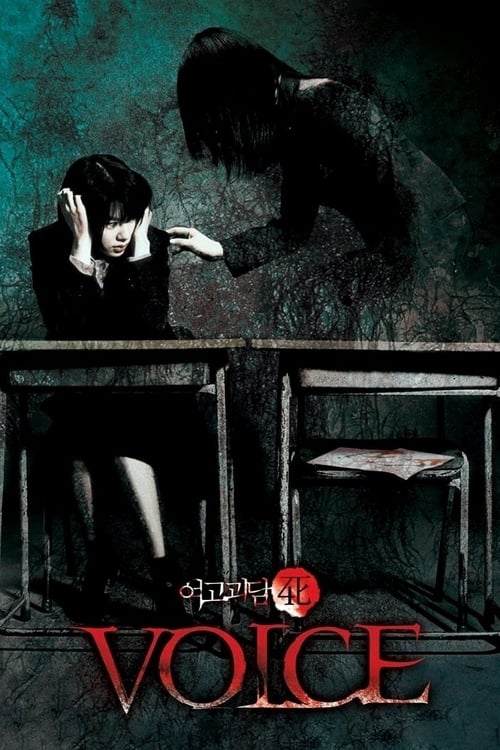
One lonely evening, in the dimly lit music room of an all-girls high school, Park Young-eon (Kim Ok-bin), the school's unrivaled top singer, practices her vocals alone after hours. Her voice echoes flawlessly through the empty space, a haunting soprano that fills the air with crystalline purity. She pauses, sensing an unnatural chill, a faint whisper of movement in the shadows. A single sheet of music lifts from the piano, fluttering unnaturally like a possessed bird, its sharp edge glinting under the fluorescent light. It slices across her throat in a swift, brutal arc, blood spraying in a vivid crimson arc as Young-eon clutches her neck, eyes wide with shock and agony. She collapses to the floor, gurgling her final, choked breath, her life extinguished in an instant by the improbable weapon.
The next morning, sunlight streams through the classroom windows as students chatter in the school hallways. Kang Sun-min (Seo Ji-hye), Young-eon's devoted best friend, sits amid the bustle, her face etched with worry. Classmates gossip casually: "Young-eon's probably off visiting her mother's grave again," one says dismissively, presuming her absence ordinary. Teachers mark her absent without alarm. But as Sun-min stares out the window, a familiar voice pierces the din--Young-eon's voice, desperate and ethereal: "Sun-min! It's me! Help me!" Sun-min freezes, whipping her head around, but no one else reacts. The voice insists, frantic: "I'm right here! I can't... I can't be seen!" Terror grips Sun-min as realization dawns; her best friend is dead, her spirit trapped, invisible and inaudible to all but her.
Young-eon's ghost hovers nearby, her school uniform pristine yet translucent, her throat unmarked in death's denial. She watches helplessly as her physical absence ripples through the school grounds. Fractured memories flicker in her mind--flashes of rivalry, a shadowed figure, the music teacher's stern gaze--but they dissolve like smoke, incomplete and unreliable. Desperate to uncover her killer, she pleads through Sun-min: "We have to find out what happened. My body... it's gone. Please, Sun-min, you're the only one who can hear me."
Sun-min, pale and trembling, navigates the school hallways in a daze, the weight of the secret crushing her. Whispers of Young-eon's disappearance buzz among peers, amplifying the eerie atmosphere. In class, Sun-min's eyes dart to the music teacher (Kim Seo-hyung), a poised woman with sharp features and an air of quiet intensity, known for her rigorous vocal training sessions. Lately, her behavior has grown erratic--fidgeting during lessons, avoiding eye contact. Sun-min confides in Young-eon's ghost during a stolen moment in an empty classroom: "It has to be her. The music teacher. She was always pushing you too hard. Remember how she favored Hyo-jung?" Young-eon's spectral form nods, rage simmering, but her flashbacks remain hazy: a jealous glare, a whispered threat, the flutter of that deadly sheet.
Tension mounts as days pass, the school grounds transforming into a spectral hunting ground. Other ghosts manifest subtly--pale figures in the corridors, their moans blending with the wind. Bodies begin appearing mysteriously, heightening the dread: a student found lifeless in a stairwell, another slumped in the bathrooms, their throats marked with unnatural slits. Panic spreads among students, police tape fluttering on school doors, but no connections are made yet. Young-eon's ghost grows restless, her voice echoing louder in Sun-min's ears during lunch broadcasts in the school auditorium, where Sun-min usually announces news. "They're all connected to me," Young-eon whispers urgently. "The music room... that's where it happened."
Seeking allies, Sun-min befriends Cho-ah (Cha Ye-ryun), the class's strange, isolated girl who lurks in corners, her wide eyes hinting at hidden knowledge. During a tense recess on the school grounds, Cho-ah approaches Sun-min unprompted, her voice soft and knowing: "I can sense her. The dead one. Young-eon, right? They only see what they want to see... and remember only what they want." Sun-min startles, pulling Cho-ah aside into a shadowed hallway. Cho-ah reveals her gift: she hears and sees ghosts, their voices a constant torment. "Ghosts trap themselves with lies," Cho-ah explains, her face illuminated by a flickering light. "Young-eon's memories aren't whole. Help her face them, or she'll drag you down too." Reluctantly, the trio forms--Sun-min as conduit, Cho-ah as medium, Young-eon's voice as guide--investigating the music room under cover of night.
In the music room, moonlight casts long shadows over scattered sheets, evoking the murder scene. Young-eon's ghost relives fragments: practicing late, hearing a rival's mocking laugh, the sheet animating with malice. "It was Hyo-jung," she insists to Sun-min and Cho-ah. "She hated my voice--ours were too similar." But Cho-ah frowns, sensing discord. "Not everything is as it seems." Confrontations escalate; Sun-min argues with the ghost during a heated classroom whisper-session: "Your memories are broken! What if you're wrong about the teacher?" Young-eon snaps back, her voice booming ethereally: "I know what I saw!" The rift strains their bond, Sun-min's fear mounting as headaches plague her from the constant spectral intrusion.
Tragedy strikes abruptly. The music teacher, under mounting suspicion--whispers of her odd affections toward students, her fixation on vocal perfection--confronts her demons alone in the school office late one night. Overwhelmed by guilt and scrutiny, she takes her own life, method shrouded in shadow but final, her body discovered slumped at her desk the next morning. Students gasp in the hallways: "She killed herself! Because of Young-eon?" Police swarm the school grounds, but Young-eon's corpse remains elusive. Then, the pivotal discovery: atop the school elevator shaft, hidden in the machinery's trunk, Young-eon's decayed body tumbles into view during maintenance, throat savagely slit, confirming her murder weeks prior. Flashbulbs pop, screams echo; Sun-min collapses in horror, Young-eon's ghost wailing beside her: "Now they know... but who did this?"
Cho-ah's warnings intensify amid the chaos. In a dimly lit classroom after hours, she gathers Sun-min and the ghost: "Hyo-jung... she died too. In that same elevator trunk, some time ago. Her body was there before yours." The revelation chills them; Hyo-jung, the quiet rival with a voice mirroring Young-eon's, vanished mysteriously. Young-eon's flashbacks sharpen painfully--intimate practice sessions turning venomous, Hyo-jung's unspoken love for the music teacher fueling jealousy. "I wished the teacher dead," Young-eon admits haltingly, her spectral form flickering. "To break her... make her quit." But doubt creeps in, Cho-ah murmuring, "Ghosts rewrite their sins."
Momentum builds relentlessly toward the truth. More hauntings plague the school: ghostly silhouettes in hallways, music sheets rustling ominously, bodies piling up--another girl found strangled in the music room, her death attributed to "accidents" but reeking of supernatural fury. Young-eon's rage manifests; she lashes at minor spirits, her voice a weapon. Sun-min and Cho-ah pore over old recordings in the music room, piecing together audio clues--dueling sopranos, Young-eon's and Hyo-jung's voices intertwining in hatred. Emotional fractures deepen: Sun-min confronts the ghost tearfully in an empty corridor: "You're changing, Young-eon. This anger... it's consuming you." Young-eon retorts bitterly: "You don't understand! I want to live again!"
The climax erupts in a torrent of revelations, triggered by Cho-ah's visions and Young-eon's shattering flashbacks. In the music room, under stormy skies rattling the windows, the full truth uncoils like a venomous serpent. Months earlier, Park Young-eon and her rival, the talented but tormented Hyo-jung, clashed in a ferocious confrontation born of vocal supremacy and twisted affections. Hyo-jung harbored a deep, unspoken love for the music teacher, pouring her soul into song for her approval. Young-eon, envious of their bond and Hyo-jung's matching timbre, seethed with malice. "I wished that teacher was dead," Young-eon confesses now, her ghost convulsing as memories flood back. "It would destroy her... force her out." The rivalry ignited in the music room one fateful night: screams echo in the flashback, the two girls grappling wildly, nails raking flesh, voices hoarse with fury. Hyo-jung seizes a music sheet, slashing Young-eon's throat in rage; Young-eon retaliates, shoving Hyo-jung into the elevator shaft, her body plummeting to a crushing death in the trunk below. Mutual slaughter--each caused the other's demise, Young-eon's body hidden atop the elevator beside her rival's. The ghost's memory had self-deceived, erasing her guilt, painting herself pure victim.
Sun-min reels, the vivid flashbacks searing her mind's eye: blood-slicked sheets, Hyo-jung's final gurgle, Young-eon's vengeful shove. Cho-ah nods solemnly: "You only remembered what you wanted." Heartbroken yet resolute, Sun-min urges the ghost toward release: "Young-eon, it's over. You killed her too. Move on... find peace. Like your mother would want." The words ignite Young-eon's desperation; her spectral form distorts, eyes blazing with unholy fire. "Peace? I want to LIVE!" she roars, her voice a thunderclap that shatters nearby windows. In a whirlwind of rage, she lunges at Cho-ah, invisible hands clamping her throat in a supernatural stranglehold. Cho-ah gasps, clawing at empty air, her eyes bulging as the ghost's fury crushes her windpipe. She collapses lifeless to the music room floor, the second direct kill by Young-eon's enraged spirit--throat bruised, body twitching in final spasms. Sun-min screams, backing away: "No! Young-eon, stop!"
But the ghost's momentum surges unchecked. With Cho-ah's corpse cooling, Young-eon turns on Sun-min, her voice infiltrating like icy fingers. "You tried to abandon me," she hisses. Sun-min fights, but exhaustion weakens her; the possession claims her in a visceral surge--Young-eon's essence floods in, eyes rolling back as Sun-min's body convulses, then stills. When "Sun-min" rises, it's Young-eon in control, a triumphant smirk twisting her best friend's face. The school's hauntings cease abruptly, ghosts receding as Young-eon's will dominates.
The film closes on a melancholy evening, the possessed Sun-min--now fully Young-eon--walking arm-in-arm with Sun-min's oblivious mother along a quiet street near the school grounds. The sun dips low, casting long shadows that mirror the unresolved tragedy. Replicating a cherished pre-death memory, Young-eon speaks in Sun-min's voice, but with her own inflections: "Mom, as soon as I'm old enough, I'll learn to drive. Just like you taught me... I mean, like you will." The mother smiles warmly, unaware of the displacement--Sun-min's spirit cast adrift, trapped eternally, while Young-eon inhabits her life, voice and all. The camera lingers on the impostor's eyes, flickering with ghostly satisfaction, as the pair fades into twilight. No redemption, no exorcism; only the chilling permanence of stolen existence, the school's whispers silenced but the bond perverted forever.





What is the ending?
In the ending of the movie "Voice," the protagonist, a young woman named Ji-won, confronts the haunting presence of her deceased friend, who has been trying to communicate with her. As she unravels the mystery surrounding her friend's death, Ji-won ultimately finds closure and peace, allowing her to move forward with her life. The film concludes with a sense of resolution, as Ji-won learns to let go of the past.
As the climax of "Voice" unfolds, Ji-won is drawn into a chilling confrontation with the spirit of her friend, who has been trying to reach out to her throughout the film. The atmosphere is thick with tension as Ji-won, now fully aware of the supernatural elements at play, ventures into the darkened corridors of her memories and the locations tied to her friend's tragic fate.
Scene by scene, the narrative progresses as follows:
The first scene of the ending begins with Ji-won standing in her dimly lit apartment, the air heavy with an unsettling silence. She clutches her phone, the device that has been a conduit for her friend's voice, echoing the last words she heard before her friend's untimely death. Ji-won's face is a mixture of fear and determination; she knows she must confront the truth.
In the next scene, Ji-won visits the site where her friend died. The location is shrouded in shadows, the atmosphere thick with an eerie stillness. As she approaches, memories flood her mind--laughter, shared secrets, and the moment of loss. Ji-won's heart races as she feels a presence, a cold breeze brushing past her, sending shivers down her spine. She calls out her friend's name, her voice trembling, desperate for a response.
Suddenly, the air shifts, and Ji-won is enveloped in a vision of her friend's last moments. The scene is hauntingly vivid; she sees her friend in distress, trapped in a cycle of fear and despair. Ji-won's eyes widen as she realizes the depth of her friend's suffering, the pain that had gone unnoticed. Tears stream down her face as she feels the weight of guilt and sorrow for not being able to save her.
In the following scene, Ji-won is transported back to her apartment, where she finds herself surrounded by the remnants of her friend's life--photos, letters, and mementos. Each item serves as a reminder of their bond and the unresolved feelings that linger. Ji-won's internal struggle is palpable; she grapples with her emotions, torn between grief and the need for closure.
As the climax reaches its peak, Ji-won hears her friend's voice clearly for the first time, calling out to her with a mix of urgency and longing. The sound reverberates through the room, filling Ji-won with a sense of both dread and hope. She realizes that her friend is not seeking revenge but rather understanding and peace. Ji-won's resolve strengthens; she must help her friend find rest.
In the final scene, Ji-won stands at the edge of a serene lake, the water reflecting the moonlight. She speaks to her friend, expressing her love and regret, acknowledging the pain they both endured. As she releases a bouquet of flowers into the water, Ji-won feels a profound sense of release. The flowers drift away, symbolizing her friend's spirit finally being set free.
The film concludes with Ji-won walking away from the lake, her posture lighter, her heart unburdened. She has faced the darkness and emerged with a renewed sense of purpose. The final shot lingers on the still water, a mirror of tranquility, suggesting that both Ji-won and her friend have found peace at last.
In summary, Ji-won's journey culminates in a powerful confrontation with her past, leading to the resolution of her friend's spirit and her own emotional healing. The fate of Ji-won is one of liberation, while her friend's spirit is finally at rest, allowing both characters to move forward from their shared tragedy.
Is there a post-credit scene?
The movie "Voice," produced in 2005, does not feature a post-credit scene. The film concludes its narrative without any additional scenes or content after the credits roll. The story wraps up with a focus on the emotional resolution of the characters, leaving the audience with a sense of closure regarding the events that transpired throughout the film.
What role does the supernatural element play in the story?
The supernatural element in 'Voice' is introduced through the mysterious phone calls that Yoon-hee receives, which are linked to her deceased mother. These calls serve as a conduit for Yoon-hee to connect with her past and seek answers about her mother's death. The supernatural aspect heightens the emotional stakes of the narrative, as it blurs the lines between reality and the afterlife, compelling Yoon-hee to confront her fears and unresolved feelings.
What is the significance of the character Yoon-hee in the story?
Yoon-hee is a pivotal character whose emotional journey drives much of the narrative. She is portrayed as a young woman grappling with her past and the trauma of losing her mother. Her internal struggles manifest in her interactions with other characters, particularly as she seeks closure and understanding about her mother's death. Yoon-hee's character embodies themes of grief and the search for identity, making her a central figure in the unfolding drama.
How does the character of the detective evolve throughout the film?
The detective in 'Voice' begins as a hardened investigator, focused solely on solving the case at hand. However, as he delves deeper into the mystery surrounding Yoon-hee's mother's death, he becomes emotionally invested in her plight. His character evolves from a detached professional to someone who empathizes with Yoon-hee's pain, ultimately leading him to confront his own vulnerabilities and the impact of unresolved trauma in his life.
How does the relationship between Yoon-hee and her mother influence the plot?
Yoon-hee's relationship with her mother is central to the plot, as it shapes her motivations and emotional state throughout the film. The bond they shared is depicted through flashbacks, illustrating a loving yet complicated dynamic. Yoon-hee's quest for understanding her mother's death propels the narrative forward, as she seeks to uncover the truth behind the circumstances of her passing. This relationship serves as the emotional core of the story, driving Yoon-hee's actions and decisions.
What is the impact of the setting on the characters' experiences?
The setting of 'Voice' plays a crucial role in shaping the characters' experiences and emotional journeys. The film is set in a hauntingly atmospheric environment that reflects the characters' inner turmoil. Locations such as the detective's office, Yoon-hee's home, and the sites connected to her mother's death are imbued with a sense of melancholy and mystery. This backdrop enhances the tension and emotional weight of the story, influencing how characters interact with one another and their surroundings.
Is this family friendly?
The movie "Voice," produced in 2005, contains several elements that may be considered objectionable or upsetting for children or sensitive viewers. Here are some aspects to be aware of:
-
Themes of Grief and Loss: The film explores deep emotional themes surrounding death and the impact of loss on individuals and families, which may be distressing for younger audiences.
-
Supernatural Elements: The presence of ghosts and the exploration of the afterlife can be unsettling for some viewers, particularly children who may find these concepts frightening.
-
Intense Emotional Scenes: There are moments of heightened emotional tension, including characters experiencing fear, sadness, and despair, which may be overwhelming for sensitive viewers.
-
Mature Discussions: The film includes discussions about mortality and the consequences of unresolved issues, which may not be suitable for younger children.
-
Visual Imagery: Some scenes may contain visual elements that are eerie or unsettling, contributing to a tense atmosphere that could be frightening.
Overall, while "Voice" has a compelling narrative, its emotional depth and supernatural themes may not be appropriate for all audiences, particularly younger children or those sensitive to such topics.









