















Popular
What is the significance of Gooby's character in the story?
How does Wilby's relationship with Gooby evolve throughout the film?
What challenges does Wilby face that Gooby helps him overcome?
What role do Wilby's parents play in the story, and how do they affect his relationship with Gooby?
How does the film portray the theme of imagination through Wilby and Gooby's adventures?
Should I watch it?
Ask Your Own Question

What is the plot?
Willy Dandridge is eleven years old, deeply anxious, and convinced that the world outside his home is full of monsters and alien creatures waiting to get him. His fear is not abstract to him; it is immediate, physical, and so overwhelming that his house feels like the only thing standing between him and annihilation. Then his parents force a move to a new home, and the new place only makes everything worse. The unfamiliar rooms, the changed routines, the uncertainty of a new school, and the absence of the security he associates with his old house all feed the panic already simmering inside him.
The move itself lands like a small catastrophe. Willy's mother tries to handle the transition practically, but Willy hears only the message that everything safe is being taken away from him. His father, David Dandridge, is already emotionally distant and often absent because of work, so the move also feels like abandonment. Willy is not only being displaced from his home; he is being displaced from the fragile sense of control he has built around it. The new house is supposed to be their future, but to Willy it feels like a trap.
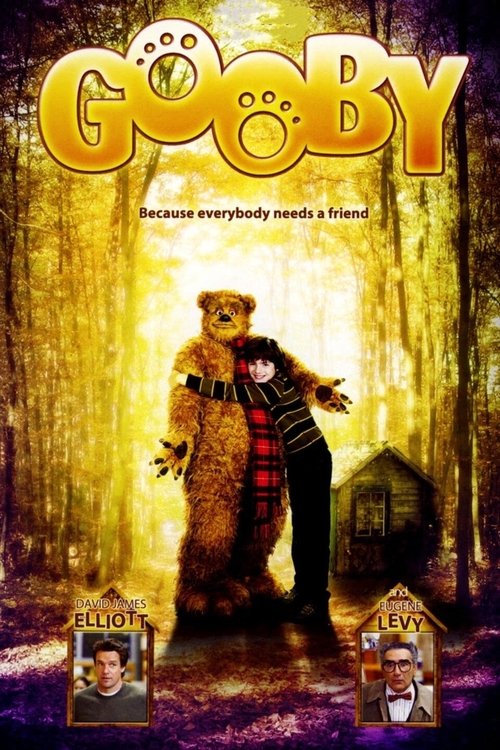
In the middle of this fear, a miracle arrives in the form of his childhood teddy bear. Gooby, once a stuffed toy, appears in the new house as a tall, furry, orange, talking creature. He is enormous, awkward, and strange, with the energy of a nervous child stuffed into the body of a monster-sized guardian. Gooby is supposed to be a protector, the wish-fulfillment answer to Willy's terror, but his own skittishness makes him more chaotic than reassuring. Still, to Willy, he is a friend, and maybe more importantly, he is a witness--someone who understands that the world feels dangerous.
Willy quickly realizes he has to keep Gooby hidden from his parents. That decision becomes the engine of the early story. Gooby cannot simply fit into the household like a normal pet or family member; he is too large, too loud, too hungry, and too unpredictable. He sneaks around the house, lurking in back rooms, slipping in and out of danger, and constantly threatening to be discovered. The secrecy adds pressure to Willy's already strained life. He is no longer just frightened of monsters in the dark; now he is also frightened of his own family finding out that a giant living teddy bear is inside their home.
The house becomes a place of comic disorder. Gooby raids the kitchen for cookies, turning Willy's secret into crumbs, noise, and frantic cover-ups. He wanders through the garage, rummaging for parts and materials that can help Willy build the fantasy racer Willy dreams of assembling. Those scenes matter because they reveal the emotional center of the story: Willy is trying to build something imaginative and safe, while Gooby, in his bumbling way, tries to support him. The garage becomes a space where Willy's hopes and Gooby's awkward devotion intersect, and the result is usually chaos. Yet the chaos is warm, and beneath the slapstick there is always a desperate tenderness.
At school, the world becomes crueler. Willy is already vulnerable, and the new environment leaves him exposed to bullies and humiliation. The school setting strips away the shelter he thinks he needs. His fear starts to affect his grades and his behavior, and the adults around him begin to notice that something is wrong. He is not adjusting. He is fraying.
The arrival of Mr. Nerdlinger only complicates matters. Willy's previous teacher has gone on maternity leave, and Mr. Nerdlinger enters the story as a vain, fame-hungry classroom authority who immediately stands out. Eugene Levy's character is not simply a teacher; he is a man who wants attention, recognition, and proof that something extraordinary is happening around him. When he catches sight of Gooby, his interest turns predatory. He becomes obsessed with photographing the creature, seeing not a frightened child's companion but a potential ticket to fame and money. That revelation changes the atmosphere around him instantly. He is not curious in a harmless way. He is opportunistic.
Willy's attempts to hide Gooby grow more frantic as Gooby's presence keeps leaking into public life. The bear cannot stay concealed forever. He appears where he should not, and every near-discovery raises the stakes. The tension builds through embarrassment as much as fear. Willy is terrified not only that Gooby will be taken away, but that everyone will think he is crazy. When Gooby shows up at school, Willy completely loses control. The scene becomes a public disaster, and the fallout is immediate: Willy and three classmates end up with two weeks of after-school detention. The punishment is less important than the humiliation. Willy's secret has nearly become public truth, and he is left to absorb the social shame.
Gooby's behavior keeps pushing the story toward bigger confrontations. He is not malicious, but he is impulsive, hungry, and often childlike in the worst possible moments. He wants to help Willy, but his help frequently creates trouble. He follows Willy into places where he is most likely to be exposed, and every outing becomes a test of whether he can remain hidden. The danger is not lethal, but it feels enormous to Willy, because exposure means losing the one magical thing that seems to care about him.
Underneath the fantasy-comedy surface, the film's deepest conflict is the one between Willy and his father, David Dandridge. David is not a villain, but he is neglectful in the way work-obsessed parents can become neglectful: not by cruelty, but by absence. Willy experiences that absence as a wound. He is desperate for attention, for protection, and for proof that his father sees him. David, meanwhile, has been living as if childhood can wait. The story slowly reveals that he has missed crucial parts of Willy's emotional life because he has been too busy with work and too detached from the growing fear in his son.
That emotional neglect is the real monster in the film, even if the story dresses it in the language of aliens and creatures. Willy's paranoia is not just a childish fantasy; it is magnified by loneliness. The more isolated he feels, the more convinced he becomes that danger is everywhere. Gooby exists because Willy needs a shield against fear, but Gooby also exists because Willy needs someone to see him. That is why the story's magical premise matters: the teddy bear has become the form of the comfort Willy has been missing.
As the narrative advances, Willy begins to change in small but visible ways. Through Gooby's bizarre friendship, he starts to gain confidence. He is still frightened, but he is no longer wholly passive. He begins to move through the world with a little more courage, even if that courage is clumsy and uncertain. The film uses their relationship to show how a child can grow through companionship, even when that companionship is ridiculous on the surface. Gooby is often a disaster, but he is a disaster who cares.
The school pressure and the home pressure continue to grind against Willy. His grades drop, the adults around him become more worried, and the household becomes increasingly aware that something is wrong. The lie of normalcy cannot hold forever. Mr. Nerdlinger's fixation on Gooby remains a looming threat, because every time he sees evidence of the creature, the possibility of exposure grows larger. Willy has to manage not only his own fear but also the danger posed by an adult who wants to exploit what he sees.
Then Gooby disappears for a time, and the emotional direction of the movie changes. When he returns one night, he no longer simply causes trouble. He leads Willy to a surprise location: the childhood home of David Dandridge. The trip becomes the film's most important turn. Willy's parents notice he is missing and call the police, creating a real crisis out of what had been mostly social and emotional chaos. Gooby, meanwhile, is guiding Willy toward a place that matters far more than Willy understands at first. The hidden destination is not random; it is David's past, a physical reminder of the life and emotional history that shaped him.
Inside the old house, Willy's fear returns with full force. The place feels eerie, abandoned, and charged with the unknown. As Willy explores, he becomes so frightened that he falls backward through the floor and ends up dangling by a metal pipe far below. Gooby is unable to pull him up. The visual is stark and frightening: the child suspended in danger, the giant teddy bear helpless above him, the old house threatening to swallow him whole. For the first time, the story's stakes feel physically dramatic rather than merely emotional.
Gooby then uses Willy's cellphone to call David. That call is one of the film's key emotional reversals. The father who has been absent is finally forced into motion by actual danger. David rushes in to rescue Willy, and the scene becomes the beginning of reconciliation. The rescue is not just about getting Willy out of the hole; it is about forcing David to confront how far he has drifted from his son's life. Willy's peril makes the cost of neglect impossible to ignore.
After the rescue, the story shifts into the revelation phase. Gooby speaks to David directly and reminds him of his own childhood, specifically that his father never spent enough time with him. This is the crucial twist beneath the fantasy: David's neglect is not accidental; it is inherited. He is replaying the emotional absence he once suffered. The story does not excuse him, but it does explain him. He is a man who became so absorbed in work and adult life that he repeated the failure that hurt him as a child. The revelation forces him to see Willy not as a child who will always be there later, but as a child who is growing up now.
That realization changes the family. David and Willy's mother decide to stop working so hard and focus more on their son. The emotional center of the movie completes its turn here. The real threat was never the aliens Willy feared; it was the emotional distance that made him feel unprotected in the first place. With the father-son rift finally acknowledged, the story's tension begins to resolve.
The final stretch still includes one last external conflict. While the family is shopping for materials to build Willy a playhouse, Gooby wanders off, and Mr. Nerdlinger sees an opportunity. He tries again to get pictures of Gooby, hoping to capture proof and presumably profit from it. This confrontation is brief but revealing. Nerdlinger remains exactly what he has been all along: a man who sees wonder as content, not as something to protect. The family, now more united, foils his attempt. Willy notices Gooby has gone missing, and the threat of exposure returns for one last moment, but the adults around Willy are now on the same side.
By this point, Willy has changed enough that Gooby's purpose is nearly complete. Gooby explains that now that Willy is happy, less alone, and no longer overwhelmed by his imaginary terrors, it is time for him to move on and help another child. This is the film's central emotional revelation: Gooby was never meant to stay forever. He was a temporary guardian, a living embodiment of comfort that arrives when a child needs it most and leaves when that child has grown enough to carry the comfort forward internally. The moment is bittersweet because it confirms the bond was real while also proving it must end.
Gooby transforms back into a teddy bear. The big orange companion collapses into the small toy form he began with, and the magical world of the movie folds back into something ordinary. The transformation is not presented as a defeat, but as a completion. His job is done. Willy no longer needs the fantasy guardian in the same way because the real relationships in his life have finally begun to heal.
In the final scene, Willy gives Gooby to a little girl whose parents are ignoring her. The gesture is simple, but it lands with enormous emotional weight. Willy passes on the protector who once saved him, extending the cycle of comfort to another lonely child. It is the film's last statement about growth: love and reassurance are not possessions to keep forever. They are gifts to receive, understand, and eventually share. Willy has moved from fear to trust, from dependence to empathy, and from isolation to connection. The story ends not with monsters defeated, but with a boy who no longer believes that safety only exists behind a locked door.
More Movies Like This
Browse All Movies →





What is the ending?
In the ending of "Gooby," the main character, Will, learns to embrace his fears and the importance of friendship. He ultimately says goodbye to Gooby, the imaginary creature who has helped him navigate his challenges. Will's relationship with his family improves, and he gains confidence as he faces the world on his own.
As the film approaches its conclusion, we find Will grappling with the reality of growing up and the need to let go of his childhood fears. The final scenes unfold in a series of poignant moments that encapsulate his journey.
The first scene shows Will in his bedroom, where he has been spending time with Gooby, the large, furry creature who has been his companion throughout the film. Gooby, who has been a source of comfort and courage for Will, senses that the time has come for him to leave. He understands that Will is ready to face the world without him. The atmosphere is heavy with emotion as Will realizes that he must say goodbye to his friend.
In the next scene, Gooby and Will share a heartfelt conversation. Gooby reassures Will that he will always be a part of him, even if he is not physically present. Will expresses his gratitude for Gooby's support, acknowledging how much he has helped him confront his fears and insecurities. This moment is filled with warmth and tenderness, highlighting the bond they have formed.
As the farewell unfolds, Gooby begins to fade away, symbolizing the transition from childhood to adolescence. Will watches with a mix of sadness and acceptance, understanding that this is a necessary step in his growth. The scene is visually striking, with soft lighting and a gentle score that underscores the emotional weight of the moment.
Following this poignant goodbye, the film shifts to Will's interactions with his family. He returns to his parents, who have been concerned about his well-being throughout the story. Will's newfound confidence is evident as he engages with them more openly. He shares his experiences and expresses his feelings, which leads to a deeper understanding between him and his parents. This reconciliation is a crucial turning point, showcasing the importance of communication and support within a family.
In the final scenes, we see Will stepping outside into the world, a place that once felt daunting to him. He walks with a sense of purpose, ready to face new challenges. The camera captures his determined expression, symbolizing his growth and the lessons he has learned from his time with Gooby.
The film concludes with a sense of hope and possibility. Will's journey has transformed him, and he is now equipped to navigate life with confidence. The fate of Gooby, while bittersweet, serves as a reminder of the power of friendship and the importance of letting go when the time is right. Will's parents, now more connected to him, stand together, proud of their son's progress and ready to support him as he embarks on this new chapter of his life.
In summary, the ending of "Gooby" encapsulates the themes of growth, friendship, and the bittersweet nature of growing up, leaving the audience with a sense of closure and optimism for Will's future.
Is there a post-credit scene?
In the movie "Gooby," produced in 2009, there is no post-credit scene. The film concludes its narrative without any additional scenes or content after the credits roll. The story wraps up with the resolution of the main plot, focusing on the relationship between the young boy, Willy, and his imaginary friend, Gooby, as they navigate challenges and ultimately find a sense of belonging and friendship. The absence of a post-credit scene allows the audience to reflect on the themes of imagination and childhood innocence as the film comes to a close.
What is the significance of Gooby's character in the story?
Gooby is a large, furry creature who serves as the imaginary friend of the protagonist, a young boy named Wilby. His character represents comfort and companionship, helping Wilby navigate his fears and insecurities, particularly regarding his new home and school environment.
How does Wilby's relationship with Gooby evolve throughout the film?
Initially, Wilby is hesitant and unsure about Gooby's presence, but as the story progresses, he grows to rely on Gooby for support. Their bond deepens as Gooby helps Wilby confront challenges, ultimately leading to Wilby embracing his own courage and independence.
What challenges does Wilby face that Gooby helps him overcome?
Wilby faces several challenges, including bullying at school, adjusting to a new home, and dealing with his parents' expectations. Gooby assists him by providing encouragement, helping him stand up to bullies, and teaching him to believe in himself.
What role do Wilby's parents play in the story, and how do they affect his relationship with Gooby?
Wilby's parents are depicted as caring but somewhat oblivious to his struggles. Their focus on adult concerns often leaves Wilby feeling isolated. This dynamic creates a contrast between the support he receives from Gooby and the lack of understanding from his parents, highlighting Wilby's need for a friend who truly understands him.
How does the film portray the theme of imagination through Wilby and Gooby's adventures?
The film showcases Wilby's imagination vividly through his adventures with Gooby, where they embark on whimsical escapades that reflect Wilby's inner thoughts and feelings. These imaginative sequences serve as a means for Wilby to process his emotions and confront real-life issues, illustrating the power of creativity in coping with life's challenges.
Is this family friendly?
"Gooby," produced in 2009, is generally considered a family-friendly film, aimed primarily at children. However, there are a few aspects that might be potentially objectionable or upsetting for some viewers, particularly sensitive children.
-
Themes of Fear and Anxiety: The protagonist, a young boy named Willy, experiences feelings of fear and anxiety, particularly regarding his new home and the changes in his life. These emotions are depicted in a way that might resonate with children who have similar fears.
-
Imaginary Friend Dynamics: The character of Gooby, an oversized, furry creature, is Willy's imaginary friend. While Gooby is meant to be comforting, some scenes may depict moments of confusion or misunderstanding that could be unsettling for younger viewers.
-
Conflict and Tension: There are scenes that involve conflict, such as Willy's struggles with bullies and his feelings of isolation. These moments may evoke feelings of sadness or discomfort.
-
Mild Scares: Certain scenes may include mild scares or surprises, particularly when Gooby's presence is revealed or when he interacts with the real world in unexpected ways.
-
Emotional Moments: The film explores themes of friendship, acceptance, and growing up, which may lead to emotional scenes that could be poignant or upsetting for sensitive viewers.
Overall, while "Gooby" is designed to be a lighthearted adventure, these elements may require parental guidance for younger audiences.








