







What is the plot?

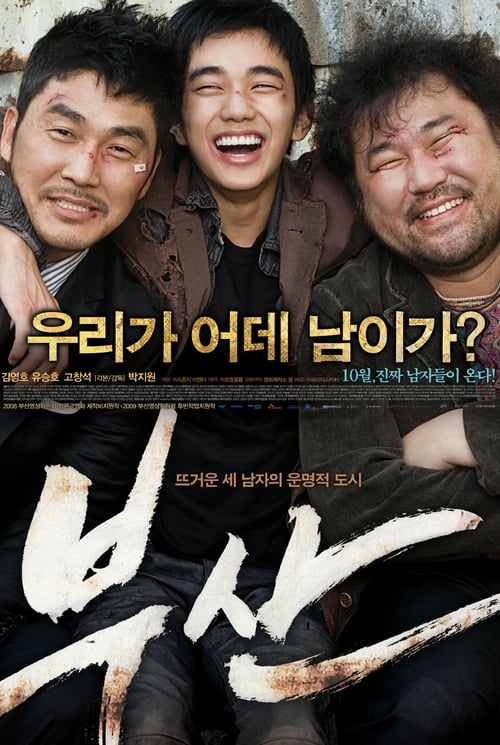
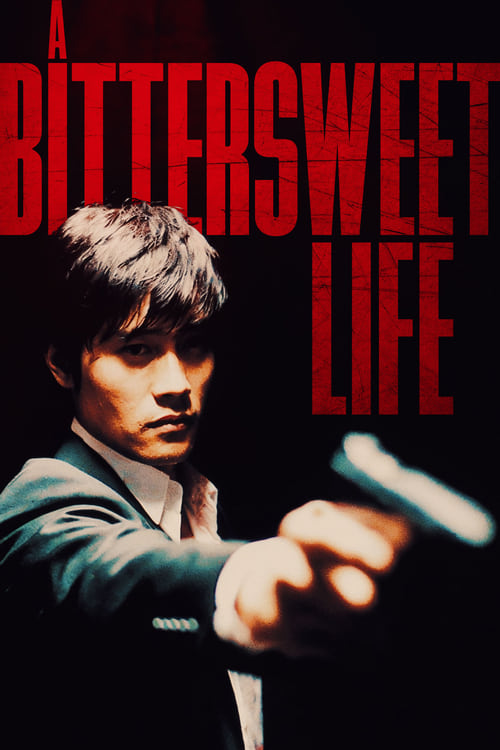
Kang-su drifts through Busan in a haze of alcohol, cards, debt, and shame, a man who has long since stopped pretending he is anything other than a small-time thug with a ruined life. He spends his days dodging loan sharks and his nights drinking himself numb, all while taking his frustrations out on his teenage son, Jong-chul, whom he berates, hits, and neglects. Their apartment and the streets around it feel airless and hostile, filled with the grim routine of a family that has forgotten how to be one. Kang-su has been lying to Jong-chul for eighteen years, and the lie is not a small one: he is not the boy's biological father. That truth sits buried beneath years of resentment and failed responsibility, and for most of the film it remains the unseen engine driving every relationship in the story.

Jong-chul is introduced as angry, rebellious, and already hardened by the world around him. He is not a saintly victim but a boy who has learned hostility as a language because no gentler one has been offered to him. The emotional distance between father and son is immediate and painful. Kang-su treats him like a burden, and Jong-chul returns the contempt with the bitter indifference of a teenager who has long stopped expecting care. Their exchanges are sharp and ugly, charged with the weight of years of disappointment. Even before the central crisis begins, the film makes clear that this is not a family on the edge of breaking; it is already broken.

That fragile, corrosive equilibrium shatters when Jong-chul is diagnosed with kidney cancer. The revelation hits like a physical blow. The illness is not presented as melodrama but as a devastating fact that reorders the entire story. Suddenly the neglected son is no longer just a source of anger and guilt; he becomes a child facing mortality, and Kang-su is forced into the one role he has most spectacularly failed to perform: father. The diagnosis pushes him out of his drunken stupor and into motion, and for the first time his desperation is not for money, alcohol, or survival, but for his son's life. The film's emotional register changes here. The story that began in grime and self-destruction becomes a race against time.

Kang-su tries, in his clumsy and damaged way, to step into the role of caretaker. He begins scrambling for a solution, moving between hospitals, debts, and dead ends, the city seeming to press in on him from every side. But the brutal reality is that he does not have the resources or the moral authority to solve this alone. The cancer is too serious, the money too scarce, and the history between father and son too poisoned. In the face of this crisis, Kang-su's buried secret rises to the surface as both a burden and a possibility: if he is not Jong-chul's real father, then perhaps the boy's biological father can help. That possibility sends Kang-su into the part of the story that gives the film its cruelest twist.

The real father is Tae-suk, a pimp and career criminal who abandoned any claim to domestic life in favor of power and success. Tae-suk exists in a different moral universe from Kang-su, but not a better one. He is not a noble lost parent waiting to be rediscovered; he is another damaged man who has built a life around selfishness, exploitation, and emotional absence. Kang-su has kept his existence from Jong-chul for eighteen years, and now he must cross into Tae-suk's world and ask for help. The irony is devastating: the man who raised the boy badly must beg the man who fathered him biologically but never cared for him at all. The confrontation is not just about blood; it is about the emptiness of blood when it is detached from duty.

When Kang-su finally tracks Tae-suk down, the encounter is tense and humiliating. He goes not as an equal but as a desperate supplicant, a father begging another father to do what he himself cannot. Tae-suk listens without warmth and refuses to help. The refusal is one of the film's defining blows. There is no sentimental recognition, no awakening of long-dormant conscience, no clean restoration of family bonds. Tae-suk's response makes it plain that biology has not made him less monstrous than Kang-su, only more absent. The hope that Jong-chul might be saved by the intervention of his "real" father collapses instantly. That refusal also sharpens the film's central moral idea: fatherhood is not inherited in blood but proven in action, and both men have failed that test in different ways.

From there, Kang-su's struggle becomes more frantic and more heartbreaking. He remains an alcoholic gambler and a man perpetually behind in life, but the cancer forces him to make choices that are suddenly life and death rather than merely ruinous. He battles his own habits, his own shame, and the violent street world that has always defined him. Loan sharks continue circling, debt continues tightening, and every attempt to help Jong-chul is dragged through the mud of Kang-su's self-destruction. The film's tension comes from this collision between the urgent, intimate need to save a child and the crumbling criminal life of a father who barely knows how to function. Each time Kang-su stumbles toward responsibility, his past yanks him backward.

The story also keeps the emotional pressure on Jong-chul, who is forced to absorb not only the terror of illness but the instability of the adults around him. His cancer diagnosis turns him into the center of a crisis he never asked for, and the adults in his life only partially understand how much is at stake. Kang-su's behavior toward him is still uneven; even in trying to help, Kang-su carries the habits of a man who has never learned tenderness. The film's power comes from the bitter contrast between Kang-su's sincere fear of losing his son and his inability to express that fear in any way other than clumsy, damaged action. There are moments where he seems almost transformed, and moments where the old cruelty resurfaces immediately. That instability makes every scene between them emotionally uncertain.

As the pressure mounts, the long-hidden truth about paternity becomes impossible to contain. The film's central revelation--that Kang-su is not Jong-chul's biological father--reframes every earlier argument, insult, and abandonment. What once looked like ordinary paternal failure now carries the added agony of a man raising another man's son while knowing the truth all along. Yet the revelation does not absolve him; if anything, it deepens the tragedy, because his secrecy has shaped Jong-chul's identity and because he has spent eighteen years choosing silence over honesty. Tae-suk's existence adds another layer of betrayal. Jong-chul has two fathers in the most literal sense and has been failed by both: one through daily neglect, the other through complete absence.

The confrontations between Kang-su and Tae-suk are the film's most loaded scenes. Kang-su's need is genuine, but it is tangled with shame, anger, and the humiliation of asking for help from a man he has every reason to despise. Tae-suk's refusal is cold and final, exposing the emptiness at the heart of his supposed authority. The two men stand as damaged mirrors of one another: one a drunken street thug who has at least remained in the child's life, the other a pimp who escaped domestic responsibility entirely. Neither is an ideal parent. The film's bleakness lies in how thoroughly it refuses easy moral sorting. The biological father is not redeemed by blood, and the adoptive father is not redeemed by love because his love has been so badly mangled by years of abuse and failure.

All of this moves toward a climax shaped less by action than by emotional exhaustion. Kang-su's attempt to save Jong-chul becomes a desperate, almost humiliating assertion of love. He is not heroic in the conventional sense. He does not suddenly become clean, stable, or wise. He remains a flawed, often repellent man, but the crisis strips him down to one uncontestable fact: he does care whether his son lives. That care is the one thing the film allows him to claim, even as it refuses to excuse everything else. The emotional tension comes from whether that love, so long obscured by violence and neglect, can matter enough to make a difference.

The available plot information does not confirm any deaths, and none are explicitly described in the material at hand, so the film's tragedy rests not on a body count but on the threat of loss and the wreckage of failed responsibility. The real catastrophe is not a death shown on screen but the possibility of Jong-chul's death hanging over every scene. That uncertainty gives the story its urgency. Kang-su is forced to confront not only the illness but the possibility that he has already lost his son in all the ways that matter emotionally, even if he can still physically save him.

By the end, the film's resolution remains bleak and morally unsettled rather than comforting. Kang-su's frantic effort to secure help from Tae-suk fails to produce a clean rescue, and Tae-suk's refusal leaves the burden squarely on the man who has spent years escaping burdens. The ending does not offer a sentimental miracle or a neat family reconciliation. Instead, it leaves the audience with the hard truth that a father can spend a lifetime failing his child and still, in a final desperate crisis, be the one person who truly fights for him. The final dramatic movement is Kang-su's attempt to become a real father too late, under the shadow of a secret that has defined their lives, and under the crushing knowledge that the man who should have been there all along has chosen not to be.

What remains at the end is the image of a damaged man driven by fear, guilt, and love into a kind of belated responsibility. The story closes with the bleak recognition that fatherhood in this world is not about who sired the child, but who stays, who suffers, and who fights when everything begins to collapse. Kang-su has lived as a failure for eighteen years, but when Jong-chul's life is threatened, he finally moves like a father should. Tae-suk, by contrast, remains the father in name only, a man whose blood means nothing against his refusal to act. The film ends on that bitter moral divide, with no easy redemption, only the painful endurance of a bond that has been damaged almost beyond repair and the desperate hope that love, even late and imperfect, might still count for something.

What is the ending?

In the ending of "City of Fathers," the main character, a father named Kadir, confronts the reality of his strained relationship with his son, who is caught in a cycle of violence and despair. The film concludes with Kadir making a pivotal decision that reflects his desire to break this cycle and seek a better future for his son.

As the film approaches its climax, Kadir finds himself in a tense confrontation with his son, who is deeply entrenched in a life of crime and rebellion. The emotional weight of their relationship hangs heavily in the air, filled with unspoken words and unresolved conflicts. Kadir, feeling the urgency of the moment, attempts to reach out to his son, expressing his fears and hopes for him.

In a pivotal scene, Kadir takes a stand against the influences that have led his son astray. He confronts the harsh realities of their environment, acknowledging the systemic issues that have contributed to their struggles. This moment is charged with emotion, as Kadir's desperation to protect his son clashes with the harsh truths of their lives.

As the confrontation escalates, Kadir's son reacts with anger and defiance, embodying the pain and confusion of youth caught in a tumultuous world. The tension reaches a breaking point, and Kadir, in a moment of clarity, makes a choice that signifies his commitment to change. He decides to leave behind the life that has defined them, symbolizing a break from the cycle of violence and despair that has plagued their family.

The film concludes with Kadir and his son standing at a crossroads, both physically and metaphorically. Kadir's decision to step away from the life they have known offers a glimmer of hope for a new beginning. The final scenes depict the two of them walking away from their past, suggesting the possibility of healing and redemption.

In the closing moments, the camera lingers on their figures as they move forward, leaving behind the shadows of their former lives. The film ends on a note of uncertainty but also of potential, emphasizing the importance of choice and the possibility of a brighter future.

Is there a post-credit scene?

The movie "City of Fathers," produced in 2009, does not contain a post-credit scene. The film concludes its narrative without any additional scenes or content after the credits roll. The story wraps up with a focus on the emotional journeys of the characters, particularly the themes of fatherhood, loss, and reconciliation, leaving the audience with a sense of closure regarding the characters' arcs.

What role does the setting play in the development of the story?

The setting of 'City of Fathers' is integral to the narrative, as it reflects the socio-economic struggles faced by the characters. The urban landscape is depicted with gritty realism, showcasing the challenges of life in a city marked by hardship. This backdrop serves to amplify the characters' emotional states, as they navigate their personal dilemmas against the harsh realities of their environment.

What is the significance of the character of the father in the film?

The character of the father in 'City of Fathers' serves as a central figure representing the struggles and complexities of parenthood. His journey reflects the emotional turmoil of trying to connect with his children while grappling with his own past and failures. His motivations are deeply rooted in a desire for redemption and a longing to provide a better life for his family.

How does the relationship between the father and his children evolve throughout the film?

Throughout 'City of Fathers', the relationship between the father and his children is fraught with tension and misunderstanding. Initially, there is a palpable distance, as the children harbor resentment towards their father's absence and perceived failures. As the story progresses, moments of vulnerability and shared experiences begin to bridge this gap, leading to a gradual reconciliation and deeper emotional connection.

What are the key turning points in the father's journey throughout the film?

Key turning points in the father's journey include moments of confrontation with his past, such as revisiting old haunts that trigger memories of his failures. Another significant moment occurs when he attempts to reconnect with his children during a family crisis, which forces him to confront his own shortcomings. These turning points are pivotal in shaping his character arc and ultimately lead to his quest for redemption.

How do the supporting characters influence the father's journey in the film?

The supporting characters in 'City of Fathers' play crucial roles in shaping the father's journey. Friends and family members provide contrasting perspectives on fatherhood and responsibility, often challenging the father's views and decisions. Their interactions serve as catalysts for his growth, pushing him to reflect on his choices and the impact they have on his children, ultimately guiding him towards a path of self-discovery and reconciliation.

Is this family friendly?

"City of Fathers," produced in 2009, is a film that delves into complex themes of family, loss, and the struggles of fatherhood. While it offers a poignant narrative, there are several elements that may be considered objectionable or upsetting for children or sensitive viewers.

  1. Themes of Abandonment: The film explores the emotional turmoil of fathers who are absent from their children's lives, which may resonate deeply and evoke feelings of sadness or discomfort.

  2. Depictions of Grief: Characters experience profound loss, leading to scenes that portray mourning and emotional distress, which could be heavy for younger audiences.

  3. Conflict and Tension: There are moments of conflict between characters that may include raised voices or intense emotional exchanges, potentially creating a tense atmosphere.

  4. Substance Use: The film may include references to alcohol or drug use, which could be concerning for younger viewers or those sensitive to such topics.

  5. Difficult Family Dynamics: The portrayal of strained relationships and the struggles of parenting can be emotionally charged, possibly leading to discomfort for some viewers.

Overall, while "City of Fathers" offers a rich narrative, its exploration of heavy themes and emotional struggles may not be suitable for all children or sensitive individuals.