



















Popular
What role does Abby's pregnancy play in the story of The Seventh Sign?
Who is David and what is his significance in Abby's life?
What are the seven signs mentioned in the film, and how do they manifest?
What is the significance of the character of the stranger, and how does he influence the plot?
How does Abby's relationship with her faith evolve throughout the film?
Should I watch it?
Ask Your Own Question

What is the plot?
Sorry, we aren't able to watch and write up a full detailed plot yet. Check back in a few days.









What is the ending?
In the ending of "The Seventh Sign," Abby, the protagonist, discovers that she is pregnant with the child who holds the key to humanity's survival. As the final signs of the apocalypse unfold, she must make a choice that will determine the fate of the world. Ultimately, she sacrifices herself to save her unborn child, leading to a miraculous event that halts the impending doom.
Now, let's delve into the ending in a more detailed narrative fashion:
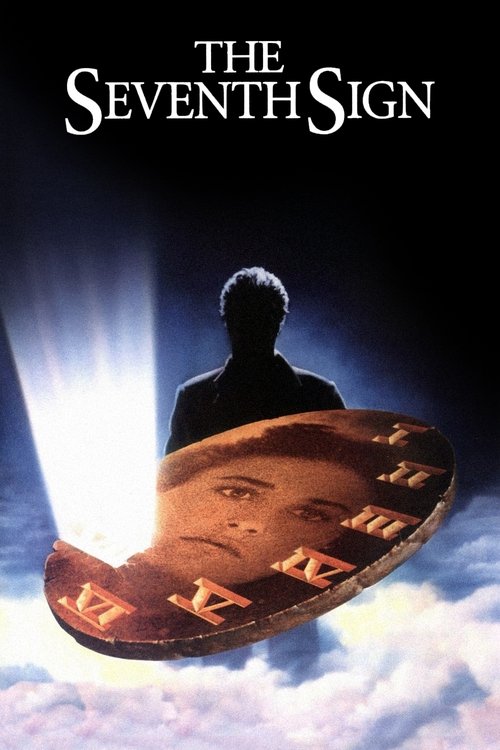
As the film approaches its climax, Abby, played by Demi Moore, is in a state of turmoil. The world around her is unraveling, with natural disasters and chaos marking the signs of the apocalypse. She is deeply connected to the events unfolding, especially as she learns more about the mysterious stranger, David, who has appeared in her life. David, portrayed by Jürgen Prochnow, is revealed to be a pivotal figure in the unfolding prophecy.
In the penultimate scene, Abby is at home, grappling with the weight of her impending motherhood and the knowledge that her child is somehow central to the fate of humanity. The atmosphere is tense, filled with a sense of urgency and dread. The sky darkens ominously, and the earth trembles, reflecting the turmoil within her. She feels the pressure of the world's fate resting on her shoulders, and her emotional state is a mix of fear, determination, and hope.
As the final sign approaches, Abby confronts David, who has been guiding her through the signs. He reveals that the seventh sign is a choice that she must make. The world is on the brink of destruction, and her unborn child is the key to either salvation or doom. Abby realizes that she must choose to protect her child at all costs, even if it means sacrificing herself.
In a heart-wrenching moment, Abby goes into labor amidst the chaos. The scene is filled with urgency as she is rushed to the hospital, where the atmosphere is chaotic, reflecting the world outside. The hospital is filled with people in distress, mirroring the apocalyptic signs that have been unfolding. Abby's internal struggle is palpable; she is torn between her instinct to survive and her understanding of the greater good.
As she gives birth, the moment is both miraculous and terrifying. The labor is intense, and Abby is filled with a fierce determination to bring her child into the world. In a moment of clarity, she understands that her child represents hope for humanity. As she holds her newborn, the skies begin to clear, and the signs of destruction start to fade. The world is given a second chance.
In the final moments, Abby's sacrifice is complete. She has chosen to protect her child, and in doing so, she has altered the course of fate. The film closes with a sense of renewal and hope, as the chaos subsides and the world begins to heal. Abby's fate is intertwined with her child's; she has become a symbol of maternal sacrifice and the enduring strength of love.
David, who has been a guiding force throughout the film, watches as the world transforms. His role as a harbinger of the signs concludes with the realization that humanity has been given a reprieve. The film ends on a note of ambiguity, leaving the audience to ponder the implications of Abby's choice and the future of humanity.
In summary, the ending of "The Seventh Sign" encapsulates themes of sacrifice, hope, and the profound connection between a mother and her child, ultimately leading to a moment of redemption for both Abby and the world.
Is there a post-credit scene?
The Seventh Sign does not have a post-credit scene. The film concludes with its final moments, focusing on the resolution of the central conflict and the fate of the main characters, particularly Abby and her family. After the climactic events surrounding the apocalyptic themes and the revelation of the seventh sign, the film ends without any additional scenes or content during or after the credits. The narrative wraps up with a sense of closure, emphasizing the themes of sacrifice, hope, and the cyclical nature of life.
What role does Abby's pregnancy play in the story of The Seventh Sign?
Abby's pregnancy is central to the plot, as it symbolizes hope and the potential for new life amidst the apocalyptic events unfolding around her. As the signs of the apocalypse begin to manifest, Abby's condition becomes increasingly precarious, reflecting her emotional turmoil and the stakes involved in the battle between good and evil. Her pregnancy is tied to the prophecy that she must fulfill, making her a pivotal character in the unfolding drama.
Who is David and what is his significance in Abby's life?
David is Abby's husband, a supportive yet troubled character who struggles with his own demons, including a past that haunts him. His relationship with Abby is strained due to the pressures of impending parenthood and the supernatural events surrounding them. David's character represents the human struggle against fate, and his journey is intertwined with Abby's as they confront the challenges posed by the signs of the apocalypse.
What are the seven signs mentioned in the film, and how do they manifest?
The seven signs in The Seventh Sign are manifestations of impending doom, each representing a biblical prophecy. They include events such as the death of the firstborn, the sun turning dark, and the seas turning to blood. Each sign escalates the tension and urgency in the film, as Abby and David witness these occurrences, leading them to realize the gravity of their situation and Abby's crucial role in averting disaster.
What is the significance of the character of the stranger, and how does he influence the plot?
The stranger, played by Jürgen Prochnow, is a mysterious figure who appears in Abby's life, embodying both a harbinger of doom and a potential savior. His enigmatic presence raises questions about fate and free will, as he guides Abby towards her destiny. His interactions with her reveal deeper truths about the nature of the apocalypse and the choices she must make, ultimately influencing her decisions and the outcome of the story.
How does Abby's relationship with her faith evolve throughout the film?
Abby's relationship with her faith is initially one of doubt and struggle, as she grapples with the reality of the signs and her impending motherhood. As the events unfold, her faith is tested, leading her to confront her beliefs about good and evil. This evolution is marked by moments of desperation and revelation, culminating in her acceptance of her role in the prophecy, which ultimately empowers her to take action to protect her child and humanity.
Is this family friendly?
"The Seventh Sign," produced in 1988, contains several elements that may not be suitable for children or sensitive viewers. Here are some potentially objectionable or upsetting aspects:
-
Religious Themes: The film heavily incorporates apocalyptic and religious themes, including references to the end of the world, which may be unsettling for some viewers.
-
Violence: There are scenes that depict violence, including a character being attacked and moments of tension that may be frightening.
-
Death and Suffering: The film explores themes of mortality, with characters experiencing loss and suffering, which could be emotionally distressing.
-
Supernatural Elements: The presence of supernatural occurrences and the portrayal of a demonic figure may be frightening for younger audiences.
-
Pregnancy and Childbirth: There are scenes involving pregnancy complications and the potential loss of a child, which can be particularly sensitive topics.
-
Dark Atmosphere: The overall tone of the film is dark and foreboding, which may create an unsettling viewing experience.
These elements contribute to a narrative that may be more appropriate for older teens and adults rather than younger children.






