



















Popular
What is the significance of the character Salamo Arouch in the film?
How does the film depict the relationship between Salamo and his fellow prisoners?
What role does boxing play in Salamo's survival in the concentration camp?
How does the character of the camp commandant affect the story's progression?
What emotional struggles does Salamo face throughout the film?
Should I watch it?
Ask Your Own Question

What is the plot?
Sorry, we aren't able to watch and write up a full detailed plot yet. Check back in a few days.

What is the ending?
In the ending of "Triumph of the Spirit," the protagonist, Salamo Arouch, survives the horrors of the concentration camp and is liberated by Allied forces. He is left to grapple with the trauma of his experiences and the loss of his loved ones. The film concludes with a sense of resilience as Salamo vows to honor the memory of those who perished.
As the film approaches its conclusion, the atmosphere within the concentration camp grows increasingly tense. Salamo Arouch, portrayed by Willem Dafoe, has endured unimaginable suffering alongside his fellow inmates. The camp is rife with despair, and the brutality of the guards is ever-present. Salamo's internal struggle is palpable; he is torn between the instinct to survive and the weight of his memories of family and friends who have been lost.
In a pivotal scene, Salamo is forced to participate in a boxing match against another inmate, a situation that serves as both a means of survival and a moment of deep conflict. The match is brutal, and Salamo fights not just for his life but also to maintain a sense of dignity amidst the dehumanization surrounding him. The audience can feel the desperation in his punches, each blow a testament to his will to live.
As the war progresses, the camp becomes increasingly chaotic. The guards, sensing the impending defeat of the Nazis, become more violent and erratic. Salamo witnesses the execution of fellow inmates, a harrowing reminder of the stakes at play. His resolve is tested as he grapples with the loss of hope, yet he clings to the memories of his family, which fuel his determination to survive.
In the final act, the camp is liberated by Allied forces. The atmosphere shifts dramatically as the sound of gunfire and explosions fills the air. Salamo and the remaining inmates experience a mix of disbelief and elation as they realize they are free. The guards, once so powerful, are now fleeing in fear. Salamo stands amidst the chaos, a mixture of relief and sorrow washing over him as he processes the loss of his loved ones and the trauma he has endured.
As the dust settles, Salamo is seen wandering through the camp, his face a canvas of grief and resilience. He encounters other survivors, and together they share a moment of solidarity, acknowledging the horrors they have faced. Salamo's journey is far from over; he must now confront the emotional scars left by his experiences. The film closes with a poignant scene of Salamo, reflecting on the past while vowing to honor the memory of those who did not survive. His expression conveys a deep sense of loss but also a flicker of hope for the future, symbolizing the enduring human spirit in the face of unimaginable adversity.
In summary, Salamo Arouch survives the concentration camp but is left to navigate the profound impact of his experiences. The film ends on a note of resilience, emphasizing the importance of memory and the strength to carry on despite the scars of the past.
Is there a post-credit scene?
The movie "Triumph of the Spirit," produced in 1989, does not have a post-credit scene. The film concludes with its final scenes that encapsulate the harrowing experiences of the protagonist, Salamo Arouch, a Jewish boxer who survives the horrors of a Nazi concentration camp during World War II. The narrative wraps up with a poignant reflection on resilience and the human spirit, leaving the audience with a lasting emotional impact without any additional scenes after the credits.
What is the significance of the character Salamo Arouch in the film?
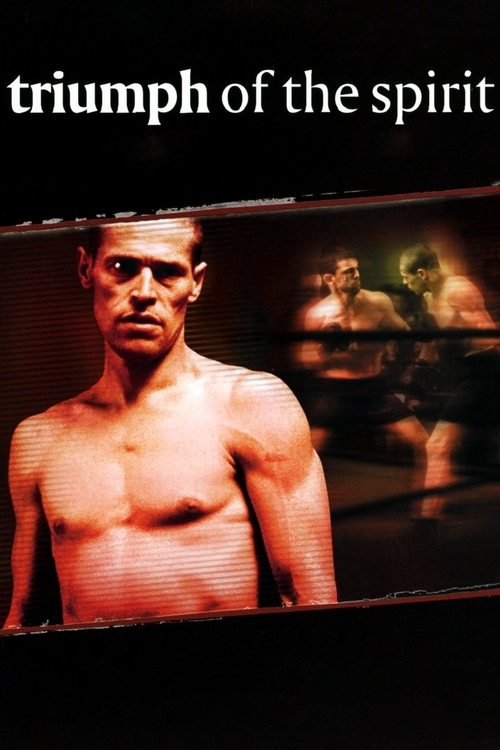
Salamo Arouch, portrayed by Willem Dafoe, is a Jewish boxer who becomes a symbol of resilience and hope amidst the horrors of the Holocaust. His character is driven by a fierce will to survive and protect his loved ones, showcasing the internal struggle between despair and the will to fight back against oppression.
How does the film depict the relationship between Salamo and his fellow prisoners?
The film illustrates the camaraderie and solidarity among the prisoners, particularly through Salamo's interactions with his fellow inmates. Their shared experiences of suffering and the bonds formed in the face of adversity highlight the importance of friendship and mutual support in dire circumstances.
What role does boxing play in Salamo's survival in the concentration camp?
Boxing serves as both a literal and metaphorical lifeline for Salamo. His skills in the ring allow him to gain favor with the camp guards, providing him with a temporary reprieve from the brutal conditions. This aspect of the plot emphasizes the duality of his talent as a means of survival while also showcasing the moral complexities of competing in such a horrific environment.
How does the character of the camp commandant affect the story's progression?
The camp commandant, played by Edward James Olmos, represents the oppressive force of the Nazi regime. His interactions with Salamo and the other prisoners create a tense atmosphere, as he embodies both cruelty and a twisted sense of control. His character serves as a catalyst for many of the film's conflicts, pushing Salamo to confront his own limits and moral choices.
What emotional struggles does Salamo face throughout the film?
Salamo grapples with profound emotional turmoil, including guilt over surviving while others suffer, the fear of losing his family, and the constant threat of death. His internal conflict is palpable as he navigates moments of despair and fleeting hope, reflecting the psychological toll of life in the concentration camp.
Is this family friendly?
"Triumph of the Spirit," produced in 1989, is a film that deals with heavy and intense themes related to the Holocaust, focusing on the experiences of a Jewish boxer, Salamo Arouch, in a Nazi concentration camp. Given its subject matter, the film is not considered family-friendly.
Potentially objectionable or upsetting aspects include:
-
Graphic Violence: The film contains scenes depicting brutality and violence inflicted upon prisoners, which can be distressing.
-
Depictions of Suffering: There are intense portrayals of suffering, starvation, and the harsh realities of life in a concentration camp, which may be upsetting for children or sensitive viewers.
-
Emotional Trauma: Characters experience significant emotional pain, loss, and despair, which can be heavy and difficult to process.
-
Death and Loss: The film addresses themes of death, including the loss of family members and friends, which can be particularly hard-hitting.
-
Discrimination and Oppression: The film explores themes of anti-Semitism and the dehumanization of individuals, which may be challenging for younger audiences to understand.
Overall, the film's serious themes and graphic content make it more suitable for mature audiences.








