























Popular
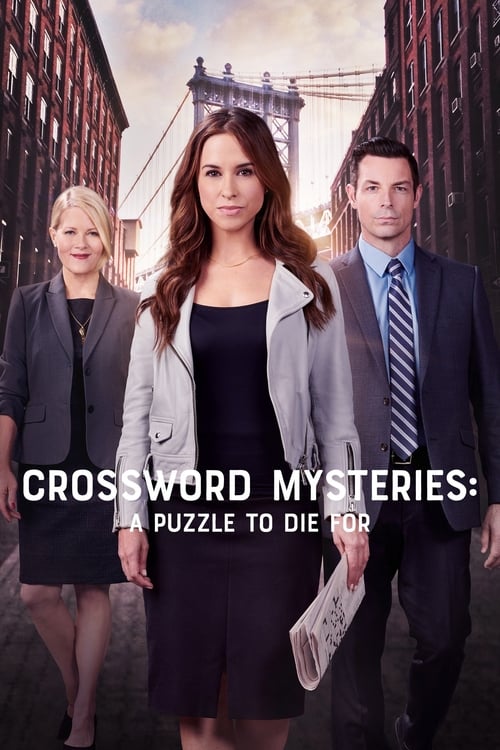
Who is the main character in Crossword Mysteries: A Puzzle to Die For?
What motivates Tess Harper to investigate the murder?
What role does Detective Logan O'Connor play in the story?
How does the crossword puzzle relate to the murder mystery?
What is the significance of the victim's connection to the crossword puzzle community?
Should I watch it?
Ask Your Own Question

What is the plot?
The film opens in New York City with a burglary that is supposed to be silent, elegant, and invisible, but it turns lethal the moment the owner steps in at the wrong time. A thief slips into Alan Nightingale's art gallery through the skylight and moves straight toward one particular painting, as if already knowing exactly what is valuable and exactly where it hangs. When Alan Nightingale enters and sees the robbery in progress, he pauses, smiles in a way that suggests recognition rather than fear, and then is shot. The murder instantly transforms the scene from a theft into something far more coordinated, and the police arrive to find a body, a ruined gallery, and almost no useful answers.
Detective Logan O'Connor takes charge at the crime scene, briefing the police chief while the investigators try to make sense of a murder that does not look straightforward. The most unsettling details are small and specific: Nightingale has been shot three times, yet only one shell casing is found, and in his back pocket there is an unfinished crossword puzzle from the New York Sentinel. That crossword becomes the first strange thread in a case that should have been about art theft, but instead begins to feel like a message written for someone who knows how to read it.
Across the city, Tess Harper is introduced in a very different rhythm, strolling through New York on her way to work at the New York Sentinel as a crossword editor. Her life is orderly and intellectual, shaped by wordplay, deadlines, and the pressure of an upcoming crossword tournament she is preparing for. At the newspaper, her role is established through a quick exchange that also shows her puzzles are attracting attention online, giving her a professional confidence that is both quiet and genuine. Tess is curious by nature, but at first the murder is just a strange news item--until she learns that the crossword found with Nightingale is tied to her own newspaper and, more specifically, to the puzzles she works with every day.
That discovery pulls her into the orbit of Detective Logan O'Connor. He is competent, guarded, and immediately irritated by the fact that an editor from the newspaper is poking around his murder investigation. Logan's skepticism is not just professional; he is also trying to prove himself under the shadow of his father, Police Chief Chauncey O'Connor, which makes him especially determined not to let an amateur interpret the evidence for him. Tess, meanwhile, is not the kind of person who lets a mystery sit unanswered. Once she sees the crossword in Nightingale's pocket, she begins comparing it to previous puzzles and quickly notices that something is off.
At first, Logan is dismissive when Tess suggests that the puzzles may contain coded information about the crime. The idea sounds implausible to him: a murderer hiding instructions in everyday newspaper crosswords seems too elaborate, too clever, almost too theatrical. But Tess keeps looking, and the more she studies old puzzles and recent submissions, the more a pattern emerges. She realizes that the clues are not random at all, but part of a system. The crossword grid is functioning like a secret communication channel, with the numbered clue positions serving a very specific purpose: 1 across indicates the location, 22 across the point of entry, 44 across the time to strike, and 53 across the target. Once Tess sees the structure, the entire case changes shape. The puzzle is not just a clue left behind--it is a language for criminal coordination.
The investigation widens as Logan and Tess start following the trail through the newspaper, the gallery world, and the puzzle community around Tess's work. Tess identifies that the crossword found in Nightingale's pocket is not even one of hers; it is a submitted puzzle by a regular constructor named Abigail Krebs. That revelation matters because it means the message did not originate from the newspaper's editorial process as Tess first assumed, but from someone outside her immediate control who knew how to hide meaning in published puzzles. The idea of an outside contributor using the paper as a delivery system gives the case a chilling precision. Someone has been planting clues in plain sight, trusting that only the right person--someone with the right habits, the right knowledge, or the right guilt--would notice.
As Tess digs deeper, the case gains a second layer involving stolen art and financial desperation. There is talk of an antique gun, and of forged paintings that suggest the gallery robbery is only one part of a larger fraud. The murder at the gallery now looks less like a spontaneous killing and more like a pressure point in a much older scheme involving theft, insurance money, and smuggled art. Logan continues to treat Tess's theories with caution, but he cannot ignore the growing pile of connections: the crossword, the art theft, the suspiciously neat clue structure, and the fact that someone seems to be using the newspaper's puzzle page as a hidden instruction manual for crimes.
The emotional center of the film begins to shift as Logan and Tess keep intersecting in the course of the investigation. Their exchanges move from irritation to reluctant respect, especially after Tess proves that her insight is not just guesswork but a disciplined reading of patterns that others have missed. Logan begins to understand that her knowledge of crosswords gives her a different kind of investigative instinct, one that can spot hidden structure in what looks like noise. Tess, in turn, sees that Logan's stubbornness is not stupidity but a kind of protective discipline--he does not want to be embarrassed by a theory that sounds absurd until the evidence makes it unavoidable. Their partnership becomes one of the film's pleasures, but the mood remains tense because the killer is still active, and the next move could come at any time.
The pressure intensifies when Tess's own professional world is pulled into the case in a far more personal way. According to the later reporting on the mystery, one of Tess's co-workers is murdered, and that death convinces Logan that the puzzle theory cannot be ignored any longer. The film uses this escalation to raise the stakes from an isolated art-gallery homicide to a threat embedded inside Tess's daily life at the New York Sentinel. What had seemed like an abstract intellectual challenge now becomes dangerous and immediate. Tess is no longer just decoding clues; someone is killing people around her to preserve a secret.
As the investigation advances, Tess's earlier suspicion hardens into certainty: the crosswords are not merely hiding instructions, they are being used to coordinate crimes and disguise a theft-and-insurance operation tied to the art world. The clues point not just to a robbery but to a pattern of people who know one another intimately, enough to anticipate each other's movements and conceal their identities. The presence of forged paintings and an antique gun suggests a scheme that has been running for some time, with the gallery murder serving as the point where the whole arrangement begins to unravel. Tess and Logan now have to identify the "puzzlehead" behind the messages before the next move is made.
The final explanation is devastating because it redefines the entire first murder. Pierre, Tess's crossword friend, is exposed as the true killer of Alan Nightingale. Even worse, Alan Nightingale was Pierre's brother, a fact hidden by Pierre's changed identity. Pierre is originally from Newcastle, and after reinventing himself, he secretly partners with Alan to steal paintings from their own galleries, collect insurance money, and then sell the art abroad. The scheme depends on the two men remaining aligned, but Alan's growing debts and reckless behavior threaten to expose everything. Instead of letting himself be dragged down by his brother's instability, Pierre chooses murder. He kills Alan to protect himself and preserve the larger operation.
That revelation gives the early scene at the gallery a horrifying new meaning. Alan's strange smile when he sees the intruder no longer reads as simple recognition of a thief; it becomes the look of a man who knows the person in front of him, even if he does not expect to be shot by him. The fact that only one shell casing is found despite three gunshot wounds now feels like a detail that was always meant to confuse investigators and obscure the mechanics of the killing. The crossword, which seemed like a random oddity at first, turns out to be the breadcrumb trail Pierre uses to hide his crimes in everyday plain sight. Every clue in the movie's structure has been leading toward the same human truth: Pierre is not just a collector of secrets, he is the architect of the deception.
Once Tess and Logan understand Pierre's role, the mystery stops being a matter of interpretation and becomes a race to survive. Pierre realizes that Tess is close to the truth and decides to remove her before she can expose him. He lures her onto a roof, the kind of isolated, wind-swept space that feels cinematic and dangerous, with the city dropping away below them. The scene tightens into a final confrontation where he tries to kill her and finish what he started at the gallery. Tess is frightened, but she does not panic. Instead, she stalls him by talking, using the only weapon she reliably has: time, language, and the ability to keep a killer focused on her long enough for help to arrive. The tension builds in that suspended moment where every sentence matters, and the roof becomes a stage for the film's final act of concealment and revelation.
Logan arrives in time to save her life. His arrival resolves the long tension between his skepticism and Tess's certainty, because the very thing he doubted is what leads him straight to her. The confrontation ends with Pierre exposed and Tess alive, the puzzle finally solved in the most literal sense possible. The investigation's key breakthrough--the realization that the crossword clues were a hidden message system--proves to be the mechanism that uncovers both the art-smuggling scheme and the murderer's identity. The film closes on that hard-won clarity: the killer is unmasked, the coded crosswords are decoded, the conspiracy around Alan Nightingale's death is broken open, and Tess's unusual talent for reading patterns has turned out to be exactly what was needed to crack the case.




What is the ending?
In the ending of "Crossword Mysteries: A Puzzle to Die For," Tess Harper solves the murder mystery surrounding the death of a crossword puzzle creator, leading to the arrest of the true killer. The film concludes with Tess and Detective Logan O'Connor sharing a moment of connection, hinting at a budding romance.
As the climax of "Crossword Mysteries: A Puzzle to Die For" unfolds, Tess Harper stands in the dimly lit room of the victim, the crossword puzzle creator, who has been found dead. The atmosphere is thick with tension as she pieces together the clues that have been scattered throughout the investigation. The walls are adorned with various crossword puzzles, each one a testament to the victim's genius but also a reflection of the twisted circumstances surrounding his death.
Tess, driven by her passion for puzzles and her determination to uncover the truth, recalls the various suspects she has encountered: the victim's estranged wife, a jealous colleague, and a disgruntled friend. Each character has been painted with shades of suspicion, but Tess's intuition tells her that the answer lies deeper than surface appearances.
In a pivotal scene, Tess gathers the suspects in the same room where the murder took place. The tension is palpable as she methodically reveals the connections between the victim and each suspect, using the clues from the crossword puzzles as a framework for her deductions. The camera captures the shifting expressions on the faces of the suspects, their anxiety growing as Tess draws closer to the truth.
As she unveils the final piece of the puzzle, Tess identifies the killer: it is the victim's colleague, who had been envious of the victim's success and had a motive rooted in professional rivalry. The revelation is met with gasps from the gathered crowd, and the atmosphere shifts from suspicion to shock. The colleague's facade crumbles, and he attempts to flee, but Detective Logan O'Connor, who has been observing closely, swiftly apprehends him.
With the case solved, Tess feels a wave of relief wash over her. She has not only proven her skills as a crossword constructor but has also found a sense of purpose in her investigative abilities. The emotional weight of the case lifts, and she shares a moment of triumph with Logan. Their chemistry is undeniable, and as they stand together, the camera lingers on their expressions, hinting at a deeper connection that has formed through their shared experiences.
In the final scenes, Tess and Logan walk out of the building together, the sun setting behind them, casting a warm glow. They exchange playful banter, and Tess's laughter rings out, a sound of newfound joy and hope. The film closes with a sense of resolution, not just in the case but in Tess's personal journey as well. She has grown from a crossword enthusiast into a confident woman who can tackle challenges head-on, and her relationship with Logan hints at future adventures together.
As the credits roll, viewers are left with the impression that Tess has not only solved a murder but has also discovered her own strength and the potential for love in her life. The fates of the main characters are intertwined, with Tess stepping into her new role as a sleuth and Logan by her side, ready for whatever puzzles may come next.
Is there a post-credit scene?
In "Crossword Mysteries: A Puzzle to Die For," there is no post-credit scene. The film concludes without any additional scenes after the credits roll, wrapping up the story of the main characters and their journey through the mystery. The focus remains on the resolution of the plot and the relationships developed throughout the film, particularly between the protagonist, Tess Harper, and Detective Logan O'Connor. The ending emphasizes their growing connection and hints at future collaborations, but it does not include any further scenes or revelations after the credits.
Who is the main character in Crossword Mysteries: A Puzzle to Die For?
The main character is Tess Harper, a crossword puzzle editor who becomes embroiled in a murder investigation.
What motivates Tess Harper to investigate the murder?
Tess is motivated by her curiosity and her desire to solve puzzles, as well as her personal connection to the victim, which drives her to uncover the truth.
What role does Detective Logan O'Connor play in the story?
Detective Logan O'Connor is the lead investigator on the murder case, and he often collaborates with Tess, leading to a mix of professional and personal tension between them.
How does the crossword puzzle relate to the murder mystery?
The crossword puzzle contains clues that are linked to the murder, and Tess uses her skills to decipher these clues, which helps her piece together the events surrounding the crime.
What is the significance of the victim's connection to the crossword puzzle community?
The victim, a well-known crossword puzzle creator, has ties to the crossword community, which adds layers to the investigation as Tess interacts with other puzzlers who may have motives or insights related to the murder.
Is this family friendly?
"Crossword Mysteries: A Puzzle to Die For" is generally considered family-friendly, but there are a few elements that might be objectionable or upsetting for children or sensitive viewers.
-
Murder Theme: The central plot revolves around a murder mystery, which may be unsettling for younger viewers. The concept of death and the investigation into a homicide are prominent throughout the film.
-
Crime Investigation: Scenes depicting police investigations and discussions about the crime can be intense. There are moments of tension as characters confront the reality of the murder.
-
Emotional Distress: Characters experience grief and fear related to the murder, which may evoke strong emotions. The emotional weight of loss and the impact on the victim's family are explored.
-
Suspenseful Moments: There are suspenseful scenes that may create anxiety, including moments where characters are in danger or face threats related to the investigation.
-
Mild Language: There may be occasional mild language or phrases that some parents might find inappropriate for younger audiences.
Overall, while the film is designed to be a light-hearted mystery, the themes of murder and emotional distress could be sensitive for some viewers.








