




Popular
How does the character of Dr. Emily Carter evolve throughout the film?
What is the significance of the Collider device in the story?
What role does the character of Mark play in relation to the Collider's malfunction?
How do the alternate realities affect the characters' relationships?
What is the emotional impact of the Collider's consequences on the main characters?
Should I watch it?
Ask Your Own Question

What is the plot?
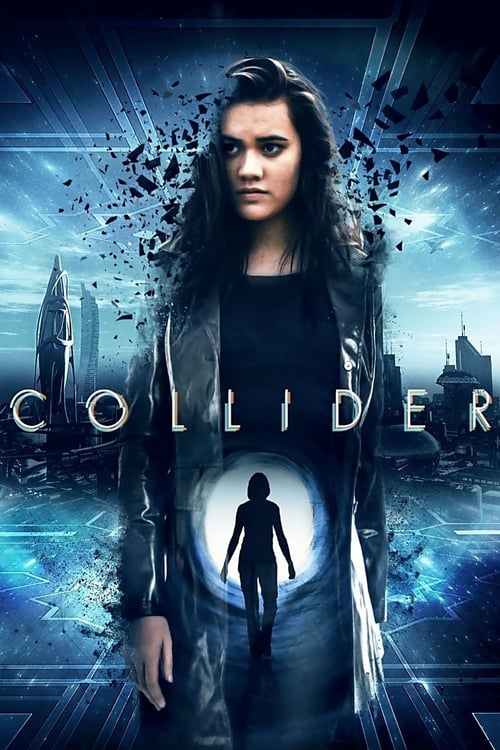
Five strangers wake up in the CERN campus in Switzerland in 2018, but the world around them is already ruined: the air is poisonous, the landscape is post-apocalyptic, and something unseen stalks the darkness outside the facility. At first, none of them understand where they are or how they got there, only that they have been dragged out of their own lives and stranded in a nightmare future where stepping outside can mean disappearing into the shadows and being taken by the Unknown. The building they find themselves in feels less like a safe haven than a sealed coffin, a brittle pocket of civilization surrounded by collapse.
The group is an uneasy cross-section of strangers from different times and places: a shady girl from London, an LA cop with a heart of gold, an Irish mother grieving her missing daughter, a physically fit woman from Brazil, and an abrasive Spanish man who immediately makes himself difficult. They do not trust one another, and at first they do not even know whether they should. The only thing that unites them is fear. In the silence of the ruined CERN complex, every corridor seems to promise either answers or death.
Their confusion deepens when they encounter a Scottish scientist who once worked on the Large Hadron Collider. He explains that the disaster was not a random natural collapse but the result of a catastrophic scientific mistake. Long before the apocalypse, CERN had been pursuing research into micro black holes, believing they could control the phenomenon once created. He alone realizes that the calculations for the radiation were wrong. According to his warning, the radiation would be far lower than expected, and the black holes would implode and consume surrounding matter, potentially destroying everything. He submits a report, but CERN rejects it, and his credibility as a scientist is ruined.
That failure pushes the story back to 23 September 2012, when Peter Ansay, a young genius in quantum physics, breaks into the CERN laboratories to sabotage the Collider and stop any future experiments. Peter is not just another scientist; he is the central thread binding the past to the future, the man whose choices have torn a hole in time itself. When he enters the facility to prevent disaster, something goes wrong in a way he never expects. Instead of destroying the machine and ending the threat, he is caught in a wormhole and hurled forward to 2018, into the devastated world he has accidentally helped create.
Peter wakes in the future with a violent sense of déjà vu. The ruined CERN complex feels familiar, as if he has already walked these halls in another life, another timeline. As memory flashes back in fragments, he begins to understand the truth: he has not merely survived the catastrophe, he has become trapped inside its aftermath. He realizes that the apocalypse is tied to the collider experiment, and he has only a limited window--36 hours--to reverse the wormhole, reach the Collider again, and prevent Earth's destruction before time runs out.
The tension in the CERN hotel-like refuge builds as Peter tries to explain what he knows to the others. They are from different times, but now they are being forced into the same impossible moment. The scientist's knowledge of the collider gives the group a reason to listen, though trust is fragile. The others have no reason to believe a man who says he is from the past and that the world has ended because of failed particle physics. Yet the reality outside speaks for itself. The poisoned air, the hostile wasteland, and the ever-present threat of the Unknown make denial impossible.
The shared objective becomes clear: they must reactivate the collider and use it to send themselves back in time, possibly even to change the course of history and save Earth itself. But the machine cannot simply be switched on. The group needs to gather specific components, including the infamous spark plugs mentioned in the plot descriptions, to get the Large Hadron Collider working again. That detail gives the film a grim, improvised quality: the fate of civilization depends not on grand speeches but on scavenged parts, technical skill, and the ability to move through a deadly ruined world without being picked off one by one.
The journey through the facility and its surrounding wasteland becomes a series of confrontations with both the environment and each other. The Spanish man is repeatedly framed as antagonistic, the kind of person whose abrasive personality makes him a liability when cooperation is the only chance of survival. The LA cop acts as the moral center, instinctively protective and willing to help others even when the situation is unbearable. The Irish mother is driven by grief and desperation, her missing daughter haunting every decision she makes. The Brazilian woman brings physical strength and resilience, a practical counterweight to the chaos around them. The London girl remains guarded and hard to read, her suspicious energy making her both unpredictable and necessary.
As the group struggles toward the collider, Peter's memory fragments sharpen into revelation. He understands more and more clearly that the future catastrophe is not merely some abstract scientific accident. It is the direct consequence of human arrogance, rejected warnings, and a decision to move forward with dangerous research despite the risk. His own sabotage attempt, meant to prevent disaster, became the trigger for the very apocalypse he tried to stop. That irony hangs over every scene: the man who wanted to save the world may have doomed it instead.
Outside the safe zone, the wasteland is lethal. The film describes a world so devastated that people who leave the building vanish into the shadows and are taken by the Unknown. That threat creates a constant countdown, even before the literal time limit is mentioned. Every opening door feels like a gamble. Every corridor beyond the light seems to swallow sound, as though the apocalypse itself is listening. The unseen danger gives the movie its momentum: the characters are never allowed to settle, only to move from one uncertain shelter to the next.
The deeper they go, the more the story becomes about choice versus inevitability. If the apocalypse already happened, can it truly be undone? If Peter caused the rupture, can he really repair it? The film pushes them toward an answer through action rather than debate. They must restore the Collider, reroute power, and find the missing parts needed to start it. The effort is desperate and physical, a race against the collapse of the building, the hostility outside, and the growing realization that not everyone in the group may survive long enough to see the machine activate.
The available plot information confirms that the movie is built around a science-fiction survival puzzle, but it does not provide a fully verified scene-by-scene death list for all six characters. What is clear is that the apocalypse itself has already killed nearly everyone on Earth, and the outside world is full of lethal forces. The Unknown functions as an offscreen killer throughout the story, taking anyone who ventures too far from the relative safety of the facility. Because the sources do not reliably document each named death, any more specific claim would go beyond what can be firmly supported.
Still, the emotional stakes keep rising because the story is not just about survival; it is about undoing a disaster that has become intertwined with Peter Ansay's guilt. He is the one who broke into CERN on 23 September 2012, he is the one who was swept into the future, and he is the one who now must decide whether repairing the Collider will truly save humanity or simply reinforce the same catastrophic loop. The others depend on him, but he also depends on them. Without the group's cooperation, he cannot reach the machine. Without his knowledge, they cannot even begin to understand what they are fighting.
The climax builds as the group reaches the Collider itself. This is the moment the story has been angling toward from the beginning: the machinery at the heart of CERN, the machine whose intended brilliance led to destruction, now becomes the only possible path to redemption. The machine is not just hardware; it is the embodiment of every rejected warning, every failed calculation, every moral compromise. Reactivating it is both a technical task and an act of defiance against the future that has already swallowed the world.
As the spark plugs and power systems are finally brought into alignment, the atmosphere turns frantic. The characters are no longer merely trying to survive the day; they are trying to alter history itself. Peter's flashes of memory, his awareness that he has seen this place before, and the pressure of the 36-hour deadline all converge into a sense that reality itself is unstable. The film's promise is that if they can get the Collider running, they may be able to send themselves back and change "their own histories and that of the earth."
The ending, as described in the available summaries, resolves around that core possibility: the Collider is reactivated, and the characters attempt to use it to go back in time and prevent the apocalypse. The premise of the film is that this return offers a chance to alter what happened, to rewrite the broken chain of events that led from Peter's sabotage attempt in 2012 to the ruined Earth of 2018. The sources available here do not provide a fully trustworthy minute-by-minute account of the final sequence, so it is not possible to state with certainty the exact last image or the fate of each named character without risking invention.
What the film does make clear is the shape of its resolution: the characters' hope lies in restarting the machine, reversing the wormhole, and escaping the future before extinction becomes permanent. Whether they succeed completely or whether the timeline remains altered is not fully specified by the reliable plot material provided here, but the narrative's dramatic center is unmistakable. Peter Ansay's mistake has created a future of ruin, and his last chance at redemption is to use the Collider not as a weapon of destruction, but as a bridge back to the moment before the world ended.
As the story closes, the ruined CERN complex remains a place of loss and suspended possibility, a scientific monument turned survival bunker. The final movement belongs to the idea that history can still be changed, that the apocalypse is not yet sealed beyond repair, and that the people trapped in 2018 may still have one last chance to return to the past and save the world from the catastrophe that began with a rejected warning and a broken experiment.
More Movies Like This
Browse All Movies →





What is the ending?
In the ending of "Collider," the main characters confront the consequences of their actions as they navigate through a collapsing reality. The film culminates in a tense showdown where they must make critical choices that determine their fates and the stability of their universe.
As the climax unfolds, the characters face the ultimate challenge of reconciling their personal desires with the greater good. The film concludes with a resolution that leaves some characters changed forever, while others find a sense of closure or redemption.
As the final act of "Collider" begins, the atmosphere is thick with tension. The characters, now fully aware of the catastrophic consequences of their experiments with the collider, gather in a dimly lit control room. The screens flicker with chaotic images of alternate realities collapsing into one another, a visual representation of the chaos they have unleashed.
The protagonist, a determined scientist named Dr. Emily Carter, stands at the forefront, her brow furrowed with worry. She feels the weight of responsibility pressing down on her shoulders, knowing that her ambition has led to this moment. Her internal conflict is palpable; she grapples with guilt over the lives affected by their reckless pursuit of knowledge.
Beside her, her colleague and love interest, Mark, is equally troubled. He is torn between his feelings for Emily and the realization that their actions have endangered countless lives. As they discuss their next steps, the urgency in their voices rises. They must find a way to stabilize the collider before it tears their reality apart completely.
In a pivotal scene, they decide to split up to gather the necessary components to execute a risky plan. Emily and Mark share a brief, intense moment, filled with unspoken words and lingering glances, before they part ways. This separation heightens the emotional stakes, as both characters are acutely aware that they may not see each other again.
As Emily navigates through the labyrinthine corridors of the facility, she encounters her former mentor, Dr. Harris, who has been consumed by his obsession with the collider. His descent into madness serves as a stark reminder of the dangers of unchecked ambition. In a tense confrontation, Emily pleads with him to help her, but he is too far gone, fixated on the power the collider offers. This encounter deepens Emily's resolve; she understands that she must stop him to save not only herself but also the world.
Meanwhile, Mark faces his own challenges as he races against time to retrieve the final component needed for their plan. He encounters a series of obstacles, including malfunctioning equipment and the eerie remnants of alternate realities that have begun to bleed into their own. Each setback tests his determination and forces him to confront his fears about the consequences of their work.
As the characters converge back in the control room, the tension reaches a boiling point. They initiate the sequence to stabilize the collider, but the process is fraught with danger. Alarms blare, and the room shakes as the fabric of reality continues to unravel around them. In a moment of desperation, Emily makes a selfless decision to stay behind and manually override the system, knowing it could cost her life.
Mark, realizing what she is doing, fights against the chaos to reach her. Their eyes lock in a moment of understanding; they both know the stakes. With tears in her eyes, Emily urges him to leave, to save himself and the others. This emotional farewell encapsulates their journey, highlighting the themes of sacrifice and love that have woven through their story.
In the final moments, as Emily executes the override, a blinding light engulfs the room. The screen fades to white, and the audience is left in suspense. When the light dissipates, we see Mark standing outside the facility, breathless and alone. He looks back at the building, now eerily quiet, and a sense of loss washes over him.
The film concludes with a poignant scene of Mark walking away, carrying the weight of what has transpired. He glances at a small device in his hand, a reminder of Emily and their shared dream. The fate of Emily remains ambiguous, leaving viewers to ponder the cost of their ambitions and the sacrifices made in the name of progress.
In the end, "Collider" leaves its characters forever changed, grappling with the consequences of their actions and the fragility of reality itself. The emotional resonance of their choices lingers, inviting reflection on the balance between ambition and responsibility.
Is there a post-credit scene?
In the movie "Collider," there is indeed a post-credit scene that adds an intriguing layer to the narrative. After the main credits roll, the screen fades back in to reveal a dimly lit laboratory filled with advanced technology and flickering screens. The atmosphere is tense, with a low hum of machinery in the background.
In this scene, a figure is seen working frantically at a control panel, their face obscured by shadows. As the camera zooms in, it becomes clear that this is one of the scientists from the main storyline, who had been deeply involved in the experiments that led to the chaotic events of the film. Their hands move quickly over the controls, and a series of complex equations and diagrams flash across the screens.
Suddenly, an alarm blares, and red lights begin to flash, casting an ominous glow over the room. The scientist's expression shifts from focused determination to panic as they realize that something has gone horribly wrong. They mutter to themselves about needing to fix the "collider" before it's too late, hinting at the potential for further catastrophic consequences.
As the scene reaches its climax, the camera pulls back to reveal a large, unstable energy core pulsating dangerously in the center of the lab. The scientist frantically types commands into the console, but the energy levels continue to rise uncontrollably. Just as the screen begins to flicker and the energy core reaches a critical point, the scene cuts to black, leaving the audience with a sense of dread and anticipation for what might come next.
This post-credit scene effectively teases the possibility of further exploration into the consequences of the collider experiments, setting the stage for potential future developments in the story.
How does the character of Dr. Emily Carter evolve throughout the film?
Dr. Emily Carter begins as a dedicated scientist, deeply invested in her work with the Collider. As the story progresses, she faces moral dilemmas and personal losses that challenge her beliefs about science and responsibility. Her emotional journey is marked by moments of doubt, guilt, and ultimately a resolve to confront the consequences of the Collider's malfunction, showcasing her growth from a purely scientific mindset to a more humanistic perspective.
What is the significance of the Collider device in the story?
The Collider device serves as the central plot element that drives the narrative forward. It is a scientific experiment designed to explore the fabric of reality, but its malfunction leads to catastrophic consequences, creating rifts in time and space. The characters' interactions with the Collider reveal their motivations and fears, as they grapple with the implications of their actions and the potential for alternate realities.
What role does the character of Mark play in relation to the Collider's malfunction?
Mark is a pivotal character whose actions directly influence the Collider's malfunction. Initially portrayed as a supportive colleague to Dr. Carter, his ambition and desire for recognition lead him to push the boundaries of the experiment. His internal conflict between scientific curiosity and ethical considerations creates tension, ultimately resulting in a catastrophic event that forces all characters to confront the reality of their choices.
How do the alternate realities affect the characters' relationships?
The alternate realities created by the Collider's malfunction serve to test and strain the characters' relationships. As they encounter different versions of themselves and their loved ones, they are forced to confront unresolved issues, regrets, and desires. This exploration of alternate realities deepens their emotional connections, revealing vulnerabilities and ultimately leading to moments of reconciliation or further conflict.
What is the emotional impact of the Collider's consequences on the main characters?
The emotional impact of the Collider's consequences is profound, as the main characters experience loss, fear, and existential dread. Each character reacts differently; some become consumed by guilt, while others seek redemption or understanding. The weight of their choices and the chaos unleashed by the Collider creates a palpable tension, driving them to confront their pasts and the fragility of their realities, leading to moments of intense emotional clarity.
Is this family friendly?
Collider, produced in 2018, is a science fiction thriller that contains several elements that may not be suitable for children or sensitive viewers. Here are some potentially objectionable or upsetting aspects:
-
Violence and Action Sequences: The film features intense action scenes that include physical confrontations, which may be distressing for younger audiences.
-
Tense Atmosphere: The overall tone of the movie is suspenseful and can create a sense of anxiety, which might be unsettling for sensitive viewers.
-
Themes of Isolation and Desperation: Characters experience feelings of isolation and desperation, which could resonate negatively with some viewers, particularly children.
-
Mature Themes: The narrative explores complex themes such as survival, sacrifice, and the consequences of scientific experimentation, which may be difficult for younger audiences to fully grasp.
-
Disturbing Visuals: There are moments that may include unsettling imagery or scenarios that could be frightening for children.
These elements contribute to a viewing experience that may not be appropriate for all ages, particularly for younger children or those who are sensitive to intense emotional or visual content.








