
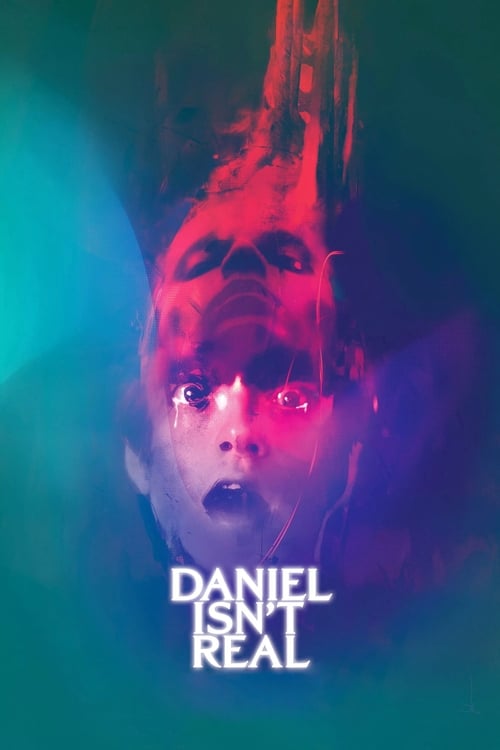

















Popular
What is the significance of Daniel's character in Luke's life?
How does Luke's relationship with his mother affect the story?
What role does the concept of reality versus imagination play in the film?
How does the film depict Luke's descent into madness?
What is the significance of the final confrontation between Luke and Daniel?
Should I watch it?
Ask Your Own Question

What is the plot?
Sorry, we aren't able to watch and write up a full detailed plot yet. Check back in a few days.




What is the ending?
In the ending of "Daniel Isn't Real," Luke confronts Daniel in a climactic battle within his mind. Luke ultimately decides to let go of Daniel, leading to a final confrontation where he sacrifices his own well-being to ensure Daniel's defeat. As a result, Daniel is banished, and Luke is left to face the consequences of his actions. The film concludes with Luke beginning to heal, but the scars of his experiences remain.
As the film approaches its climax, Luke finds himself in a surreal and chaotic mental landscape, a manifestation of his inner turmoil. The atmosphere is thick with tension, and the once vibrant colors of his imagination have turned dark and foreboding. Luke, now fully aware of Daniel's manipulative nature, understands that he must confront this embodiment of his fears and insecurities.
In a pivotal scene, Luke stands in a shadowy void, the remnants of his childhood memories swirling around him. Daniel appears, his demeanor both charming and sinister, taunting Luke about his weaknesses and the pain he has caused. Luke's heart races as he grapples with the realization that Daniel is not just a figment of his imagination but a representation of his unresolved trauma and mental struggles.
As the confrontation escalates, Daniel attempts to lure Luke back into a false sense of security, reminding him of the exhilarating moments they shared. However, Luke's resolve strengthens as he recalls the destruction Daniel has wrought in his life, including the harm to his mother and the chaos that ensued during their time together. The emotional weight of these memories fuels Luke's determination to break free from Daniel's grasp.
In a moment of clarity, Luke declares that he will no longer allow Daniel to control him. This declaration is met with Daniel's furious backlash, and the two engage in a fierce struggle within Luke's mind. The environment shifts dramatically, reflecting Luke's internal battle; the once inviting landscapes turn into nightmarish visions filled with shadows and echoes of his past.
As the fight reaches its peak, Luke realizes that the only way to defeat Daniel is to confront the pain he has been avoiding. He acknowledges the hurt and fear that Daniel represents, and in a moment of vulnerability, he embraces the darkness rather than fighting it. This act of acceptance weakens Daniel, who begins to dissolve into the shadows, screaming in rage and desperation.
In the aftermath of this intense confrontation, Luke awakens in the real world, gasping for breath as he comes to terms with the reality of his actions. He is left alone, but there is a sense of relief mixed with sorrow. The battle has taken a toll on him, and he understands that while he has banished Daniel, the scars of their relationship will linger.
The film concludes with Luke visiting his mother, who has been struggling with her own mental health issues. Their reunion is bittersweet, filled with unspoken words and a shared understanding of their respective battles. Luke's journey toward healing has just begun, and while he has defeated Daniel, he knows that the path ahead will require strength and support.
As the credits roll, viewers are left with a sense of hope for Luke's future, but also an acknowledgment of the complexities of mental health and the importance of confronting one's inner demons. The fate of Daniel is sealed as he is no longer a part of Luke's life, but the impact of their relationship will forever shape Luke's journey toward recovery.
Is there a post-credit scene?
In "Daniel Isn't Real," there is no post-credit scene. The film concludes with a powerful and emotional climax that wraps up the story of Daniel and Luke. After the intense confrontation between the two characters, the film leaves viewers with a sense of resolution regarding Luke's journey and his struggle with his mental health. The absence of a post-credit scene emphasizes the finality of Luke's choices and the impact of his experiences throughout the film. The focus remains on the psychological themes and the character development that unfolds in the main narrative.
What is the significance of Daniel's character in Luke's life?
Daniel is a manifestation of Luke's imagination, representing his inner struggles and desires. Initially, Daniel appears as a charismatic and adventurous friend who helps Luke cope with his loneliness and anxiety. However, as the story progresses, Daniel's influence becomes darker, revealing Luke's repressed fears and traumas, ultimately leading to a battle for Luke's mental stability.
How does Luke's relationship with his mother affect the story?
Luke's relationship with his mother, Claire, is strained and complex. Claire, who struggles with her own mental health issues, is both protective and controlling of Luke. Her attempts to shield him from his father's legacy of mental illness create tension, as Luke feels suffocated and misunderstood. This dynamic drives Luke to seek solace in Daniel, complicating his emotional state and leading to pivotal moments in the narrative.
What role does the concept of reality versus imagination play in the film?
The film intricately weaves the theme of reality versus imagination through Luke's interactions with Daniel. As Daniel becomes more dominant, the lines between what is real and what is a product of Luke's mind blur. This struggle is visually represented through surreal sequences where Daniel's influence manifests in increasingly disturbing ways, challenging Luke's perception of reality and forcing him to confront his fears.
How does the film depict Luke's descent into madness?
Luke's descent into madness is portrayed through escalating encounters with Daniel, who encourages reckless behavior and self-destructive choices. As Luke becomes more isolated from reality, the film uses visual distortions and unsettling imagery to reflect his deteriorating mental state. Key scenes, such as confrontations with Daniel and moments of self-doubt, illustrate Luke's internal battle and the consequences of his reliance on an imaginary friend.
What is the significance of the final confrontation between Luke and Daniel?
The final confrontation between Luke and Daniel serves as a climactic moment of self-realization and empowerment for Luke. In this intense showdown, Luke must confront the darkest parts of himself that Daniel embodies. This battle is not just physical but deeply emotional, symbolizing Luke's struggle to reclaim his identity and break free from the toxic influence of his imagination, ultimately leading to a cathartic resolution.
Is this family friendly?
"Daniel Isn't Real" is not considered family-friendly and contains several potentially objectionable or upsetting elements that may be distressing for children or sensitive viewers. Here are some aspects to be aware of:
-
Mental Health Themes: The film explores serious mental health issues, including schizophrenia and the impact of trauma, which may be unsettling for some viewers.
-
Violence: There are scenes depicting violence, including physical confrontations and moments that suggest harm to characters.
-
Substance Abuse: The film includes references to drug use, which may be inappropriate for younger audiences.
-
Disturbing Imagery: There are surreal and nightmarish sequences that can be visually unsettling, including hallucinations and dark psychological elements.
-
Emotional Turmoil: Characters experience intense emotional struggles, including fear, anxiety, and despair, which may be distressing for sensitive viewers.
-
Death and Loss: Themes of death and the impact of loss are present, which can be heavy and upsetting.
Overall, the film delves into complex and dark themes that may not be suitable for children or those who are sensitive to such content.







