



Popular
What are the key events in Eric Burdon's early life that shaped his music career?
How does Eric Burdon's relationship with The Animals evolve throughout the film?
What role does the city of San Francisco play in Eric Burdon's life and music?
How does Eric Burdon confront his personal demons throughout the film?
What significant performances or songs are highlighted in the film, and what do they represent for Burdon?
Should I watch it?
Ask Your Own Question

What is the plot?
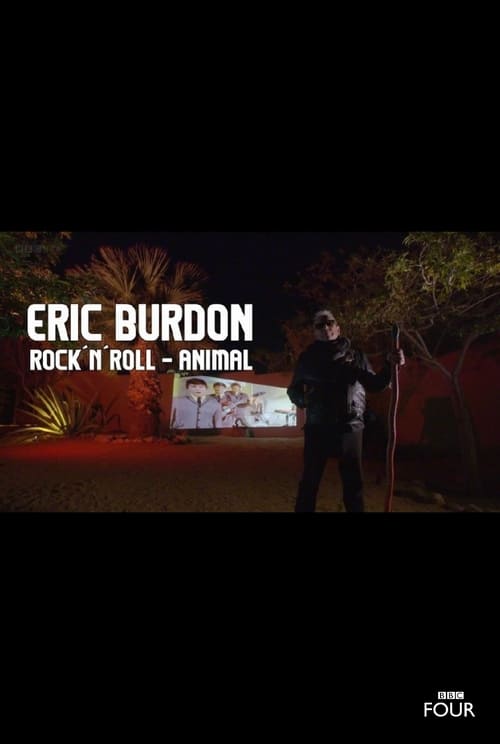
Eric Burdon stands in the dim glow of a Newcastle upon Tyne nightclub on the docks, the year 1964 etching itself into history as he belts out the raw, haunting strains of "House of the Rising Sun" at the Odeon in Nottingham one summer night. The air thickens with the smoke of industrial grit and the sweat of a crowd hungry for escape, their faces illuminated by the flickering stage lights as Burdon's voice--a gravelly force born from the bleak shipyards--cuts through like a siren's call. Born in 1941 in this unforgiving northern English city, young Eric Burdon prowls the streets as a street kid, teetering on the edge of petty crime, the kind immortalized in Guy Ritchie's gangster tales. But music intervenes, his voice becoming the ticket out of a destiny chained to the factories and the fog.
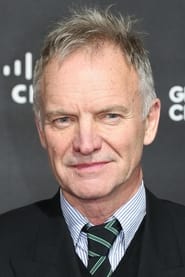
The film weaves into this origin with present-day Eric, now weathered at 77 in 2018 interviews, his eyes sharp beneath lines carved by decades of rock 'n' roll fury. Bruce Springsteen appears on screen, voice steady with reverence: "We Gotta Get Out of This Place" inspired my "Born to Run"--it was the anthem of every kid dreaming of highways beyond the rust. Patti Smith and Sting echo the tribute, their words layering emotional weight onto Burdon's raw beginnings, as archival footage rolls of him burning the midnight oil in dockside clubs, his hotheaded spirit already flaring. Tension simmers here, not in fists but in the unspoken pull between destruction and creation--without music, Burdon confesses in close-up, reflective and gravel-voiced, he might have slipped into gangster shadows forever.
Smoothly, the narrative shifts to his apprenticeship at Club A Go Go in Newcastle, early 1960s, where the pulse of blues hones his edge. Teacher Bertie Brown spots his spark at secondary school, pushing him into art college around 1959, where he meets John Steel, the drummer whose steady beat will anchor his rise. They form Pagan Jazzmen, a fledgling crew, and soon Alan Price joins on organ, evolving the group through name changes into The Animals by 1962. The lineup solidifies: Burdon on lead vocals, Steel on drums, Price on keyboards, Hilton Valentine on guitar, and Chas Chandler on bass--the same Chandler who will later manage Jimi Hendrix. No blood spills, but confrontation brews in the creative fires; they back blues legends like John Lee Hooker and Sonny Boy Williamson between September and December 1963, absorbing the cotton-picking soul that will define Burdon's howl.
Archival clips surge forward to the Ealing Club in West London, a crucible of British R&B where Burdon recalls Alexis Korner and Cyril Davies with vivid nostalgia, the cramped room pulsing with the birth of giants--The Animals, Rolling Stones, all forged in that sweaty haze. His voice, inspired first by Louis Armstrong flickering on the family TV (trombone dreams giving way to singing), elevates the human spirit, raw like Tina Turner's fire. But cracks form early. The global smash of "House of the Rising Sun"--traditional words, arrangement borrowed from Bob Dylan via Dave Van Ronk--ignites a rift. Alan Price claims sole credit, shattering Burdon's faith in the collective dream. "It damaged my belief in all for one and one for all," Burdon ruminates in interview, his face tightening with old betrayal, the emotional scar vivid as the song's minor-key lament plays over grainy footage.
Momentum builds as The Animals storm America in the British Invasion, right after The Beatles, ahead of The Who and Kinks. Their 1964 hit pushes Dylan electric, but internal tensions escalate. By September 1966, the original band dissipates amid rifts--Burdon pushes "straight blues," what bandmates deride as "cotton patch shit," forcing the issue until they're done with him. No fists fly on screen, but the dissolution hangs heavy, Burdon's rages and contract-breaking painting him as the lifelong underdog. He launches into Eric Is Here, his first solo album, delayed to 1967, while forming Eric Burdon & The Animals in December 1966: Barry Jenkins now on drums (replacing Steel), John Weider on guitar/violin/bass, Vic Briggs on guitar/piano, and Danny McCulloch on bass.
The scene transitions to Greenwich Village, New York, late 1960s, electric with discovery. Burdon stumbles upon Jimi Hendrix, a friendship igniting instantly, deep and fraternal. They bond over blues and rebellion, remaining close until the literal end--Burdon spent the night before Hendrix's death with him in London, 1970, trying desperately to warn of the coke and acid's grip. "I couldn't reach him," Burdon says softly in interview, eyes distant, the weight of loss etching deeper lines, as Hendrix clips play: fiery guitar duels, shared nights of creation. No murder, no killer--just the quiet tragedy of a friend slipping away under questionable circumstances, part of the "27 Club" shadows Burdon reflects on, associates dying young in the haze of excess.
Psychedelic winds carry him to San Francisco, California, late 1960s, where Eric Burdon & The Animals relocates amid heavy LSD use, shifting to trippy sounds. The highs peak, then crash. Disillusioned, Burdon drives to Mexico in 1969 for a break, hitting the Actor's Studio before linking with War, a Black LA funk-rock band in the Black Panther era. It's political dynamite--a white singer fronting Black musicians, inspired by Charlie Parker, John Coltrane, and Rahsaan Roland Kirk. They fuse jazz, funk, blues; hits flow, but confrontation looms. War "dumps" him, Burdon claims bitterly, because he's "the white guy"--overlooking Lee Oskar, the white harmonica player. The split stings, another underdog blow, his rages flaring as he breaks more contracts.
Cut to Los Angeles and the Sunset Strip, his home for 50+ years from the 1970s onward. By the late 1970s, he's broke, living in a car, cruising the desert in a '70s gas-guzzler, the visual of desolation stark against golden sands--wind whipping his hair, face gaunt with defeat. Archival performances intercut: Newcastle 1964 Odeon triumph, Hendrix collaborations, War grooves, all underscoring his evolution. Tributes deepen the emotional core--Springsteen again: "Eric carried the working-class roar across the ocean." Patti Smith marvels at his authenticity; Sting nods to the influence on his own path. Revelations unfold in Burdon's retrospective voiceover: near-criminal youth averted by Armstrong's TV glow; art college pivot via Bertie Brown; skipping the 1994 Rock & Roll Hall of Fame induction with the original Animals, a defiant snub to past betrayals.
Tension mounts not through violence but survival's grind--bands dissolve, styles shift (blues to psych to funk), fortunes plummet. Burdon's "incurable hothead" nature impedes stardom, yet his voice endures, a belting force lifting spirits from cotton fields to counterculture peaks. He reflects on the 60s/70s zeitgeist, triumphs laced with failures: discovering Hendrix, inspiring Dylan and Springsteen, yet always the outsider.
The narrative crests in 2018 Los Angeles, Burdon unbowed at 77, prepping his new American band for an album. Meet them in rehearsal footage: Evan Mackey on trombone, Davey Allen on piano, Dustin Koester on drums, Johnzo West on guitar, Justin Andres on bass, Ruben Salinas on saxophone. The camera lingers on his hands, gnarled but sure, gripping the mic as he sings "Across the Borderline"--the 1981 Ry Cooder, Jim Dickinson, and John Hiatt gem from Tony Richardson's soundtrack. His voice cracks with age yet soars, affirming he's one of the "last men standing" alongside Paul McCartney, Bob Dylan, The Rolling Stones. No deaths claim him; no final confrontation erupts. The screen fades on this weathered survivor, reflective eyes meeting the lens, the desert cruise looping back as a symbol of enduring momentum. Eric Burdon: Rock 'n' Roll Animal closes on quiet triumph, his personal vision intact, moving us with ruminations on a life of raw authenticity--no heroes slain, no twists darker than betrayal's echo, just the unyielding beat of a voice that escaped the docks and outlasted the chaos.
More Movies Like This
Browse All Movies →



What is the ending?
In the ending of "Eric Burdon: Rock 'n' Roll Animal," Eric Burdon reflects on his life and career, culminating in a powerful performance that showcases his enduring passion for music. The film concludes with Burdon embracing his legacy, surrounded by memories of his past, while also looking forward to the future.
As the final scenes unfold, the audience is taken through a series of poignant moments that encapsulate Burdon's journey. The camera captures him in a dimly lit venue, the atmosphere thick with anticipation. The stage is set, and the audience buzzes with excitement. Burdon steps into the spotlight, his presence commanding and electric. He begins to sing, his voice rich with emotion, resonating with the struggles and triumphs he has faced throughout his life.
The scene shifts to a montage of archival footage, interspersed with clips of Burdon's earlier performances. The images flash by, showcasing his rise to fame with The Animals, the cultural upheaval of the 1960s, and the personal challenges he has encountered along the way. Each clip serves as a reminder of the impact he has had on music and the lives of his fans.
As Burdon continues to perform, the camera zooms in on his face, revealing a mixture of joy and vulnerability. He pours his heart into each lyric, reflecting on love, loss, and the passage of time. The audience is captivated, swaying to the rhythm, lost in the moment. Burdon's passion is palpable, and it becomes clear that music is not just a career for him; it is a lifeline, a means of expression that has sustained him through the years.
The performance reaches its climax, and Burdon's energy is infectious. The crowd erupts in applause, a testament to his enduring legacy. In this moment, he is not just a rock star; he is a storyteller, sharing his life experiences through the universal language of music. The scene fades to black, leaving the audience with a sense of closure and appreciation for Burdon's journey.
In the final moments, the film emphasizes the importance of resilience and the power of art to heal and connect people. Burdon stands alone on stage, taking a deep breath as he looks out at the audience, a smile breaking across his face. He acknowledges the crowd with a nod, a silent promise that his music will continue to resonate, even as he reflects on the past. The screen fades to credits, leaving viewers with a lasting impression of a man who has lived fully and passionately, embodying the spirit of rock 'n' roll.
Is there a post-credit scene?
The movie "Eric Burdon: Rock 'n' Roll Animal" does not feature a post-credit scene. The film concludes with a powerful reflection on Eric Burdon's life and career, encapsulating his journey through music and personal struggles. The credits roll without any additional scenes or content following them, leaving the audience to ponder the themes and emotions presented throughout the documentary.
What are the key events in Eric Burdon's early life that shaped his music career?
The film delves into Eric Burdon's childhood in Newcastle, England, highlighting his experiences with music and the cultural environment that influenced him. It portrays his early fascination with rhythm and blues, his family's musical background, and the socio-economic challenges he faced, which fueled his passion for music.
How does Eric Burdon's relationship with The Animals evolve throughout the film?
The narrative explores the dynamics within The Animals, showcasing Burdon's initial camaraderie with band members, the creative tensions that arise as they achieve fame, and the eventual disbandment. It captures the emotional highs and lows of their journey, including Burdon's struggle to maintain his artistic vision amidst commercial pressures.
What role does the city of San Francisco play in Eric Burdon's life and music?
San Francisco serves as a pivotal backdrop in the film, representing a cultural hub for the counterculture movement of the 1960s. Burdon's move to the city is depicted as a transformative experience, where he encounters new musical influences, engages with the vibrant artistic community, and grapples with the changing landscape of rock music.
How does Eric Burdon confront his personal demons throughout the film?
The film portrays Burdon's struggles with fame, substance abuse, and the pressures of the music industry. It provides an intimate look at his internal battles, showcasing moments of vulnerability and reflection as he seeks to reconcile his artistic identity with the expectations placed upon him.
What significant performances or songs are highlighted in the film, and what do they represent for Burdon?
The film features several key performances, including iconic songs like 'House of the Rising Sun' and 'Don't Let Me Be Misunderstood.' These moments are depicted as not just musical milestones but also as expressions of Burdon's emotional state, reflecting his personal experiences and the societal issues of the time.
Is this family friendly?
"Eric Burdon: Rock 'n' Roll Animal" is a documentary that explores the life and career of Eric Burdon, the lead singer of The Animals. While it provides an insightful look into his music and personal experiences, there are several aspects that may not be considered family-friendly.
-
Language: The film contains strong language, including profanity, which may not be suitable for younger audiences.
-
Substance Use: There are references to drug and alcohol use, reflecting the rock and roll lifestyle that Burdon and his contemporaries lived, which may be upsetting for sensitive viewers.
-
Mature Themes: The documentary touches on themes of loss, heartbreak, and the darker sides of fame, which could be emotionally heavy for children or those who are sensitive to such topics.
-
Violence and Conflict: There are discussions and depictions of conflicts, both personal and professional, that may be intense for younger viewers.
Overall, while the film is a celebration of music and artistry, its mature content may not be appropriate for all audiences, particularly children.








