












Popular
What is the significance of Gai's connection to Ultraman Orb?
How does the character of Juggler influence Gai's journey?
What role do the Kaiju play in Gai's development as Ultraman Orb?
What is the backstory of the Orb Ring and its connection to Gai?
How does the relationship between Gai and his friends evolve throughout the series?
Should I watch it?
Ask Your Own Question

What is the plot?
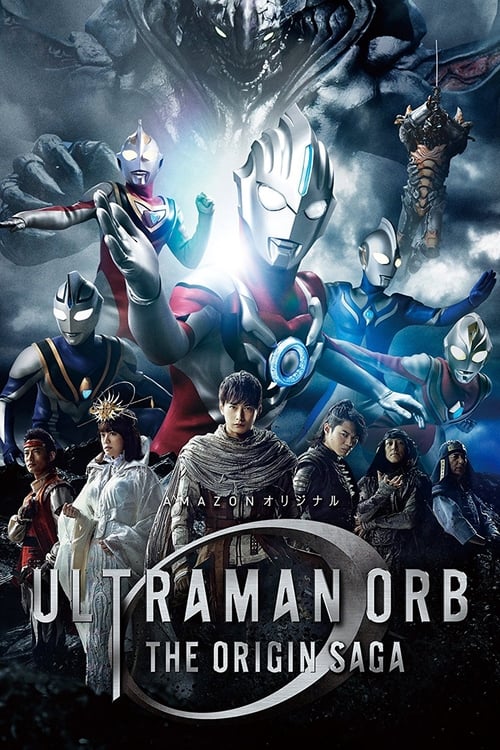
The story begins with a prologue that introduces the ancient battle between the Light and the Darkness. A powerful being known as the "Giant of Light" fights against the "Giant of Darkness," leading to a cataclysmic clash that results in the sealing of the Darkness. This sets the stage for the events that will unfold in the present day.
In the present, we meet Gai Kurenai, a young man who is searching for his purpose. He is a wanderer with a mysterious past, and he possesses the Orb Ring, a powerful artifact that allows him to transform into Ultraman Orb. Gai is initially seen in a small town where he encounters a monster attack. He transforms into Ultraman Orb for the first time, showcasing his abilities as he battles the creature, demonstrating his agility and strength. The townspeople are in awe of his power, but Gai remains distant and focused on his mission.
After the battle, Gai is approached by a group of individuals known as the "S.H.I.N. Team," who are dedicated to protecting humanity from kaiju threats. They are led by a determined woman named Jiro, who is skeptical of Gai's intentions. Despite her reservations, Gai joins the team, hoping to learn more about his powers and the monsters he faces. The team is soon called to investigate a series of mysterious kaiju appearances, which seem to be connected to a dark force.
As the S.H.I.N. Team investigates, they discover that a powerful kaiju named Gubira is behind the attacks. Gubira is a formidable foe, and the team realizes they must work together to defeat it. Gai struggles with his own insecurities and doubts about his abilities, but he is motivated by the desire to protect those around him. During a confrontation with Gubira, Gai transforms into Ultraman Orb again, and a fierce battle ensues. The fight is intense, with Gai using various techniques and strategies to outmaneuver Gubira, but the kaiju proves to be a tough opponent.
In a pivotal moment, Gai taps into the power of the Orb Ring, allowing him to access different forms and abilities. He combines the powers of past Ultramen, showcasing a dazzling array of attacks. The battle reaches its climax as Gai unleashes a powerful finishing move, ultimately defeating Gubira. The victory brings a sense of relief to the S.H.I.N. Team, but Gai is left feeling conflicted about the nature of his powers and the responsibility that comes with them.
As the story progresses, Gai learns more about his past and the connection he has to the ancient battle between Light and Darkness. He encounters a mysterious figure named Kuro, who reveals that he is a manifestation of the Darkness. Kuro seeks to manipulate Gai and exploit his insecurities, leading to a series of confrontations between the two. Gai's internal struggle intensifies as he grapples with the temptation to embrace the Darkness for greater power.
The S.H.I.N. Team faces new threats as more kaiju appear, each linked to Kuro's machinations. Gai's relationship with the team deepens, particularly with Jiro, who begins to see him as a valuable ally. However, Gai's connection to Kuro creates tension, as he is torn between his desire for power and his commitment to protecting humanity. In a critical moment, Gai is forced to confront Kuro directly, leading to an emotional showdown where he must choose between Light and Darkness.
During the climax, Gai transforms into Ultraman Orb once more, facing Kuro in an epic battle that tests his resolve. The fight is visually stunning, with both combatants showcasing their powers in a spectacular display of energy and strength. Gai ultimately realizes that true strength comes from within and that he must embrace his identity as a protector rather than succumbing to the Darkness. With newfound determination, he unleashes a final attack that defeats Kuro, sealing away the Darkness once again.
In the aftermath of the battle, Gai reflects on his journey and the bonds he has formed with the S.H.I.N. Team. He understands that his powers are not just a burden but a gift that he can use to help others. The series concludes with Gai standing tall as Ultraman Orb, ready to face whatever challenges lie ahead, embodying the spirit of hope and courage in the ongoing fight against darkness.
More TV Shows Like This
Browse All TV Shows →


What is the ending?
In the ending of "Ultraman Orb: The Origin Saga," Gai Kurenai, as Ultraman Orb, confronts the powerful enemy, the Dark Ultraman, in a climactic battle. After a fierce struggle, Gai manages to defeat the Dark Ultraman, saving the world from destruction. The story concludes with Gai reflecting on his journey and the bonds he has formed, particularly with his friends and allies. The fate of the main characters is left with a sense of hope and the promise of new beginnings.
As the final act of "Ultraman Orb: The Origin Saga" unfolds, the atmosphere is thick with tension. The scene opens in a desolate landscape, where Gai Kurenai stands resolute, his Ultraman Orb form shimmering with energy. The Dark Ultraman looms before him, a menacing figure shrouded in darkness, embodying the chaos and despair that has plagued the world. Gai's heart races, not just from the impending battle, but from the weight of his responsibilities and the memories of those he has fought alongside.
The battle erupts with a clash of light and shadow. Gai, fueled by determination and the memories of his friends, unleashes a series of powerful attacks. Each strike is a testament to his growth, both as a warrior and as a person. The Dark Ultraman retaliates fiercely, showcasing devastating powers that threaten to overwhelm Gai. The ground shakes beneath them, and the sky darkens, reflecting the intensity of their conflict.
As the fight progresses, Gai recalls the moments that have shaped him--the friendships forged with his allies, the sacrifices made, and the hope that has kept him going. These memories ignite a fire within him, pushing him to dig deeper into his strength. With a final surge of energy, Gai channels the power of Ultraman Orb, transforming into a brilliant form that radiates light. The Dark Ultraman, sensing the shift in power, becomes desperate, launching a final, all-out attack.
In a breathtaking moment, Gai counters with the Orb's ultimate technique, a dazzling display of light that engulfs the battlefield. The clash of their powers creates a shockwave that ripples through the air, and for a moment, time seems to stand still. Gai's determination shines through, and with a powerful cry, he delivers the finishing blow to the Dark Ultraman. The dark figure shatters into fragments of light, dissipating into the air, leaving behind a serene calm.
As the dust settles, Gai stands victorious but weary. The world around him begins to heal, the darkness lifting as hope returns. He looks up at the sky, a sense of relief washing over him. The bonds he has formed with his friends--Mitsuki, who has been a steadfast ally, and the others who fought alongside him--fill him with gratitude. They have all played a part in this victory, and Gai understands that he is not alone in this fight.
In the final scenes, Gai reflects on his journey. He walks through a landscape that is slowly returning to life, flowers blooming and the sun shining brightly. He knows that while the battle against darkness may never truly end, he has the strength and support of his friends to face whatever comes next. The camera pans out, showing Gai standing tall, a symbol of hope and resilience, ready to embrace the future.
The fate of the main characters is one of renewal. Gai Kurenai, having defeated the Dark Ultraman, emerges as a beacon of hope, ready to protect the world. Mitsuki, who has been by his side, shares in this victory, her faith in Gai reaffirmed. The other allies, having witnessed the power of unity and friendship, are inspired to continue their fight against evil. The story closes on a note of optimism, suggesting that while challenges may arise, the bonds formed through struggle will always light the way forward.
Is there a post-credit scene?
Yes, "Ultraman Orb: The Origin Saga" features a post-credit scene that adds an intriguing layer to the story.
As the credits roll, the scene opens with a dark, starry sky, creating a sense of mystery and anticipation. The camera pans down to reveal a desolate landscape, hinting at a world that has seen better days. In the foreground, a figure cloaked in shadows stands, their features obscured. The atmosphere is tense, filled with an ominous energy.
Suddenly, the figure steps into the light, revealing a familiar face: it is the antagonist, the mysterious and powerful being known as Jugglus Juggler. His expression is one of cunning and determination, suggesting that he has not been defeated but rather is plotting his next move. He smirks, a glint of malice in his eyes, as he speaks cryptically about the future and the challenges that lie ahead for Ultraman Orb and his allies.
The scene then shifts, showing flashes of various characters from the series, including Gai Kurenai, the human form of Ultraman Orb, and his companions. Each character is depicted in moments of struggle and triumph, emphasizing their growth and the bonds they have formed throughout the series. The visuals are accompanied by a haunting score that heightens the emotional stakes.
As the scene concludes, Jugglus Juggler raises his hand, and a dark energy swirls around him, hinting at his potential return and the looming threats that Ultraman Orb will face in the future. The screen fades to black, leaving viewers with a sense of foreboding and excitement for what lies ahead, effectively setting the stage for future encounters and challenges in the Ultraman universe.
What is the significance of Gai's connection to Ultraman Orb?
Gai's connection to Ultraman Orb is central to the narrative, as it represents his struggle between his human identity and his role as a protector of Earth. Gai, who is initially portrayed as a lone wolf, gradually learns to embrace his powers and responsibilities as Ultraman Orb. This connection is not just about wielding power; it reflects Gai's internal conflict and growth as he faces various monsters and challenges, ultimately leading him to understand the importance of teamwork and friendship.
How does the character of Juggler influence Gai's journey?
Juggler serves as both a mentor and an antagonist to Gai throughout the series. His enigmatic nature and complex motivations create a sense of intrigue and tension. Juggler's past with Ultraman Orb and his desire for power lead him to manipulate Gai, pushing him to confront his own fears and insecurities. This relationship is pivotal as it forces Gai to question his own values and the true meaning of strength, ultimately shaping his evolution into a hero.
What role do the Kaiju play in Gai's development as Ultraman Orb?
The Kaiju in 'Ultraman Orb: The Origin Saga' are not merely obstacles for Gai to overcome; they symbolize his internal struggles and the darker aspects of humanity. Each encounter with a Kaiju challenges Gai to confront his fears, regrets, and the consequences of his actions. As he battles these monsters, Gai learns valuable lessons about sacrifice, courage, and the importance of protecting those he loves, which are crucial for his growth as Ultraman Orb.
What is the backstory of the Orb Ring and its connection to Gai?
The Orb Ring is a powerful artifact that allows Gai to transform into Ultraman Orb. Its backstory is deeply intertwined with the history of the Ultraman legacy and the battles fought to protect Earth. The ring is not just a tool; it embodies the spirits of past Ultramen, and Gai's ability to wield it signifies his acceptance of his role as a guardian. The emotional weight of the ring's history adds depth to Gai's character, as he grapples with the expectations placed upon him and the legacy he must uphold.
How does the relationship between Gai and his friends evolve throughout the series?
Gai's relationships with his friends, particularly with characters like Shin and the members of the G.U.A.R.D., evolve significantly throughout the series. Initially, Gai is distant and reluctant to trust others, but as he faces various challenges, he begins to open up and rely on his friends for support. This evolution is marked by moments of vulnerability, teamwork, and shared victories, highlighting the importance of camaraderie in their fight against evil. Gai's journey from isolation to connection is a key emotional arc that enriches the narrative.
Is this family friendly?
"Ultraman Orb: The Origin Saga" is generally considered family-friendly, but there are a few elements that might be potentially objectionable or upsetting for children or sensitive viewers.
-
Monsters and Battles: The series features various kaiju (monsters) that can be frightening in appearance. The battles between Ultraman and these creatures can be intense, with scenes of destruction and chaos.
-
Emotional Conflict: Characters experience significant emotional turmoil, including themes of loss, betrayal, and sacrifice. These moments can be heavy and might resonate deeply with sensitive viewers.
-
Dark Themes: The narrative explores darker themes such as the struggle between good and evil, the consequences of power, and the burden of responsibility, which may be complex for younger audiences to fully grasp.
-
Violence: While the violence is not graphic, there are scenes of combat that may be intense, including Ultraman facing off against formidable foes, which could be unsettling for some children.
-
Character Deaths: There are moments that involve the loss of characters, which can evoke sadness and may be difficult for younger viewers to process.
Overall, while the show is designed for a younger audience, these elements may require parental guidance for sensitive viewers.