












Popular
What are the main conflicts between Will Shakespeare and Robert Greene throughout the series?
How does the character of Kate influence Will Shakespeare's development?
What role does the character of Burbage play in Will's life and career?
How does the character of Lord Southampton impact Will's writing and ambitions?
What comedic situations arise from Will's interactions with his family, particularly his wife Anne?
Should I watch it?
Ask Your Own Question

What is the plot?
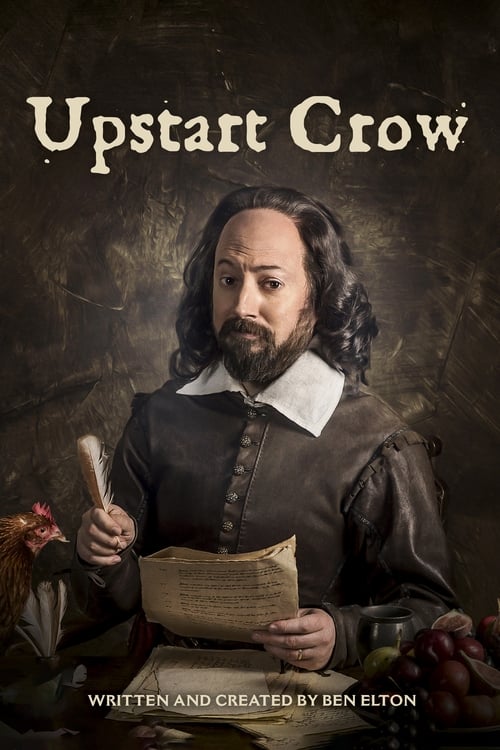
In the first episode, "The Play's the Thing," we are introduced to William Shakespeare, a struggling playwright in 1592 London. He is portrayed as ambitious yet insecure, desperate to make a name for himself in the competitive world of theatre. William is frustrated with the lack of success of his plays and is constantly seeking the approval of his patron, the Earl of Southampton. His wife, Anne Hathaway, is supportive but often challenges his decisions, pushing him to be more practical.
William's friend, the actor Richard Burbage, is eager to perform in a new play but is frustrated by William's indecision. Meanwhile, the theatre owner, the unscrupulous Robert Greene, is a rival who mocks William's efforts. The episode culminates in William finally deciding to write a play that will impress the Earl, leading to a chaotic rehearsal where everything that can go wrong does, showcasing the challenges of theatrical production.
In the second episode, "The Taming of the Shrew," William is inspired to write a new play based on the tumultuous relationship between men and women. He faces pressure from his peers and the theatre community to create something that will attract audiences. Anne, feeling neglected, confronts William about his obsession with work, leading to a heartfelt discussion about their relationship.
As William navigates the complexities of writing, he draws from his own experiences with Anne, leading to comedic misunderstandings and a series of mishaps involving his friends and fellow actors. The episode highlights the tension between artistic ambition and personal relationships, culminating in a performance that is both a success and a reflection of William's struggles.
In the third episode, "The Merchant of Venice," William is tasked with writing a play that addresses themes of love and money. He grapples with the moral implications of his characters' actions, particularly the character of Shylock, which leads to a deeper exploration of societal issues.
William's interactions with his friends, including the loyal but bumbling Bottom, provide comic relief as they attempt to help him with the writing process. The episode features a subplot involving Anne's attempts to secure a better life for their family, showcasing her determination and resourcefulness. The climax occurs during a heated discussion about the play's themes, forcing William to confront his own beliefs and the impact of his work on society.
In the fourth episode, "The Comedy of Errors," William finds himself in a series of mistaken identities and misunderstandings that mirror the chaos of his own life. He is approached by a wealthy patron who wants a play that will entertain the masses, pushing William to compromise his artistic integrity.
As the plot unfolds, William's friends become embroiled in the confusion, leading to a series of comedic encounters that highlight the absurdity of their situation. The episode culminates in a chaotic performance where the lines between reality and fiction blur, forcing William to confront the consequences of his choices and the nature of his relationships.
In the fifth episode, "The Tempest," William is inspired by the natural world and the concept of magic. He struggles with writer's block and seeks solace in the company of his friends, who provide both support and distraction.
The episode explores themes of creativity and inspiration, as William's interactions with Anne and his fellow playwrights lead to moments of introspection. The climax occurs when William finally breaks through his block, leading to a dramatic and emotional writing session that results in a powerful new play. The episode ends with a sense of renewal and hope for William's future.
In the sixth episode, "The Merry Wives of Windsor," William is faced with the challenge of writing a comedy that appeals to both men and women. He navigates the complexities of gender dynamics and societal expectations, leading to humorous situations involving his friends and family.
As William works on the play, he finds himself caught between the expectations of his patrons and his desire to create something meaningful. The episode features a subplot involving Anne's attempts to assert her independence, showcasing her growth as a character. The climax occurs during a performance that highlights the absurdity of the characters' situations, ultimately leading to a resolution that emphasizes the importance of love and understanding.
In the seventh episode, "The Winter's Tale," William grapples with themes of jealousy and redemption. He is inspired by a personal tragedy, leading to a more somber tone in his writing.
The episode delves into William's emotional state as he reflects on his relationships and the impact of his work on those around him. His friends rally to support him, providing moments of levity amidst the darker themes. The climax occurs during a pivotal scene in the play, where the characters confront their past mistakes, leading to a powerful resolution that emphasizes forgiveness and growth.
In the eighth episode, "The King and I," William is faced with the challenge of writing a historical play that will impress the court. He navigates the complexities of politics and power, leading to humorous encounters with nobles and royalty.
As William works on the play, he finds himself caught in a web of intrigue and deception, forcing him to confront his own values and beliefs. The episode features a subplot involving Anne's attempts to secure a better future for their family, showcasing her determination and resourcefulness. The climax occurs during a performance that highlights the absurdity of the political landscape, ultimately leading to a resolution that emphasizes the importance of integrity and honesty.
In the final episode, "The End of the Affair," William reflects on his journey as a playwright and the impact of his work on his relationships. He faces the challenge of reconciling his artistic ambitions with his personal life, leading to moments of introspection and growth.
The episode culminates in a powerful performance that showcases the culmination of William's experiences and the lessons he has learned throughout the series. As the curtain falls, William finds a sense of peace and fulfillment, embracing both his role as a playwright and his responsibilities as a husband and father. The series concludes with a sense of hope for the future, leaving the audience with a lasting impression of William's journey.






What is the ending?
In the final episode of Upstart Crow, titled "The Green-Eyed Monster," Shakespeare faces the challenges of jealousy and ambition as he navigates his relationships with his friends and family. The episode culminates in a series of misunderstandings and comedic situations, ultimately leading to a resolution where Shakespeare learns valuable lessons about trust and loyalty.
As the episode begins, we find Will Shakespeare in his study, grappling with the pressures of his writing career. He is anxious about the success of his latest play and feels overshadowed by the rising star of his rival, Christopher Marlowe. This sense of insecurity is compounded by his interactions with his wife, Anne, who is supportive but also frustrated by Will's preoccupation with his work.
Scene transitions to the Globe Theatre, where Will's friends, including the loyal but bumbling Bottom and the ambitious actor, Burbage, are preparing for the opening night of Will's new play. Tensions rise as Will overhears a conversation that leads him to believe that Anne may be having an affair with Marlowe. Consumed by jealousy, he confronts Anne, leading to a heated argument that reveals his insecurities and fears about their relationship.
Meanwhile, Marlowe, who is portrayed as charming yet cunning, is also dealing with his own ambitions. He seeks to undermine Will's confidence, further complicating the situation. The comedic misunderstandings escalate as Will's friends attempt to mediate between him and Anne, leading to a series of humorous yet poignant moments that highlight the importance of communication and trust in relationships.
As the opening night of the play approaches, Will's jealousy reaches a peak, causing him to sabotage his own work. However, in a moment of clarity, he realizes that his fears are unfounded and that Anne's loyalty to him is unwavering. This revelation prompts him to reconcile with her, leading to a heartfelt scene where they reaffirm their love and commitment to each other.
The episode concludes with the successful opening of Will's play, where the audience is captivated by his writing. Will stands proudly alongside his friends, having learned that true success comes not from rivalry but from the support of loved ones. The final moments showcase the camaraderie among the characters, emphasizing the themes of friendship, love, and the importance of overcoming jealousy.
In summary, the fates of the main characters are as follows: Will Shakespeare emerges with a renewed sense of confidence and a stronger bond with Anne; Anne remains supportive and loving, having navigated the challenges of Will's jealousy; Bottom and Burbage continue to be Will's loyal friends, providing comic relief and support throughout the chaos. Marlowe, while still a rival, is left to reflect on his own ambitions and the impact they have on his relationships. The episode closes on a note of unity and understanding, encapsulating the essence of the series.
Is there a post-credit scene?
In the TV show "Upstart Crow," there are no post-credit scenes. The episodes typically conclude without any additional content after the credits roll. The focus remains on the comedic and dramatic elements of the main storyline, with each episode wrapping up its narrative within the allotted time. The humor and character dynamics are fully explored during the episodes themselves, leaving no need for post-credit material.
What are the main conflicts between Will Shakespeare and Robert Greene throughout the series?
The conflicts between Will Shakespeare and Robert Greene are central to the narrative of 'Upstart Crow.' Greene, a successful playwright, often sees Will as a rival and a threat to his own status. Their rivalry is marked by Greene's snobbish attitude and attempts to undermine Will's work, often mocking his humble beginnings and lack of formal education. Will, on the other hand, is driven by a desire to prove himself and gain respect in the theatrical world. This tension is palpable in various episodes, where Greene's schemes to sabotage Will's plays lead to humorous yet poignant confrontations, showcasing Will's determination and resilience.
How does the character of Kate influence Will Shakespeare's development?
Kate, portrayed as a strong-willed and intelligent woman, plays a significant role in Will Shakespeare's development throughout 'Upstart Crow.' Initially, Will is depicted as somewhat oblivious to the capabilities of women in his time, but Kate challenges his perceptions. Her sharp wit and ambition inspire Will to consider deeper themes in his writing and to recognize the value of female voices. Their interactions often oscillate between playful banter and serious discussions about societal roles, pushing Will to evolve both personally and professionally. Kate's influence is particularly evident in episodes where she encourages Will to write more complex female characters, reflecting her own struggles and aspirations.
What role does the character of Burbage play in Will's life and career?
Burbage serves as a crucial ally and friend to Will Shakespeare in 'Upstart Crow.' As the owner of the Theatre, Burbage is instrumental in providing Will with opportunities to showcase his plays. Their relationship is characterized by a blend of camaraderie and business, with Burbage often acting as a sounding board for Will's ideas. He is supportive yet pragmatic, frequently reminding Will of the financial realities of theatre. Burbage's loyalty is tested in various episodes, especially when Will's ambitious projects threaten to jeopardize their partnership. His character embodies the struggles of the theatrical world, balancing artistic integrity with commercial success, and his interactions with Will highlight the importance of friendship in navigating the challenges of their profession.
How does the character of Lord Southampton impact Will's writing and ambitions?
Lord Southampton is portrayed as a patron and supporter of Will Shakespeare in 'Upstart Crow,' significantly impacting Will's writing and ambitions. Southampton's admiration for Will's talent provides him with the financial backing and social connections necessary to elevate his status in the theatre world. Their relationship is marked by mutual respect, with Southampton often encouraging Will to pursue more ambitious projects. However, this dynamic also introduces pressure, as Will feels the weight of expectations to produce work that lives up to Southampton's praise. The character's influence is particularly evident in episodes where Will grapples with the balance between artistic freedom and the desire to please his patron, showcasing the complexities of their relationship.
What comedic situations arise from Will's interactions with his family, particularly his wife Anne?
Will's interactions with his family, especially his wife Anne, are a rich source of comedic situations in 'Upstart Crow.' Anne is often portrayed as a practical and down-to-earth counterbalance to Will's lofty ambitions and artistic temperament. Their exchanges frequently highlight the domestic challenges of a playwright's life, with Anne's no-nonsense attitude clashing humorously with Will's romanticized view of his work. For instance, in episodes where Will becomes overly absorbed in his writing, Anne's interruptions and practical concerns about household matters lead to comedic misunderstandings. These moments not only provide humor but also reveal the underlying affection and partnership in their marriage, as Anne ultimately supports Will's dreams while keeping him grounded.
Is this family friendly?
"Upstart Crow," produced in 2016, is a British sitcom that centers around the life of William Shakespeare as he navigates the challenges of being a playwright in Elizabethan England. While the show is generally family-friendly, there are a few aspects that might be considered objectionable or upsetting for children or sensitive viewers:
-
Mature Themes: The show often touches on themes of ambition, jealousy, and rivalry, which may be complex for younger viewers to fully grasp.
-
Innuendos and Wordplay: The humor frequently includes innuendos and clever wordplay that may go over the heads of children but could be inappropriate for younger audiences.
-
Historical Context: Some scenes depict the harsh realities of life in the 16th century, including references to social class struggles and the treatment of women, which might be unsettling for some viewers.
-
Character Conflicts: There are moments of conflict and tension between characters that could be intense, showcasing jealousy and betrayal, which might be distressing for sensitive viewers.
-
Physical Comedy: The show includes slapstick humor and physical comedy that, while often light-hearted, can sometimes lead to characters getting hurt or embarrassed.
Overall, while "Upstart Crow" is designed to be humorous and entertaining, parents may want to preview episodes to determine their suitability for younger audiences.