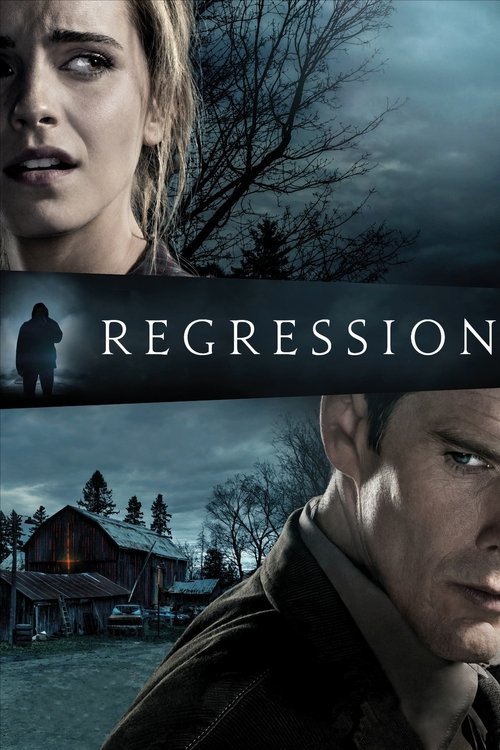

































Popular
What is the significance of the character Angela Gray in the story?
How does Detective Bruce Kenner's investigation unfold throughout the film?
What role does the character of Dr. Kenneth Raines play in the story?
What is the impact of the cult on the characters and the plot?
How does the theme of memory manipulation manifest in Angela's experiences?
Should I watch it?
Ask Your Own Question

What is the plot?
Sorry, we aren't able to watch and write up a full detailed plot yet. Check back in a few days.









What is the ending?
In the ending of "Regression," Detective Kenneth Raines uncovers the truth behind the alleged cult and the memories of abuse that have haunted Angela Gray. He realizes that the memories were manipulated through hypnosis, leading to a false narrative. The film concludes with Raines confronting the reality of the situation, and Angela is left to grapple with her trauma, while the true nature of the cult is revealed.
As the film approaches its climax, Detective Kenneth Raines, played by Ethan Hawke, finds himself in a dimly lit room, surrounded by the remnants of a case that has spiraled into a web of confusion and fear. The tension is palpable as he sifts through the evidence, piecing together the fragmented memories of Angela Gray, portrayed by Emma Watson. Angela's accusations against her father, John Gray, and the supposed cult that has tormented her become increasingly complex.
In a pivotal scene, Raines meets with Dr. Kenneth, the psychologist who conducted the hypnosis sessions. The atmosphere is thick with unease as Raines presses for clarity. Dr. Kenneth reveals that the memories Angela has been recalling may not be genuine but rather implanted through the process of hypnosis. This revelation sends Raines into a spiral of doubt, questioning the very foundation of the case he has been building.
The narrative shifts to Angela, who is seen in a vulnerable state, grappling with the implications of her memories. She is portrayed as a young woman caught in a storm of confusion and fear, her emotional state raw and exposed. The audience witnesses her struggle as she confronts the possibility that her memories may not be real, leading to a profound sense of betrayal and loss.
As Raines delves deeper, he uncovers the truth about the cult. In a tense confrontation, he discovers that the supposed cult members were not the monsters they were made out to be. Instead, they were victims of a larger societal panic, manipulated by the media and the justice system. This revelation is a turning point, as Raines realizes that the real danger lies not in the cult itself but in the hysteria that has consumed the community.
In the final scenes, Raines confronts Angela's father, John Gray, who has been wrongfully accused. The emotional weight of the moment is heavy as Raines grapples with the consequences of the investigation. He must face the reality that he has been part of a system that has failed to protect the innocent while punishing the wrong individuals.
The film concludes with a somber tone. Angela is left to navigate her trauma, now aware that her memories may have been manipulated. Raines, burdened by the weight of his discoveries, reflects on the fragility of truth and the impact of fear on human lives. The final shot lingers on Raines, his expression a mix of regret and determination, as he contemplates the complexities of justice and the scars left behind by the pursuit of it.
In the end, Raines is left with a sense of unresolved conflict, while Angela must find a way to heal from her experiences, both of them forever changed by the events that unfolded. The film closes, leaving the audience to ponder the implications of memory, truth, and the human condition.
Is there a post-credit scene?
The movie "Regression," produced in 2015, does not have a post-credit scene. The film concludes with its final moments, wrapping up the story without any additional scenes or content after the credits roll. The narrative focuses on the psychological and emotional turmoil experienced by the characters, particularly the protagonist, Angela Gray, and the detective, Bruce Kenner, as they unravel the mystery surrounding a series of disturbing events linked to a cult and repressed memories. The absence of a post-credit scene aligns with the film's serious tone and thematic exploration of trauma and belief.
What is the significance of the character Angela Gray in the story?
Angela Gray, played by Emma Watson, is a pivotal character in 'Regression.' She is a young woman who accuses her father, John Gray, of sexual abuse, which sets off the investigation led by Detective Bruce Kenner. Angela's emotional turmoil and the trauma she experiences are central to the narrative, as her memories are manipulated through hypnosis, raising questions about the reliability of memory and the impact of trauma.
How does Detective Bruce Kenner's investigation unfold throughout the film?
Detective Bruce Kenner, portrayed by Ethan Hawke, begins his investigation into Angela's allegations with a sense of duty and determination. As he delves deeper, he encounters a series of bizarre occurrences and a growing sense of paranoia. His motivations shift from seeking justice to grappling with the implications of the case, especially as he uncovers a larger conspiracy involving a cult and the manipulation of memories, which leads him to question his own beliefs and the nature of truth.
What role does the character of Dr. Kenneth Raines play in the story?
Dr. Kenneth Raines, played by David Thewlis, is a psychologist who becomes involved in Angela's case through hypnosis. His character embodies the complexities of memory recovery, as he attempts to help Angela recall her traumatic experiences. However, his methods raise ethical concerns, and as the story progresses, it becomes clear that his influence may lead to false memories, complicating the investigation and adding layers of psychological tension to the narrative.
What is the impact of the cult on the characters and the plot?
The cult, which is revealed to be a significant part of the story, serves as a catalyst for the events that unfold. It is linked to the abuse allegations against John Gray and represents a larger societal fear of hidden evils. The cult's influence creates a sense of dread and paranoia, affecting not only Angela and her family but also Detective Kenner, who becomes increasingly obsessed with uncovering the truth. The cult's presence amplifies the themes of manipulation and the fragility of memory.
How does the theme of memory manipulation manifest in Angela's experiences?
Angela's experiences with memory manipulation are central to the plot of 'Regression.' Through hypnosis, she recalls traumatic events that may or may not have occurred, leading to a blurring of reality and fiction. This manipulation affects her emotional state, causing confusion, fear, and a struggle for identity. As the investigation progresses, the audience witnesses the devastating effects of these manipulated memories on Angela's psyche, highlighting the film's exploration of the reliability of memory and the consequences of trauma.
Is this family friendly?
"Regression," produced in 2015, is not considered family-friendly due to its mature themes and unsettling content. Here are some potentially objectionable or upsetting aspects that may affect children or sensitive viewers:
-
Child Abuse Themes: The film deals with the sensitive topic of child abuse, which is central to the plot and may be distressing for viewers.
-
Psychological Trauma: Characters experience significant psychological distress, including anxiety and fear, which may be unsettling.
-
Violence: There are scenes that depict violence and aggression, contributing to a tense atmosphere.
-
Cult and Occult Elements: The film explores themes related to cults and occult practices, which may be disturbing for some viewers.
-
Graphic Imagery: Some scenes may contain graphic or intense imagery that could be upsetting.
-
Paranoia and Fear: The overarching themes of paranoia and fear of the unknown can create a tense and uncomfortable viewing experience.
These elements contribute to the film's mature rating and may not be suitable for younger audiences or those sensitive to such topics.