















Popular
What motivates Jake Carter to take on the mission in The Marine 6: Close Quarters?
How does the character of Luke Trapper contribute to the plot?
What is the significance of the hostage situation in the story?
How does the relationship between Jake Carter and the hostages evolve throughout the film?
What role does the setting play in the action sequences of the film?
Should I watch it?
Ask Your Own Question

What is the plot?
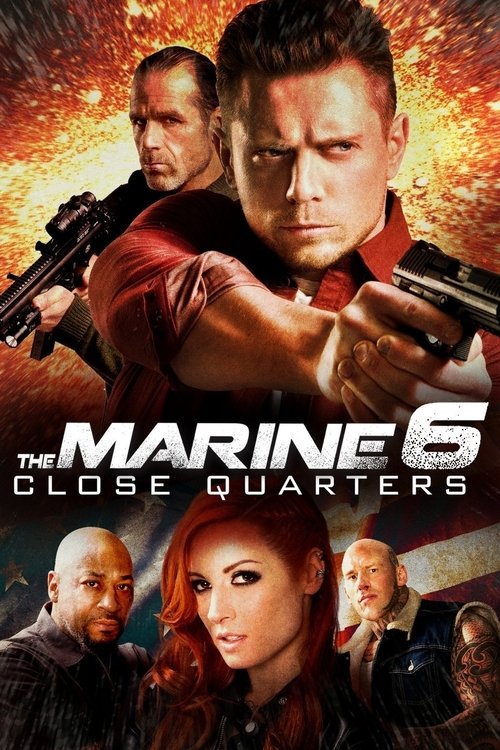
Jake Carter and Luke Trapper open the film in Portland, Oregon, in a stripped-down gym space where they spar like men who never really left the war behind. Their movements are sharp and economical, the kind of training that feels less like exercise than ritual, and the scene immediately establishes both their bond and their readiness. Luke, Jake's former commanding officer, now works for the Department of Veterans Affairs, and he pulls Jake into a side mission that seems almost gentle compared to what comes later: visiting Tommy Walker, a veteran squatting in an abandoned brewery. Luke has already been bringing Tommy food and basic supplies, and he hopes Jake can help persuade him to leave and accept proper housing.
Tommy Walker's refusal to go matters because the brewery is not just an abandoned building; it is a wound he has chosen to live inside. He is the father of a former comrade who was killed in combat, and his grief has become part of the building's decay. The place feels hollow and haunted, with broken surfaces, stale air, and the sense that no one should be living there, yet Tommy clings to it as if the walls can keep the past from disappearing. Jake and Luke try to reason with him, but the old veteran will not budge. The scene might have ended as a quiet tragedy about loneliness and neglect, except that the film is already tightening its trap elsewhere.
At the same time, Sarah Dillon is kidnapped by Maddy Hayes, the fierce and ruthless daughter of a powerful criminal, Horace Hayes. Maddy's strategy is coldly practical and personal at once. Sarah's father, Patrick Dillon, is serving as a juror in Horace's trial, and Maddy uses Sarah as leverage to force Patrick into delivering a mistrial. The threat is direct and brutal: if Patrick does not help her father escape conviction, Sarah dies. Maddy's call to Patrick turns the court case into a hostage negotiation, and suddenly the legal drama and the action thriller fuse into one pressure cooker. Horace Hayes is not just facing any case; he is on trial for the murders of two police officers, so the stakes are already lethal before Maddy ever enters the picture.
Jake and Luke leave Tommy's brewery and head back toward Luke's truck, still trying to salvage the visit and probably thinking they have escaped another small disappointment. Then they hear a scream from inside the building. The sound cuts through the air and instantly changes the temperature of the scene. They turn back, moving from concern into urgency, and go inside to investigate. The brewery that seemed like a sad refuge now becomes a battlefield.
They burst into a room and find Sarah surrounded by Maddy Hayes and her henchmen. The hostage situation is immediate, chaotic, and explosive. Jake and Luke are outnumbered, but they are not helpless, and the fight begins almost as soon as they understand the room they have walked into. The brothers-in-arms work with the practiced aggression of men who know how to survive an ambush. They fight through the first wave of attackers, trying to protect Sarah while taking the building apart around them. Maddy, meanwhile, stays composed through the violence, as if she has already decided the outcome and is simply letting the pieces fall into place.
In the middle of the chaos, a man named Graham wanders in. He is not part of the rescue mission, and he is not part of Maddy's plan either; he is just unlucky enough to step through the wrong door at the wrong time. Maddy kills him, and the suddenness of the death underlines how little restraint she has. It is one of the film's earliest and clearest demonstrations that the villains will murder anyone who complicates their control, even an innocent bystander who blunders into the scene. The shock of Graham's death sharpens the danger for everyone else in the brewery.
As Jake and Luke continue fighting, the story keeps cutting back to Patrick Dillon's moral crisis. He is trapped in a nightmare with no clean answer. His daughter's life is being held hostage by a criminal family, and his role as a juror makes him the pivot point for the entire scheme. Every moment in the courtroom carries the weight of Sarah's survival, and every thought he has about justice is contaminated by fear. He struggles with his verdict, torn between doing the right thing and saving his child. That tension builds in parallel with the violence at the brewery, linking two enclosed spaces--the jury room and the abandoned building--through the same suffocating logic of coercion.
The action in the brewery escalates into a long series of close-quarters clashes. Jake and Luke fight through Maddy's men in different rooms and corridors, using the building's broken structure to their advantage whenever they can. Doors slam, fists fly, bodies crash into walls, and the old brewery becomes a maze of grit and improvised survival. Sarah is dragged and repositioned as the combat shifts from one floor to another, but Jake and Luke keep forcing their way toward her. The old building seems to swallow the noise and throw it back, amplifying every punch and gunshot into something harsher and more desperate.
The fight eventually drives the group into the brewery's underground tunnel system, a hidden space that turns the building into a trap. The tunnels are darker, tighter, and more claustrophobic than the rooms above, with the sense that escape is slipping away as the attackers close in. Jake, Luke, and Sarah are pinned down there by more henchmen, and the pressure becomes unbearable. The tunnels strip away any illusion that this is a simple rescue. There is nowhere to run, nowhere to hide, only a narrowing corridor of violence.
In the chaos below ground, Jake is shot and fatally wounded. The wound is not just an injury; it is the moment the story pivots from survival to sacrifice. Maddy snatches Sarah back, reclaiming the hostage as though the whole exchange has merely confirmed her control. Jake, realizing he cannot finish the fight himself, makes a final decision that defines him. He tells Luke, in effect, to keep going, and then he charges toward the henchmen, using his own body as a weapon and a shield. He runs straight into the fire, trying to take as many of them with him as possible. The scene is frantic and grim, but it is also deeply emotional, because Jake's choice is not tactical so much as instinctive loyalty. He is buying time with his life.
Maddy ends Jake's life herself. In a final, brutal gesture, she bids him farewell and throws a knife into his heart. The kill is intimate and merciless, the kind of death that feels personal even in the middle of a firefight. Jake's sacrifice is complete the moment the blade sinks in. He falls with the knowledge that he has done everything he can to keep Sarah and Luke moving forward, and the film makes the cost unmistakable. One of its central heroes is gone, and the rescue is now stained with loss.
Even after Jake dies, the violence does not stop. Luke pushes onward, carrying the burden of Jake's sacrifice and the urgency of Sarah's life. Maddy and the remaining henchmen retreat toward the exterior waterfront and a boat, trying to escape the collapsing situation. Luke follows them outside, and the space opens up from the brewery's choking interior to the wet, exposed dockside area. The change in setting creates a new kind of tension. After the tunnel darkness, the open air should offer relief, but instead it just exposes the final movement of the chase. There is no cover now, only momentum.
Luke kills the remaining henchmen on land one by one, clearing the way with the same efficiency he showed inside the brewery. Each death strips Maddy of another layer of protection, leaving her more vulnerable and more furious. While this is happening, she learns that Patrick's mistrial has been confirmed. The plan has worked, at least in the short term. Sarah is now no longer useful to Maddy as leverage. That revelation is chilling because it means the hostage is now a loose end. The moment the legal outcome bends in Horace Hayes' favor, Sarah's value drops to zero in the eyes of her captors.
Luke boards the boat and kills Maddy's last remaining bodyguard. The fight compresses again into a small, violent space, the deck and cabin of the boat becoming the last arena of the film. Luke and Maddy then face each other directly in hand-to-hand combat. There is no crowd now, no tunnel, no courtroom, only two people and the accumulated wreckage of their choices. Maddy fights like a cornered predator, but Luke is stronger and more determined. He manages to overpower her with a rope, and the struggle turns physical in a different way, less about gunfire and more about control.
Luke throws Maddy overboard. For a brief moment, it looks like the water might be the only thing between her and survival, but the film withholds her end just long enough to let the final mechanism click into place. An anchor connected to the rope falls into the water, dragging her downward. The image is stark and final: the villain who engineered the entire nightmare is pulled under by the very weight attached to her own failed violence. She drowns beneath the surface, and the sea becomes her grave. It is an unambiguous end for Maddy Hayes, and it closes the circle on the rope that Luke used to seize the upper hand.
Once the immediate threat is over, police and paramedics arrive. The film shifts from combat to aftermath, and the emotional cost becomes visible at last. Sarah is reunited with Patrick, and the reunion lands as a release after the long sequence of fear, coercion, and bloodshed. Patrick guarantees that Horace will be brought to justice, restoring the promise of the trial that Maddy tried so hard to corrupt. The legal plot, which has hung over the entire film like a second hostage situation, finally reasserts itself as the reason all of this happened. Horace may have gained a temporary reprieve through the mistrial, but the promise of accountability remains.
The final emotional beat belongs to Luke. He says his goodbye to Jake's corpse as paramedics escort it away, and the film ends not on triumph but on mourning. Luke has survived the night, but survival is framed as loss rather than victory. Jake Carter's body is taken off, and the image leaves behind the stark reminder that heroism here is inseparable from grief. The brewery is no longer the battleground, the boat is no longer the escape route, and the hostage crisis is over. What remains is the echo of the fight, the memory of Jake's sacrifice, and the quiet, weary promise that justice will still be pursued even after too much has already been taken.
More Movies Like This
Browse All Movies →








What is the ending?
In the ending of "The Marine 6: Close Quarters," Jake Carter and his team confront the main antagonist, a ruthless criminal named Tiano, in a final showdown. After a series of intense battles, Jake manages to defeat Tiano, saving the hostages and ensuring the safety of his team. The film concludes with Jake and his allies reflecting on their victory, emphasizing themes of loyalty and sacrifice.
As the climax of "The Marine 6: Close Quarters" unfolds, the tension reaches its peak within the confines of a dilapidated warehouse, where Jake Carter and his team are cornered. The air is thick with anticipation, and the dim lighting casts long shadows, heightening the sense of danger. Jake, portrayed by Mike "The Miz" Mizanin, stands resolute, his jaw clenched, eyes scanning the area for any sign of movement. His team, consisting of fellow operatives, is equally on edge, aware that the stakes have never been higher.
The scene shifts as Tiano, the film's primary antagonist, enters the fray, flanked by his henchmen. He exudes a menacing confidence, taunting Jake and his team. The confrontation escalates quickly, with gunfire erupting as both sides engage in a fierce battle. Jake's military training kicks in; he moves with precision, taking down enemies one by one, his determination fueled by the need to protect the hostages held captive.
As the fight rages on, the camera captures the chaos: bullets ricochet off metal surfaces, and the sound of explosions reverberates through the air. Jake's internal struggle is palpable; he is not just fighting for survival but also for the lives of those he cares about. His team members, each showcasing their unique skills, work in tandem with him, demonstrating their loyalty and camaraderie.
In a pivotal moment, Jake confronts Tiano directly. The two engage in a brutal hand-to-hand combat sequence, showcasing their physical prowess. Jake's emotions are a mix of anger and resolve as he recalls the lives at stake. The fight is intense, with both men exchanging blows, but ultimately, Jake's determination prevails. With a final, powerful move, he subdues Tiano, ensuring that he can no longer pose a threat.
As the dust settles, the remaining henchmen are either captured or flee, leaving Jake and his team victorious. The hostages, who had been held in fear, are freed, and the relief on their faces is evident. Jake's team gathers around him, their expressions a mix of exhaustion and triumph. They share a moment of camaraderie, acknowledging the sacrifices made and the bonds formed through their harrowing experience.
In the aftermath, the film shifts to a quieter scene where Jake reflects on the events that transpired. He stands outside the warehouse, the sun beginning to rise, symbolizing a new beginning. His team members join him, and they share a sense of accomplishment, knowing they have made a difference. Each character's fate is addressed: Jake emerges as a hero, having proven his leadership and bravery; his team members, who fought valiantly alongside him, are celebrated for their contributions.
The film concludes with a sense of closure, highlighting the themes of loyalty, sacrifice, and the importance of standing together in the face of adversity. Jake Carter, having faced his demons and emerged victorious, looks forward to a future where he can continue to protect those in need, embodying the spirit of a true hero.
Is there a post-credit scene?
In "The Marine 6: Close Quarters," there is no post-credit scene. The film concludes without any additional scenes or teasers after the credits roll. The story wraps up with the main characters resolving their conflicts and the narrative reaching a satisfying conclusion, leaving no further plot developments or cliffhangers for the audience to ponder.
What motivates Jake Carter to take on the mission in The Marine 6: Close Quarters?
Jake Carter, portrayed by Mike 'The Miz' Mizanin, is driven by a strong sense of duty and loyalty, particularly towards his friends and fellow Marines. When he learns that his friend and former Marine, who is now a security guard, is in danger due to a hostage situation involving a group of criminals, Jake feels compelled to step in and help. His internal conflict revolves around balancing his desire to protect those he cares about with the risks involved in confronting dangerous adversaries.
How does the character of Luke Trapper contribute to the plot?
Luke Trapper, played by Shawn Michaels, serves as a mentor and ally to Jake Carter. His character adds depth to the narrative as he provides guidance and support during the mission. Trapper's experience and tactical knowledge are crucial in strategizing their approach to rescue the hostages. His presence also highlights themes of camaraderie and the bond between soldiers, as he encourages Jake to embrace his skills and instincts.
What is the significance of the hostage situation in the story?
The hostage situation is central to the plot of The Marine 6: Close Quarters, as it sets the stage for the action and conflict. The criminals, led by a ruthless antagonist, take a group of people captive, including a key character who is important to Jake. This scenario not only raises the stakes for Jake and his team but also serves as a catalyst for character development, showcasing Jake's bravery and resourcefulness as he navigates the dangerous environment to save the hostages.
How does the relationship between Jake Carter and the hostages evolve throughout the film?
Throughout The Marine 6: Close Quarters, Jake Carter's relationship with the hostages evolves from a sense of duty to a deeper emotional connection. Initially, he views them as individuals he must save, but as he interacts with them, he begins to understand their fears and struggles. This connection fuels his determination to rescue them, and he becomes increasingly protective, showcasing his growth as a character who values human life beyond just completing a mission.
What role does the setting play in the action sequences of the film?
The setting of The Marine 6: Close Quarters, primarily taking place in a high-stakes urban environment, plays a crucial role in the action sequences. The confined spaces of the building where the hostages are held create intense, close-quarters combat scenarios that heighten the tension. The filmmakers utilize the environment to enhance the choreography of fight scenes, with Jake and his team navigating through tight hallways and rooms, which amplifies the urgency and danger of their mission.
Is this family friendly?
"The Marine 6: Close Quarters" is an action film that contains several elements that may not be suitable for children or sensitive viewers. Here are some potentially objectionable aspects:
-
Violence: The film features intense action sequences, including hand-to-hand combat, gunfights, and physical confrontations that may be graphic and intense.
-
Language: There are instances of strong language throughout the film, which may not be appropriate for younger audiences.
-
Themes of Kidnapping and Hostage Situations: The plot revolves around a kidnapping, which can be distressing for some viewers, especially children.
-
Death and Injury: Characters face life-threatening situations, and there are scenes depicting injury and death that may be upsetting.
-
Emotional Turmoil: Characters experience significant emotional distress, including fear, anger, and desperation, which may resonate deeply with sensitive viewers.
These elements contribute to a tone that is more suited for mature audiences rather than a family-friendly viewing experience.