











Should I watch it?
Ask Your Own Question

What is the plot?
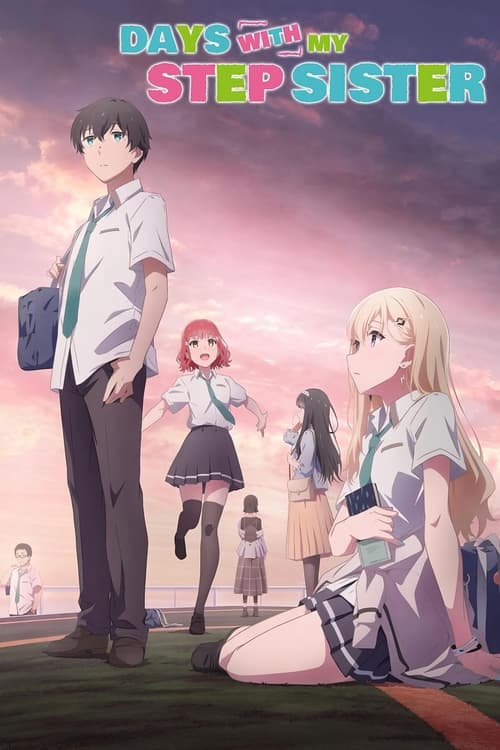
Yūta Asamura returns home from his part-time job at the bookstore to find his father waiting with a woman named Yumi Ayase, whom he has just married, and her daughter Saki Ayase, Yūta's new stepsister.
Yūta and Saki, both second-year high school students in the same grade where Saki is known as the hottest girl, enter their new shared home feeling awkward and distant due to scars from their parents' previous divorces.
Yūta and Saki sit down together and agree to maintain a reasonable distance in their relationship to avoid causing family discord, neither getting too close nor too opposing, influenced by the lessons from their parents' troubled relationships.
Yūta prepares fried eggs in the kitchen as part of a deal they make to handle household chores fairly, marking their first small interaction while still keeping emotional space.
During a school day, Yūta reflects on his interactions with Saki and revises his approach to living with her, noticing her solitary nature and her longing for family affection despite her independence.
Yūta talks with his friend Tomokazu Maru, a baseball team member and otaku, about his home situation, revealing his bewilderment on how to connect with Saki as a brother.
Yūta and Saki develop subtle tendencies in their daily routines, strategizing ways to coexist comfortably without overstepping boundaries.
One night, Yūta comes home late from work and encounters Saki in a more genuine conversation, contrasting with their previous superficial exchanges.
During a rainstorm, they share a meal of sweet and sour pork, which brings them closer emotionally as they open up slightly about their feelings.
As summer vacation approaches, Yūta becomes aware of his growing feelings for Saki after seeing her at the school swimming pool, where her beauty triggers his attraction.
Saki experiences her own shift in feelings toward Yūta during summer vacation, deepened by shared experiences that make them feel comfortable together.
Yūta responds to Saki's overtures thoughtfully while preparing hot milk, navigating the blossoming camaraderie turning deeper.
Saki reveals entries from her private diary to Yūta, providing insight into her inner thoughts and past issues with her mother, fostering greater understanding between them.
Yūta and Saki confront their regrets about their family histories and relationships, reflecting on how these shape their bond.
In a pivotal moment, Saki offers to have sex with Yūta, but he turns her down, instead choosing to talk openly about their issues with their former mother and father, which profoundly affects her.
Touched by Yūta's rejection of physical intimacy in favor of emotional discussion, Saki develops romantic feelings for him and decides to cut her hair short as a symbolic change.
Yūta and Saki affirm their identities as brother and sister while grappling with emotions that blur into something more, like admiration or familial love.
Their relationship reaches a deeper point marked by the simple conjunction "and," solidifying cautious camaraderie into profound connection without fully crossing into romance, as Saki's hair later regrows to its original length.
More TV Shows Like This
Browse All TV Shows →








What is the ending?
In the ending of Days with My Stepsister, Yuta confesses his feelings to Saki, and she accepts that he likes her, though they remain uncertain if it's true romance or deep familial affection, leaving their relationship open-ended without full resolution.
Now, let me narrate the finale scene by scene from episode 12, drawing you into the quiet tension of their shared home as the story reaches its emotional peak.
The episode builds to a late-night moment in the Asamura-Ayase household. Yuta sits alone in the living room, his heart pounding with the weight of unspoken words he's carried since their parents' marriage forced them under one roof. The room is dimly lit by a single lamp, casting long shadows on the walls lined with family photos that remind him of their awkward start--two teens scarred by divorce, vowing distance from each other. Saki enters from the kitchen, her long hair loose over her school uniform, carrying two mugs of tea. She sets one in front of him on the low table, her movements precise and composed, as always the poised beauty of their grade who hides vulnerability behind a cool exterior.
They sit across from each other on the floor cushions, steam rising from the tea in lazy curls. Yuta grips his mug tightly, knuckles whitening, his face flushed as he finally speaks. "Saki... I like you," he says directly, voice steady but eyes averted to the floor, revealing his internal storm of fear from past family failures and the taboo of stepsibling bonds. Saki pauses mid-sip, her sharp eyes widening slightly, the mug hovering near her lips. She lowers it slowly, processing his confession in the heavy silence broken only by the distant tick of a clock.
Saki responds calmly, setting her mug down with a soft clink. "I'm fine with you liking me," she says, her tone even but laced with a subtle warmth in her gaze that betrays her own guarded heart. She elaborates that she's okay with his feelings, acknowledging the closeness they've built through everyday shared pains--like late-night study sessions, accidental glimpses of vulnerability, and mutual support against parental expectations. Yet she adds they aren't sure if this is romantic love or something deeper, like the familial tie that's grown from their cautious camaraderie into irreplaceable trust.
Yuta looks up, relief mixing with confusion on his face, his shoulders relaxing for the first time. Saki meets his eyes directly now, her usual stoic mask cracking into a faint, genuine smile--the kind she's only shown him in private moments, like when they laughed over a failed recipe or confided about divorce scars. They don't kiss or embrace; instead, they sit there, sipping tea in companionable quiet, the air charged with possibility but no rush to define it. The camera lingers on their hands inches apart on the table, symbolizing the bridge they've built without crossing fully.
As the scene fades, the new ending visual releases post-finale, showing Yuta and Saki side by side in soft light, evoking their unresolved bond. Yuta's fate: he graduates into young adulthood with Saki as his closest confidante, his confession freeing him from silence but leaving romantic questions open, motivated by a desire for honest connection over isolation. Saki's fate: she continues as the composed stepsister, accepting Yuta's affection while protecting her heart, her emotional growth shown in allowing vulnerability without full commitment, prioritizing their unique family dynamic. Secondary characters like Tomokazu Maru, Maaya Narasaka, and Shiori Yomiuri fade from the immediate end, their friendships intact but not central, having supported the pair's journey without altering the core resolution. The story closes on their everyday life continuing, emphasizing that true bonds evolve slowly amid uncertainty.
Is there a post-credit scene?
No, there is no post-credits scene in the finale of Days with My Stepsister (2024). The 12th and final episode, aired on September 19, 2024, concludes without any additional teaser or scene after the credits, as confirmed by reports on the episode's broadcast and the subsequent release of a new ending key visual instead of post-credits content. A creditless ending video featuring the theme "Suisou no Buranko" by Kitri was shared separately by Crunchyroll, but this is the standard ending sequence, not a post-credits extension.
Is this family friendly?
No, Days with My Stepsister is not family-friendly for children or sensitive viewers due to its focus on the emotional complexities of stepsibling relationships in a shared living situation, which carries inherent romantic tension despite the characters' efforts to maintain distance.
Potentially objectionable or upsetting aspects include: - Scenes exploring awkward intimacy and personal boundaries between stepsiblings, such as shared household routines that highlight physical proximity and emotional vulnerability. - Discussions or depictions of parental divorces and family scars, evoking feelings of isolation, longing for affection, and relational bewilderment. - Subtle undercurrents of budding attraction or "something deeper" beyond familial bonds, presented through daily interactions that may feel charged for younger audiences.