








Popular
What role does the setting play in the development of the plot?
How does the character of Sarah contribute to the investigation?
Who is the main antagonist in A Climate for Killing?
What motivates the character of Detective Mike to investigate the case?
What is the significance of the environmental theme in the character arcs?
Should I watch it?
Ask Your Own Question

What is the plot?
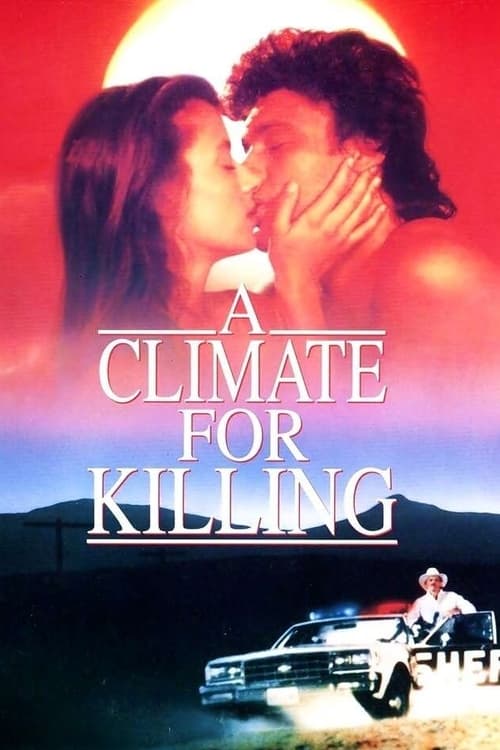
A Climate for Killing opens in the punishing brightness of Yuma County, Arizona, just before rodeo festival week, when the whole town is trying to look festive, respectable, and absolutely untroubled. That fragile calm shatters the moment a mutilated woman's body is discovered in the desert, and Sheriff Kyle Shipp is forced to pull the town back toward a past everyone would rather leave buried. The corpse is missing its head and hands, which makes identification slippery and ominous from the start, but the body's condition only deepens the shock when the investigation begins to point toward a woman the town believed dead for sixteen years: Ria Paris, the presumed victim of a notorious local murder-suicide that had long been treated as closed history.
Kyle Shipp is a working sheriff in the old local mold, a man who knows the county, knows the people, and understands just how much trouble can be caused by dragging an ugly truth into public view during rodeo week. The pressure on him is immediate, because the discovery threatens not just one death but the reputation of the entire town. Into this uneasy atmosphere arrives Paul McCraw, an ambitious outside investigator sent in to help and to modernize the operation. He is the kind of man who believes in procedure and efficiency, and almost at once he becomes a friction point in the sheriff's office, where Kyle prefers instinct, local knowledge, and quiet handling of ugly matters.
The first major break in the case comes from Grace Hines, the coroner. She studies the body and recognizes a birthmark on the thigh, a tiny physical detail that becomes the key to the entire mystery. That recognition is not merely professional; it is personally dangerous. Grace admits she knows the woman because years earlier she performed an illegal abortion on her, and that secret means Grace has identified the corpse in a way she can never safely explain to the wrong people. The revelation binds her to the investigation and to the town's buried moral history, because the body in the desert is no anonymous victim but a woman whose private life was already entangled with shame, secrecy, and local judgment.
Once the identity thread is pulled, the story opens into the old case that Yuma has been carrying like a scar. Ria Paris had been believed murdered by her much older husband, Wayne Paris, sixteen years earlier. The accepted version of events says Wayne killed her, then took his own life from remorse later that same week, sealing the tragedy into the local memory as a closed domestic horror. But the fresh condition of the corpse makes that old story impossible as stated. The investigation begins to reveal that the town has not merely forgotten the truth; it has been living inside a lie that was convenient enough to preserve for years.
As Kyle and Paul dig deeper, their partnership becomes increasingly strained. Paul wants facts, records, and clean departmental reform. Kyle wants results without detonating the whole town in the process. Their clashes are not just professional disagreements; they reflect two ways of understanding justice. Paul treats the case like an evidence problem. Kyle understands it as a living wound in a small community where everyone is connected to everyone else, and where every answer threatens to embarrass somebody powerful, or expose somebody vulnerable, or both. Their friction carries the investigation forward while also making every discovery feel contested, as if the truth itself is fighting to stay hidden.
The investigation does not unfold in a straight line, because the town is layered with old relationships and suppressed knowledge. The sheriff's office becomes the center of a slow unspooling of memory: the old domestic history of Wayne and Ria Paris, the rumors that surrounded their marriage, and the social comfort of believing the tragedy had been solved long ago. The discovery that the body is too fresh to be the long-dead woman everyone assumed forces the characters to realize that someone has either staged the corpse or has brought a second death into the light in a way meant to reopen the first. That uncertainty intensifies the suspense because every new clue threatens to split the old story in two: one part about what happened then, and one part about what is happening now.
Grace Hines' secret is one of the film's sharpest emotional pivots. She cannot publicly explain how she knows the body without revealing the illegal abortion, and that means her knowledge is at once invaluable and perilous. The film uses her dilemma to show how women's bodies, medical secrecy, and town gossip become instruments of control. Grace is not just holding a fact; she is holding a confession that could destroy her professional standing. Her recognition of the birthmark turns the body from a forensic puzzle into a moral one. This is no longer simply about identifying a victim. It is about who in Yuma has been allowed to remain respectable by keeping the ugly details of women's lives off the record.
Meanwhile, the old Wayne Paris story starts to rot under scrutiny. The supposed murder-suicide, long accepted as the final word on Ria's disappearance, begins to look less like fact than a community-made explanation designed to stop questions. Wayne Paris has been part of the story from the beginning as the wealthy husband everyone assumed guilty, but the fresh body makes the old narrative unstable. The image of a husband killing his wife and then himself becomes not closure but camouflage. The town's willingness to accept that explanation, and then forget it, becomes one of the film's central revelations: social convenience can preserve a lie for over a decade if the lie is neat enough and the people involved are socially powerful enough.
The pressure of rodeo week heightens everything. The town is full of public energy, banners, events, and ceremony, yet underneath the celebration sits fear that the case will tear open a scandal right in front of everyone. Sheriff Shipp knows the stakes are not abstract. If the truth comes out, it will not just humiliate the Paris name; it will expose how many people knew or suspected more than they ever said. That tension gives the investigation a constant double rhythm: outwardly, the town is preparing for spectacle and normal life; inwardly, the sheriff's office is becoming a chamber of secrets, arguments, and growing certainty that the old story cannot survive much longer.
Paul McCraw's presence also adds another layer of conflict because he is not just an investigator but a modernizing outsider. He represents a system that wants to catalog, regulate, and correct the roughness of local law enforcement. Yet the more he pushes, the more he gets pulled into the town's human complications. The local case is not a clean procedural. It is a knot of family relationships, shame, reproduction, reputation, and violence. Even the strongest evidence carries emotional cost. Paul's clashes with Kyle sharpen the film's tension because each man is partly right. Paul sees the need for order; Kyle sees the danger of exposing too much too fast. Together they force the investigation onward, but never comfortably.
As the mystery deepens, the film keeps returning to the body in the desert as a brutal symbol. The missing head and hands are not only practical obstacles to identification but also a visual expression of erasure. Someone has not simply killed a woman; someone has tried to strip away her name, her history, and the means by which she might be recognized. That violence resonates with the broader story, where the town itself has done something similar by stripping the earlier death of ambiguity and replacing it with a tidy legend. The murder scene and the old lie mirror each other: both are acts of removal, both are attempts to control the story by controlling the evidence.
The film also introduces further violence in the background, including the discovery of another dead body and an allusion to a "barbecued Mexican," which expands the sense that the desert and the town around it are soaked in danger. These additional deaths reinforce the idea that what begins as a single corpse in the sand is actually the edge of a wider criminal and moral landscape. The summaries available do not fully isolate every subsidiary killing, but they do make clear that the world of the film is one where death is not singular, and where the investigation touches more than one act of violence.
What ultimately matters is the film's central revelation: the body found in the desert is linked to the old Ria Paris case in a way that proves the accepted version was false or incomplete. The corpse is not simply a relic from sixteen years ago. She is a fresh body whose existence forces the town to confront what really happened, who hid it, and why the old story was allowed to stand. Grace Hines' identification of the woman by the birthmark, tied to the secret abortion, becomes the hinge of the truth. That one private medical moment joins together the hidden past and the present investigation, making it impossible for the sheriff's office to keep the case at the level of rumor anymore.
The emotional momentum builds toward a final confrontation that exposes the lie behind the supposed murder-suicide. The town's carefully maintained version of Wayne Paris as the remorseful killer who took his own life collapses under the pressure of the new evidence. The investigation closes in on the reality that the old scandal was covered up, that Ria Paris's fate was never properly accounted for, and that the current death in the desert is part of a larger pattern of concealment. Sheriff Kyle Shipp and Paul McCraw, despite their differences, are the ones who drive the truth into the open. Their combined effort finally makes the old legend untenable.
The film's ending restores order only after stripping away the false calm that had covered Yuma for years. The concealed truth about Ria Paris and the community's complicity comes out, the investigation is resolved, and the sheriff's office is no longer simply reacting to a corpse but exposing the lie that the town had mistaken for history. The summaries available indicate that the film does not end in nihilism. Instead, it closes with the mystery solved and the town's tensions settling, with the emotional and civic damage acknowledged but contained. The result is a resolution that feels less like triumph than uncomfortable truth finally spoken aloud, after years of silence and convenient forgetting.
By the final scene, what began as a grisly desert discovery has become a full reckoning with memory, secrecy, and the cost of maintaining appearances. The rodeo week backdrop, meant to symbolize celebration and local pride, is eclipsed by the exposure of the old scandal. Kyle Shipp emerges as the man who understands the town well enough to survive its truth, Paul McCraw as the outsider who helps force that truth into daylight, and Grace Hines as the keeper of the most dangerous knowledge of all. The dead woman's identity, the abortion secret, the false murder-suicide, and the town's long silence all collapse into one completed case. The movie ends not by pretending the past never happened, but by showing that the past was never dead at all; it was only waiting in the desert, missing its head and hands, until someone finally had to name it.

What is the ending?
In the ending of "A Climate for Killing," the main character, a journalist named Jack, confronts the antagonist, a powerful businessman involved in illegal activities. After a tense showdown, Jack exposes the truth, leading to the businessman's arrest. The film concludes with Jack reflecting on the impact of his work and the importance of standing up for justice.
As the film approaches its climax, Jack, the determined journalist, finds himself in a precarious situation. He has gathered enough evidence to confront the businessman, who has been orchestrating a series of environmental crimes. The tension in the air is palpable as Jack prepares to expose the truth, knowing that the stakes are high not only for him but for the environment and the community affected by the businessman's actions.
In a dimly lit office, Jack meets with his editor, who expresses concern for Jack's safety. The editor urges him to be cautious, but Jack's resolve is unwavering. He understands that the truth must come to light, and he is willing to risk everything to ensure that justice is served. The camera captures the determination in Jack's eyes, reflecting his internal struggle between fear and the moral imperative to act.
The scene shifts to a lavish corporate event hosted by the businessman. Jack, disguised as a guest, navigates through the crowd, his heart racing as he spots the businessman mingling with influential figures. The atmosphere is filled with laughter and clinking glasses, a stark contrast to the dark reality of the businessman's operations. Jack's internal monologue reveals his growing frustration with the facade of normalcy that surrounds him.
As the night progresses, Jack manages to slip away to a private office where he has set up a hidden camera. He waits anxiously, knowing that this is his chance to capture the evidence he needs. The tension builds as he hears footsteps approaching. The businessman enters the room, unaware of Jack's presence. Jack's heart pounds in his chest as he records the conversation, which reveals the extent of the businessman's illegal activities and his disregard for the environment.
Suddenly, Jack's cover is blown. The businessman notices the camera and confronts Jack, leading to a heated exchange. Jack stands his ground, fueled by a mix of fear and determination. The businessman, realizing the gravity of the situation, attempts to intimidate Jack, but Jack refuses to back down. The confrontation escalates, and Jack manages to escape, clutching the evidence tightly.
In the following scenes, Jack races against time to get the footage to the authorities. He faces numerous obstacles, including attempts by the businessman's henchmen to stop him. The chase is intense, with Jack narrowly escaping several close calls. The cinematography captures the urgency of the moment, with quick cuts and a pounding score that heightens the suspense.
Finally, Jack reaches the police station, breathless and desperate. He presents the evidence to the authorities, who are initially skeptical but soon realize the weight of the information. The scene shifts to a courtroom where the businessman is being prosecuted. Jack sits in the audience, a mix of anxiety and hope etched on his face as he watches the proceedings unfold.
The film culminates in a powerful moment when the judge delivers the verdict. The businessman is found guilty of multiple charges, and the courtroom erupts in a mix of relief and celebration. Jack's expression reflects a sense of vindication, knowing that his efforts have made a difference. However, there is also a hint of somber reflection as he contemplates the ongoing battle for justice and the environment.
In the final scenes, Jack stands outside the courthouse, surrounded by reporters eager to hear his story. He takes a moment to gather his thoughts, looking out at the world around him. The camera lingers on his face, capturing the weight of his journey and the realization that while one battle has been won, the fight for justice continues. The film ends with Jack walking away, determined to keep fighting for the truth, embodying the spirit of resilience and the importance of standing up against corruption.
Is there a post-credit scene?
The movie "A Climate for Killing," produced in 1991, does not have a post-credit scene. The film concludes its narrative without any additional scenes or content after the credits roll. The story wraps up with the resolution of the central conflict, focusing on the characters' fates and the implications of their actions throughout the film.
What role does the setting play in the development of the plot?
The setting, which includes both urban and natural landscapes, serves to highlight the contrast between the beauty of the environment and the destructive actions of the characters, intensifying the stakes of the investigation and the emotional turmoil faced by the protagonists.
How does the character of Sarah contribute to the investigation?
Sarah, a journalist, plays a crucial role in the investigation by using her research skills and connections to gather evidence, while also facing personal risks as she delves deeper into the dangerous world of corporate corruption.
Who is the main antagonist in A Climate for Killing?
The main antagonist in A Climate for Killing is a ruthless businessman named Paul, who is involved in illegal activities related to environmental exploitation.
What motivates the character of Detective Mike to investigate the case?
Detective Mike is motivated by a strong sense of justice and personal responsibility, as he feels compelled to uncover the truth behind the suspicious deaths linked to the environmental crimes.
What is the significance of the environmental theme in the character arcs?
The environmental theme significantly impacts the character arcs, particularly for Mike and Sarah, as they evolve from being unaware of the consequences of corporate greed to becoming passionate advocates for justice and environmental protection.
Is this family friendly?
"A Climate for Killing," produced in 1991, contains several elements that may not be suitable for children or sensitive viewers. Here are some potentially objectionable aspects:
-
Violence: The film includes scenes of murder and physical confrontations that may be intense or disturbing for younger audiences.
-
Murder Investigation: The plot revolves around a murder mystery, which involves themes of crime and the investigation process that could be unsettling.
-
Emotional Turmoil: Characters experience significant emotional distress, including grief and betrayal, which may be heavy for sensitive viewers.
-
Tension and Suspense: The film builds a sense of suspense that could be anxiety-inducing, particularly for younger viewers.
-
Adult Themes: There are underlying themes of deception and moral ambiguity that may not be appropriate for children.
These elements contribute to a tone that may be more suitable for mature audiences.





