
















Popular
What role does the character of Sarah play in John's journey?
What motivates the main character, a young man named John, to pursue his dreams despite the challenges he faces?
How does John's relationship with his father influence his decisions throughout the film?
What specific events lead to the climax of the film, and how do they affect John's character development?
How does the setting of the small town impact the characters and their interactions?
Should I watch it?
Ask Your Own Question

What is the plot?
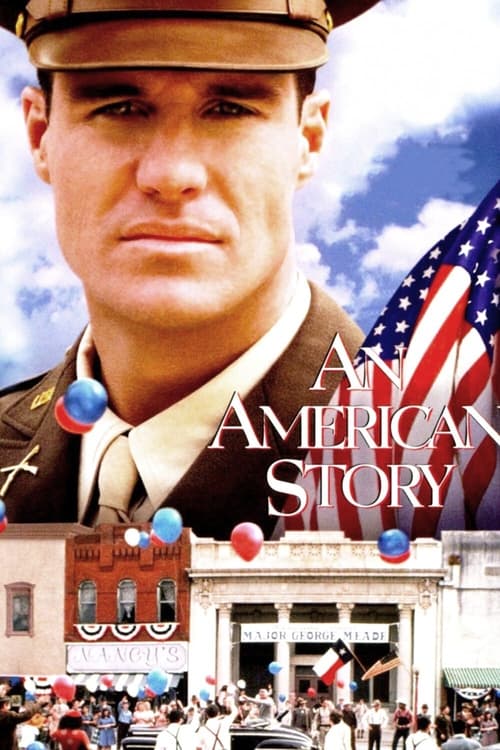
World War II has ended, and the soldiers come home expecting relief, family, and the ordinary comfort of American life. Instead, in a small Texas town, they walk straight into a different kind of occupation: one carried out not by foreign troops but by their own corrupt local officials, and the shock of that betrayal gives the story its bitter opening rhythm.
The central figures are a group of decorated veterans, including George and Jesse, who return to their sleepy hometown after heavy combat in Europe and quickly discover that the town has been taken over by a crooked political machine. One veteran comes home expecting to resume his small business only to learn that he is now paying protection money to City Hall, and the insult cuts deep because the abuse is systematic, not isolated. The film's moral temperature is set immediately by his furious complaint: "We didn't take this kind of bull from the Nazis. I don't know why we have to come home and take it from [the mayor]." That line captures the emotional core of the movie: these men have survived war overseas only to find corruption waiting for them at home.
The veterans see at once that the town's government is not simply inefficient or flawed but actively predatory. The mayor and his allies use their positions to line their own pockets with war contracts and extortion, draining money from businesses and ordinary residents while pretending to serve the public. The town's center of power is City Hall, but the corruption spreads outward into daily life, affecting shops, workers, families, and anyone forced to deal with the administration. The returning soldiers are appalled not just because they are being cheated, but because the very values they fought for in Europe--fairness, democracy, sacrifice--are being mocked in their own hometown.
As the men settle back in, the story makes clear that this is not only a political struggle but a personal one. Their homes are nearby, their neighbors are the victims, and their sense of identity is tied to the town they thought they had defended. The veterans' anger is sharpened by the fact that they have seen enough death and destruction already, yet here they are, confronting a system that behaves with the cold calculation of a wartime enemy while wearing the face of local government. The film's tension builds through that contrast: they have returned with uniforms replaced by civilian clothes, but the war's language of resistance still hangs over every exchange.
In response, George, Jesse, and their fellow soldiers begin organizing rather than simply complaining. They gather friends and family and form the Veterans Party, deciding that if the town's political machine will not relinquish power voluntarily, they will challenge it directly at the ballot box. It is an underfunded, improvised campaign, and the veterans are at an obvious disadvantage against a well-oiled machine with money, influence, and local control. The story emphasizes the awkwardness of their political awakening: men trained for combat now have to think about speeches, votes, public persuasion, and the slow machinery of democratic resistance. Their effort feels both noble and fragile because it depends on trust in a process already being poisoned from within.
The campaign's weakness becomes even more apparent when they realize how completely the mayor's side has infected local power structures. Many people in town are being forced to pay protection money, which means fear has already been turned into a civic habit. The veterans are not just up against a single crooked man but an ecosystem of intimidation, and the film carefully allows that realization to settle in before escalating the conflict. Every storefront, every office, every public interaction feels compromised. The town is still recognizable as home, but it has been hollowed out, its moral architecture replaced by bribery and coercion.
The men also face a devastating political setback when the one person who might have given their effort credibility--a widely respected fellow veteran and World War II war hero--is bought off by the powers that be. That revelation matters because it proves the corrupt machine can even capture honor itself. The veterans have been relying on the idea that military service still means something in the public sphere, that a hero's reputation might sway voters or rally the town. Instead, they learn that the machine can purchase loyalty as easily as it purchases contracts. The blow is both strategic and symbolic: if even a war hero can be compromised, then no institution in town is safe.
Although the summaries do not give a scene-by-scene account of every meeting or confrontation, the progression is clear: the veterans try persuasion first, then expose corruption, then attempt to build a legitimate political alternative, and all along the mayor's administration tightens its grip. The campaign remains humble and grassroots while the opposition uses the full force of office. The veterans' frustration grows because they can see the problem clearly, but they cannot yet force the town to see it with them. That gap between awareness and action is where the film generates its suspense. The men are no longer on battlefields, yet they still move like soldiers: scouting the enemy, testing weakness, preparing for the decisive blow.
The decisive escalation comes when the mayor attempts to rig the election. This is the moment the film has been building toward, because it transforms the conflict from a contest of speeches and votes into an outright struggle for the survival of democracy. The story's logic becomes brutally simple: if the ballot can be stolen, then all of the veterans' effort, sacrifice, and patience mean nothing. The corrupt administration is no longer content to dominate the town through money and fear; it is prepared to destroy the election itself rather than risk losing control.
From there the film surges toward its climax with mounting urgency. The veterans, described as fresh from restoring democracy abroad, refuse to let it be destroyed at home. That line of thought gives the climax its force: they are not merely angry men defending a town office; they are soldiers who believe they have a civic duty to protect the very institution that the mayor is trying to corrupt. The ballot box becomes the emotional center of the ending, a physical object loaded with symbolic weight. It stands for self-government, for honor, for the right of ordinary citizens to decide their own future without coercion.
When the ballot boxes are stolen and taken to the jail by deputies, the veterans respond with gunfire and explosives to retrieve them, echoing the real Battle of Athens that inspired the film. The confrontation becomes a direct, violent test of wills, and the film makes clear that the men are acting under the belief that force is necessary because the legal system has already been compromised. This is the point where the story's tension peaks: the town has reached the brink of open conflict, and the former soldiers must choose whether to accept defeat or risk everything to recover the democratic process. They choose resistance.
The available plot information does not specify a detailed casualty list, and the source material explicitly notes that in the historical event there were no fatalities, though several injuries occurred on both sides. The film summaries provided do not confirm any deaths in the fictionalized version either, so the most accurate reading is that the climax is violent but not fatal. That absence of confirmed deaths matters because it keeps the ending focused on justice rather than massacre. The confrontation is meant to expose corruption and force accountability, not to stage a tragic body count.
Still, the emotional stakes are high because the men are risking their lives to keep a stolen election from disappearing into the machinery of power. The final confrontation centers on the ballot box, and the veterans' success in defending it signals that the mayor's scheme has failed. The corrupt administration's attempt to steal the election backfires once the veterans physically resist. The town's political future is thus decided not by the mayor's money or deputies, but by the returning soldiers' willingness to stand their ground.
The ending resolves the central conflict in favor of the veterans. The ballot box is defended, the election theft is stopped, and the corrupt machine is confronted on the very ground it tried to control. The story closes on the sense that democracy has been reclaimed through sacrifice, brotherhood, and stubborn resolve. The film does not provide a quoted final line or a fully detailed last shot in the available summaries, but its ending beat is unmistakable: the veterans, having fought fascism abroad, refuse to allow tyranny and theft to govern their own town.
What remains most vivid in the story is the emotional reversal at its heart. The men return home expecting peace and find a domestic enemy hiding behind local office and civic respectability. They begin as exhausted veterans burdened by a broken town and end as defenders of the democratic process, their loyalty to one another and to the country's ideals finally translated into action. George, Jesse, and the others are not portrayed as superhuman; they are ordinary citizens who have learned, through war and betrayal, that honor sometimes requires confrontation. The town's corruption is not erased by rhetoric alone. It is beaten back when the veterans decide that the ballot belongs to the people, not to the men who think they can buy it.
The film's final movement, then, is less about victory in the conventional sense than about moral restoration. The veterans' party begins as a desperate local effort and ends as a direct challenge to the idea that power can simply be stolen and kept through intimidation. The mayor's attempt to rig the election is the last major twist, because it strips away any illusion that the conflict can be resolved politely. Once that happens, the story becomes a literal fight for the ballot box, and the veterans answer with the same resolve that carried them through Europe. By the end, the town's corruption has been exposed, the election has been defended, and the men who returned home in peace discover that their war for democracy was not over after all.





What is the ending?
In the ending of "An American Story," the main character, a Vietnamese immigrant named Tuan, faces the culmination of his struggles as he attempts to find his place in America. After a series of challenges, he ultimately decides to return to Vietnam, realizing that his journey in the United States has not fulfilled his dreams. The film concludes with Tuan reflecting on his experiences and the sacrifices made along the way.
As the final scenes unfold, Tuan stands at the airport, his heart heavy with the weight of his decision. He looks back at the life he built in America, filled with both hope and disappointment. The camera captures his conflicted emotions, showcasing the longing for his homeland and the realization that he may never fully belong in this new world.
In a poignant moment, Tuan shares a final goodbye with his friends, who have supported him throughout his journey. Their expressions reveal a mix of sadness and understanding, as they recognize the depth of Tuan's internal struggle. Tuan's departure symbolizes not just a physical journey back to Vietnam, but also a return to his roots and a search for identity.
As the film closes, Tuan boards the plane, leaving behind the complexities of his American life. The screen fades to black, leaving the audience to ponder the sacrifices made by immigrants and the quest for belonging.
Expanding on the ending, the scene begins with Tuan standing in the bustling airport terminal, the sounds of announcements and travelers creating a cacophony around him. He clutches his boarding pass tightly, his knuckles white with tension. The camera zooms in on his face, capturing the turmoil within--his eyes reflect a mixture of hope and sorrow.
As he walks through the terminal, memories flood back to him: the struggles he faced upon arriving in America, the friendships he forged, and the dreams he chased. Each step feels heavy, as if he is carrying the weight of his past decisions. He pauses to look at a group of children playing, their laughter a stark contrast to his somber mood. This moment highlights his longing for a simpler time, a time before the complexities of adult life and the harsh realities of immigration.
Tuan approaches his friends, who have gathered to see him off. Their faces are etched with concern and sadness. One friend, a fellow immigrant named Minh, speaks up, urging Tuan to reconsider. "You have a life here, Tuan. You can still make it work," he pleads, his voice thick with emotion. Tuan shakes his head, his resolve firm yet pained. "I need to go home," he replies softly, his voice barely above a whisper.
The camera captures the moment as Tuan embraces each friend, the hugs lingering as if to convey unspoken words of support and understanding. Tears glisten in their eyes, and the weight of their shared experiences hangs in the air. Tuan's decision is not just about returning to Vietnam; it is about reclaiming his identity and acknowledging the sacrifices made by his family.
As he walks toward the gate, the camera follows him closely, emphasizing his isolation amidst the crowd. The sounds of the airport fade into a haunting silence, allowing the audience to feel the gravity of his choice. Tuan takes one last look back, his heart aching as he sees his friends waving goodbye, their faces a mix of pride and sorrow.
Finally, Tuan boards the plane, the door closing behind him with a definitive thud. As the aircraft begins to taxi down the runway, he gazes out the window, watching the landscape of America fade away. The camera captures his reflection in the glass, a man caught between two worlds, each with its own set of challenges and dreams.
The film concludes with Tuan's plane ascending into the sky, symbolizing his journey back to his roots. The screen fades to black, leaving the audience with a poignant reminder of the immigrant experience--filled with hope, sacrifice, and the eternal search for belonging. Each character's fate is intertwined with Tuan's decision, as they all grapple with their own identities and the realities of life in a foreign land.
Is there a post-credit scene?
The movie "An American Story," produced in 1992, does not contain a post-credit scene. The film concludes its narrative without any additional scenes or content after the credits roll. The story wraps up with a focus on the main themes and character arcs, leaving the audience with a sense of closure regarding the events that transpired throughout the film.
What role does the character of Sarah play in John's journey?
Sarah serves as both a love interest and a source of emotional support for John. Her belief in his potential encourages him to pursue his dreams, while her own struggles with her family's expectations mirror John's challenges. Their relationship adds depth to John's character, showcasing his vulnerability and the importance of connection in overcoming adversity.
What motivates the main character, a young man named John, to pursue his dreams despite the challenges he faces?
John is driven by a deep desire to prove himself and escape the limitations of his small-town life. He feels a strong sense of responsibility to his family, particularly to his mother, who has sacrificed so much for him. This internal conflict fuels his determination to succeed, even when faced with obstacles.
How does John's relationship with his father influence his decisions throughout the film?
John's relationship with his father is strained, as his father embodies traditional values and expectations that John struggles to meet. This tension creates a push-and-pull dynamic, where John seeks his father's approval while also yearning for independence. His father's disapproval often leads John to make choices that are rebellious, highlighting his internal struggle between familial loyalty and personal ambition.
What specific events lead to the climax of the film, and how do they affect John's character development?
The climax is reached when John faces a critical decision that could either solidify his future or lead to his downfall. A pivotal moment occurs when he must choose between a lucrative job offer that aligns with his father's expectations and a risky opportunity that reflects his true passions. This decision forces John to confront his fears and ultimately leads to significant growth, as he learns to prioritize his own aspirations over external pressures.
How does the setting of the small town impact the characters and their interactions?
The small-town setting creates a sense of confinement for John and other characters, amplifying their struggles with societal expectations and personal dreams. The close-knit community often serves as both a support system and a source of judgment, influencing how characters interact with one another. This backdrop heightens the stakes of John's journey, as he navigates the complexities of pursuing his ambitions in an environment that feels both familiar and stifling.
Is this family friendly?
"An American Story," produced in 1992, is a drama that explores themes of identity, family, and the immigrant experience. While it contains important messages, there are elements that may be considered objectionable or upsetting for children or sensitive viewers.
-
Cultural Tensions: The film addresses issues of racism and discrimination, which may be difficult for younger audiences to understand fully. Scenes depicting prejudice can evoke strong emotions.
-
Family Struggles: The narrative includes moments of familial conflict and emotional distress, particularly related to the challenges faced by immigrant families. These scenes may be intense and evoke feelings of sadness or anxiety.
-
Violence and Threats: There are instances of verbal confrontations and implied threats that may be unsettling for younger viewers.
-
Loss and Grief: The film touches on themes of loss, which can be emotionally heavy and may resonate deeply with sensitive individuals.
-
Socioeconomic Hardships: The portrayal of poverty and the struggles associated with it can be distressing, particularly for children who may not be familiar with such realities.
Overall, while the film carries significant themes and messages, its emotional weight and some of its content may not be suitable for all children or sensitive viewers.







