









Loading additional questions...
Popular
What motivates the main character, John, to join the Marines?
How does the relationship between John and his fellow Marines develop throughout the film?
What challenges do the Marines face during their mission in the film?
How does the character of the antagonist, a rebel leader, impact the Marines' mission?
What role does the theme of sacrifice play in the characters' development?
Should I watch it?
Ask Your Own Question

What is the plot?
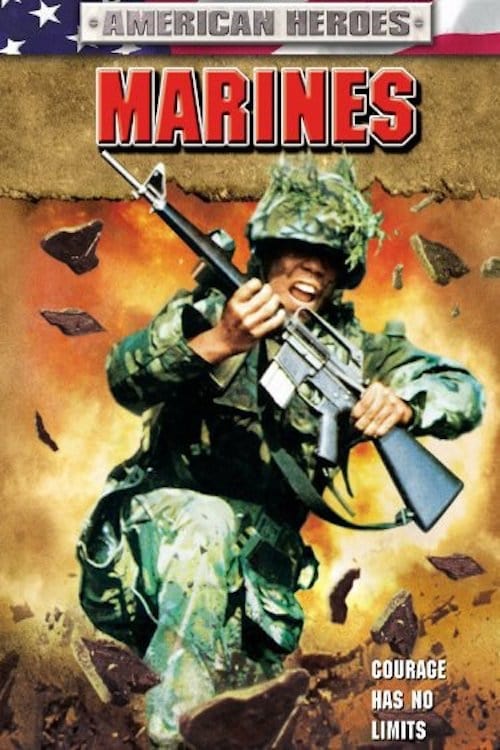
Marines opens in the wreckage of a disastrous American raid against the Russian warlord Vladimir Antonov, and the film immediately makes clear why Colonel Anslow is so determined to finish the job this time. In that earlier assault, 11 Marines are killed and two are captured, a failure that hangs over every decision that follows and gives the whole mission its grim urgency. Antonov himself is established as the kind of man who turns battlefields into graveyards, a ruthless criminal mastermind whose forces have already humiliated the Americans and who now seems untouchable. Colonel Anslow, hard-edged and furious, swears that he will not let such a catastrophe happen again, and that vow becomes the engine of the story as the next operation begins to take shape.
Over the next 36 hours, the Marine command launches a new mission into Russia. Lieutenant Everett leads the unit sent to capture Antonov once and for all, and the operation is framed not as a clean military strike but as a desperate, politically fraught retrieval effort carried out under immense pressure. The men move with the tense vigilance of soldiers who know that one wrong turn can mean death or captivity. The assignment is already dangerous enough, but the mission becomes more volatile when the Americans are forced to work alongside an elite Russian team commanded by Major Dmitri Kirilenko. Kirilenko is an unsettling ally from the start: capable, disciplined, and clearly useful, but impossible to fully trust. That uncertainty drives much of the suspense, because the Marines are trying to capture a warlord on foreign soil while never being certain whether the Russians beside them are partners, observers, or future betrayers.
The early part of the mission builds like a pressure chamber. Everett and his Marines move deeper into hostile territory, and every encounter feels charged with the memory of the previous failed attack. The film keeps returning to the question of whether this is truly a joint operation or just a temporary alignment of interests. Colonel Anslow's determination to prevent another massacre gives the Americans a kind of fierce emotional center, while Kirilenko's presence introduces a different kind of danger: the possibility that the Russians know far more about Antonov's network than they are saying. As the Marines push forward, the operation's time limit becomes more suffocating. The 36-hour window is not just a military deadline; it becomes a race against betrayal, reinforcements, and the growing likelihood that Antonov will vanish again if he is not seized immediately.
The story's key turning points are bound up in that uneasy alliance. The Marines discover that surviving in Antonov's territory requires improvisation and trust in people they do not trust. Kirilenko and his men repeatedly prove useful in the field, and their effectiveness suggests that the Russians have every bit as much reason to want Antonov taken down as the Americans do. At the same time, nothing about the arrangement feels safe. The atmosphere is thick with suspicion, and the Marines are constantly forced to wonder whether help will hold long enough for the mission to succeed. That tension gives the film its momentum, especially as Everett tries to keep his men focused while the operation grows more chaotic and the enemy's territory becomes more dangerous with each passing hour.
The confrontation with Antonov's forces escalates toward a violent final push. The Marines are not simply hunting one man; they are moving through a hostile machine built to protect him, and the film's action repeatedly emphasizes how small and exposed Everett's unit is compared with Antonov's reach. The earlier disaster with the 11 dead and two captured looms over every exchange, making each firefight feel like a reckoning. Men are forced to make split-second choices about whether to advance, cover one another, or trust the Russians on their flank. Kirilenko's team remains central to the assault, and their role underscores the film's main twist: the Americans cannot finish the mission alone. The enemy is too entrenched, the terrain too controlled, and Antonov too heavily protected. Victory, if it comes, has to be shared with the very forces the Marines are least certain about.
As the climax approaches, the film narrows its focus to the question of whether Antonov can finally be cornered. The chase and assault structure tightens into a final confrontation in which the Marines and Kirilenko's Russians close in on the warlord. The emotional weight of the sequence comes from the idea that this is the chance Colonel Anslow has been waiting for since the opening massacre. Every step toward Antonov is also a step away from the humiliation of the earlier defeat. Everett's leadership is tested under fire, and the men around him are pushed to their limit as the operation reaches its most dangerous phase. The film's tension is not just about whether Antonov can be caught, but whether the fragile cooperation between the Americans and Russians will survive long enough to make that capture possible.
The ending resolves that central struggle with a successful final push against Antonov. With Kirilenko's help, the Marines manage to overpower the warlord's defenses and bring him down at last, fulfilling the mission that has driven the whole film. The broad shape of the ending is that the alliance, however uneasy, proves strong enough to do what the first American assault could not. Antonov does not escape this time, and the story closes on the sense that Colonel Anslow's vow has finally been honored. The prior disaster is not erased, but it is answered. Everett and the Marines survive the operation's final phase, and the capture of Antonov becomes the film's decisive resolution. The closing impression is one of hard-won success rather than triumph: a mission completed through blood, distrust, and the uneasy necessity of fighting alongside former enemies to defeat a greater one.
More Movies Like This
Browse All Movies →






What is the ending?
Is there a post-credit scene?
What motivates the main character, John, to join the Marines?
John, played by the lead character, is driven by a deep sense of duty and a desire to protect his country. His backstory reveals a personal loss that fuels his commitment to serve, as he seeks redemption and purpose through military service.
How does the relationship between John and his fellow Marines develop throughout the film?
Initially, John faces skepticism from his fellow Marines, who question his abilities and commitment. However, as they undergo rigorous training and face challenges together, bonds form through shared experiences, camaraderie, and mutual respect, culminating in a strong brotherhood.
What challenges do the Marines face during their mission in the film?
The Marines encounter various obstacles, including ambushes from enemy forces, navigating treacherous terrain, and dealing with the psychological toll of combat. These challenges test their training, resolve, and the strength of their relationships with one another.
How does the character of the antagonist, a rebel leader, impact the Marines' mission?
The rebel leader poses a significant threat to the Marines, employing guerrilla tactics and manipulating local populations against them. His cunning and ruthlessness create a constant sense of danger, forcing the Marines to adapt their strategies and confront moral dilemmas.
What role does the theme of sacrifice play in the characters' development?
Sacrifice is a recurring theme that shapes the characters' arcs, as they confront the reality of loss and the potential for personal sacrifice for the greater good. This theme is particularly evident in moments of decision-making, where characters must weigh their own safety against the mission's success and their comrades' lives.







