






















Popular
Who is Boogiepop and what is their significance in the story?
What is the relationship between Touka Miyashita and Boogiepop?
What role does the character Kyouko Kirima play in the story?
How does the character Masaki Taniguchi evolve throughout the series?
What is the significance of the 'Phantom' in the story?
Should I watch it?
Ask Your Own Question

What is the plot?
In the city of Shinjuku, a series of mysterious disappearances and deaths begin to plague the area. The story opens with a high school student named Takeda, who is walking home when he encounters a strange girl named Boogiepop. She appears to be a manifestation of a supernatural entity, warning him about an impending danger. Takeda is confused and frightened, but Boogiepop's presence lingers in his mind.
The narrative shifts to a group of students at a local high school, where we meet a girl named Nagi Kirima. Nagi is intelligent and observant, and she begins to investigate the recent events surrounding the disappearances. She learns about a rumor regarding a "Shadows" phenomenon, which is said to be connected to the mysterious deaths. Nagi's determination to uncover the truth drives her to dig deeper into the situation.
Meanwhile, we are introduced to a boy named Kuroda, who is struggling with his own internal demons. He is haunted by the loss of his friend and feels isolated from his peers. Kuroda's emotional turmoil leads him to become involved with a group of students who are experimenting with supernatural powers. They believe they can harness these powers to gain control over their lives, but Kuroda is skeptical and hesitant.
As the story progresses, Nagi encounters a boy named Masaki, who has been affected by the Shadows. Masaki reveals that he has been experiencing strange visions and feels a connection to the supernatural occurrences. Nagi and Masaki form a bond as they work together to uncover the truth behind the Shadows and the entity known as Boogiepop.
The plot thickens when a new character, a girl named Sayaka, is introduced. Sayaka is a victim of the Shadows and has been taken by a mysterious figure known as the "Manticore." This figure is revealed to be a powerful being that feeds on the fears and desires of others. Nagi and Masaki realize that they must rescue Sayaka before it is too late.
In a tense confrontation, Nagi and Masaki confront the Manticore in an abandoned building. The Manticore reveals its true form, a grotesque creature that embodies the darkness within people's hearts. A fierce battle ensues, with Nagi using her intelligence and quick thinking to outmaneuver the creature. Masaki, fueled by his desire to protect Sayaka, taps into his latent powers, allowing him to fight back against the Manticore.
As the battle reaches its climax, Nagi discovers that the key to defeating the Manticore lies in confronting her own fears. She faces her inner demons and, with Masaki's help, manages to weaken the creature. In a final, desperate move, they combine their strengths to deliver a powerful blow that ultimately defeats the Manticore, freeing Sayaka from its grasp.
After the confrontation, the characters are left to grapple with the aftermath of their experiences. Nagi reflects on the nature of fear and the importance of facing one's inner struggles. Masaki, having gained confidence from the battle, begins to reconnect with his peers and find a sense of belonging. Kuroda, witnessing the events unfold, is inspired to confront his own issues and seek help.
The series concludes with a sense of ambiguity as Boogiepop reappears, hinting at the ongoing presence of supernatural forces in the world. The characters are left with the knowledge that while they have faced one threat, there are many more challenges ahead, and the battle against the darkness within themselves and the world continues.







What is the ending?
In the ending of "Boogiepop and Others," the various threads of the story converge as the characters confront their fears and the supernatural entity known as Boogiepop. The series culminates in a confrontation with the "Terror" and the revelation of the true nature of the events that have been unfolding. The characters grapple with their identities and the consequences of their actions, leading to a resolution that leaves some questions unanswered but provides closure for several key figures.
As the narrative unfolds, we see the aftermath of the events surrounding the Terror, a being that preys on the insecurities and fears of high school students. The protagonist, Boogiepop, emerges as a protector, embodying the struggle against the darkness that threatens to consume the youth. The series concludes with a sense of ambiguity, as the characters are left to ponder their experiences and the impact of the Terror on their lives.
Now, let's delve into the ending in a more detailed, chronological manner:
The final episodes of "Boogiepop and Others" begin with a sense of urgency as the characters are drawn into the chaos surrounding the Terror. The atmosphere is thick with tension, and the stakes are high as the students of Shinyo Academy face the consequences of their fears manifesting into reality.
In one pivotal scene, we see Nagi Kirima, a key character who has been investigating the strange occurrences, confront the Terror directly. Her determination is palpable as she navigates the dark corridors of the school, her heart racing with both fear and resolve. She understands that the Terror feeds on the despair of others, and she is determined to put an end to its reign of psychological torment.
As Nagi faces the Terror, the scene shifts to a confrontation between Boogiepop and the entity. Boogiepop, a manifestation of the collective fears and hopes of the students, stands as a stark contrast to the Terror. The visual imagery is striking, with shadows and light playing across their forms, symbolizing the battle between hope and despair. Boogiepop's calm demeanor juxtaposes the chaotic energy of the Terror, highlighting the internal struggle of the characters.
In a climactic moment, the Terror reveals its true form, a grotesque embodiment of the fears that have plagued the students. The confrontation is intense, filled with emotional weight as the characters grapple with their own insecurities. Nagi, fueled by her desire to protect her friends and herself, confronts the Terror with a fierce determination. The dialogue is charged with emotion, as she articulates her understanding of fear and the importance of facing it rather than succumbing to it.
As the battle reaches its peak, the students rally together, showcasing their growth and resilience. They realize that they are not alone in their struggles, and this collective strength becomes a powerful force against the Terror. The visuals shift to a brighter palette, symbolizing hope and unity as they confront their fears together.
In the aftermath of the confrontation, the characters begin to process their experiences. Nagi reflects on her journey, acknowledging the weight of her responsibilities but also the strength she has found within herself. The emotional resonance of her character arc is profound, as she moves from a place of isolation to one of connection with her peers.
The series concludes with a sense of ambiguity, as the characters are left to navigate their futures. Some, like Nagi, find a renewed sense of purpose, while others are left contemplating the impact of the Terror on their lives. The final scenes depict the students returning to their daily lives, but with a newfound understanding of themselves and each other.
In the end, the fate of the main characters is intertwined with the themes of fear, identity, and the importance of connection. Nagi emerges as a stronger individual, having faced her fears head-on. The other students, while still grappling with their experiences, begin to forge deeper connections, suggesting a hopeful path forward despite the darkness they have faced. The series closes on a note of reflection, leaving viewers to ponder the complexities of fear and the resilience of the human spirit.
Is there a post-credit scene?
In "Boogiepop and Others," there is no post-credit scene at the end of the episodes. The series concludes its narrative without additional content after the credits, focusing instead on the intricate storytelling and character development throughout the episodes. Each episode wraps up its story arcs, leaving viewers to reflect on the themes and character journeys presented in the main narrative. The absence of a post-credit scene aligns with the show's overall tone, emphasizing the psychological and supernatural elements rather than traditional cliffhangers or additional content.
Who is Boogiepop and what is their significance in the story?
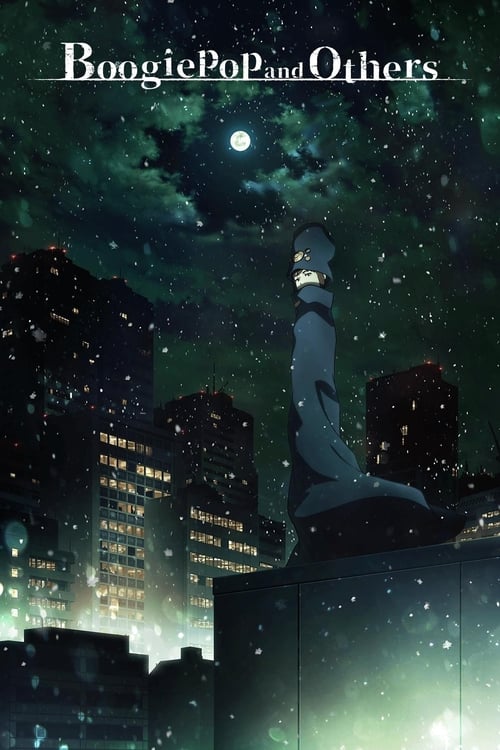
Boogiepop is a mysterious entity that embodies the concept of death and serves as a protector of humanity. They appear as a tall figure wearing a black coat and a mask, often seen in the shadows. Boogiepop's significance lies in their role as a harbinger of change, intervening in the lives of characters who are facing existential crises or threats from supernatural forces. Their presence often leads to pivotal moments in the narrative, influencing the fates of those around them.
What is the relationship between Touka Miyashita and Boogiepop?
Touka Miyashita is a high school girl who becomes the human vessel for Boogiepop. This relationship is complex; while Touka is an ordinary student, she harbors a deep connection to Boogiepop, who emerges when she feels the need to protect others from danger. This duality creates internal conflict for Touka, as she grapples with her identity and the responsibilities that come with being Boogiepop's host. Her emotional struggles are central to the narrative, highlighting themes of isolation and the burden of power.
What role does the character Kyouko Kirima play in the story?
Kyouko Kirima is a key character who serves as a detective-like figure within the narrative. She is perceptive and analytical, often piecing together the events surrounding the supernatural occurrences in the story. Kyouko's motivations stem from her desire to uncover the truth and protect her friends, which leads her to confront various threats, including the enigmatic entities that disrupt the lives of her peers. Her character adds depth to the investigation aspect of the plot, as she navigates the complexities of human emotions and the supernatural.
How does the character Masaki Taniguchi evolve throughout the series?
Masaki Taniguchi starts as a typical high school student who is initially portrayed as somewhat aloof and detached from his peers. However, as the story unfolds, he becomes embroiled in the supernatural events surrounding Boogiepop and the other characters. His evolution is marked by a growing awareness of the darker aspects of human nature and the consequences of his actions. Taniguchi's internal struggles with fear, guilt, and the desire for connection drive his character development, ultimately leading him to confront his own vulnerabilities and the reality of his relationships.
What is the significance of the 'Phantom' in the story?
The 'Phantom' is a malevolent entity that represents a significant threat to the characters in 'Boogiepop and Others.' This being preys on the insecurities and fears of individuals, manipulating them to fulfill its own agenda. The Phantom's presence serves as a catalyst for the events of the series, forcing characters to confront their inner demons and the darker sides of their personalities. Its interactions with various characters highlight the themes of fear, control, and the struggle for identity, making it a crucial element in the unfolding narrative.
Is this family friendly?
"Boogiepop and Others" is not considered family-friendly due to its mature themes and content. The series contains several potentially objectionable or upsetting aspects, including:
-
Violence and Death: The show features scenes of violence, including physical confrontations and the aftermath of deaths, which can be graphic and unsettling.
-
Psychological Horror: The narrative delves into psychological horror elements, exploring themes of fear, trauma, and existential dread that may be disturbing for younger viewers.
-
Mental Health Issues: Characters grapple with mental health struggles, including depression and anxiety, which are depicted in a serious manner that may be triggering for some.
-
Sexual Themes: There are implications of sexual violence and exploitation, which are treated with a level of seriousness that may not be suitable for children.
-
Dark Atmosphere: The overall tone of the series is dark and unsettling, with a pervasive sense of dread that can be emotionally taxing.
These elements contribute to a viewing experience that may not be appropriate for children or sensitive individuals.