





















Popular
What is the significance of the Future Foundation in Danganronpa 3?
How does the character of Hajime Hinata evolve throughout the series?
What role does the character of Chiaki Nanami play in the narrative?
What is the relationship between the characters of Makoto Naegi and Kyoko Kirigiri?
What are the motivations behind the character of Junko Enoshima in Danganronpa 3?
Should I watch it?
Ask Your Own Question

What is the plot?
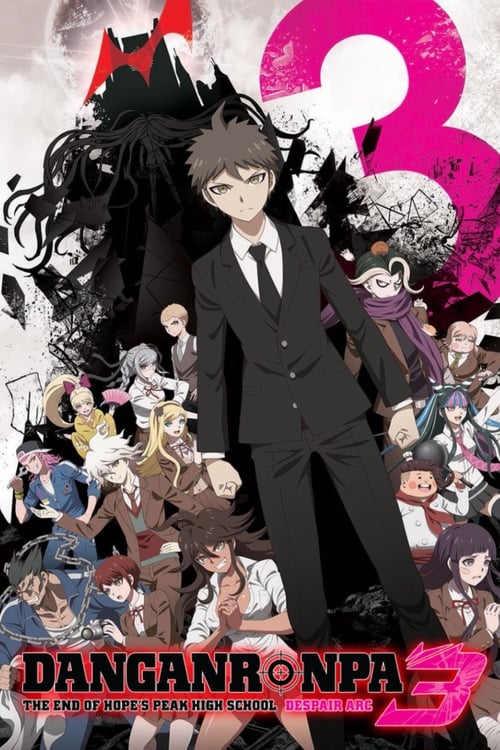
The story begins with the "Future" arc, where the remnants of the Ultimate Despair, led by Junko Enoshima, are attempting to create a new world filled with despair. The main characters, including Makoto Naegi, Kyoko Kirigiri, and others, are trapped in a facility known as the Future Foundation. They are trying to stop the remnants from executing their plan. The arc opens with a flashback to the events of the previous killing game, where the characters are introduced, and their motivations are established.
As the Future Foundation members gather, they discuss the threat posed by the remnants of despair. They learn that the remnants have taken control of a group of students from Hope's Peak Academy, who are now being manipulated into committing acts of violence. The tension rises as the characters realize they must confront the remnants to save the students and prevent a new wave of despair.
The narrative shifts to the "Despair" arc, focusing on the students of Hope's Peak Academy, particularly the members of the "Ultimate" class. The story reveals their backstories and how they became involved with Junko Enoshima. Each character's internal struggles and motivations are explored, showcasing their hopes and fears. The atmosphere is filled with a sense of impending doom as the students are gradually drawn into Junko's manipulative games.
As the arcs progress, the characters face various challenges and confrontations. The Future Foundation members engage in strategic discussions, trying to devise a plan to infiltrate the remnants' base. Meanwhile, the students in the Despair arc are subjected to psychological manipulation, leading to conflicts among them. The tension escalates as they are forced to confront their own despair and the possibility of betrayal.
In a pivotal moment, the Future Foundation discovers that the remnants are planning a new killing game. They realize they must act quickly to prevent it from happening. The characters split into teams to gather information and confront the remnants. Each team faces its own set of challenges, leading to intense confrontations and emotional revelations.
The climax of the Future arc occurs when the Future Foundation finally confronts the remnants of despair. A series of battles ensue, showcasing the characters' growth and determination. The remnants, led by a resurrected Junko, reveal their ultimate plan to plunge the world into despair. The Future Foundation members must confront their own fears and doubts as they fight against overwhelming odds.
In the Despair arc, the students face their own trials as they are manipulated into turning against each other. The psychological toll of Junko's games becomes evident, leading to tragic outcomes. Key characters make critical decisions that impact the course of the story, including betrayals and sacrifices. The emotional weight of their choices is palpable as they grapple with their identities and the consequences of their actions.
As the arcs converge, the final confrontation between the Future Foundation and the remnants of despair reaches its peak. The characters must confront their pasts and the choices that led them to this moment. The stakes are higher than ever as they fight not only for their lives but for the future of humanity. The battles are intense, filled with emotional stakes and dramatic revelations.
In the end, the remnants of despair are defeated, but not without significant losses. The characters are left to grapple with the aftermath of their experiences. The story concludes with a sense of hope, as the surviving characters reflect on their journey and the possibility of rebuilding a better future. The emotional scars of their experiences linger, but they are determined to move forward, united in their resolve to create a world free from despair.








What is the ending?
In the ending of Danganronpa 3: The End of Hope's Peak High School, the final confrontation occurs between the remnants of despair and the forces of hope. After a series of intense trials and emotional revelations, the characters face their ultimate fates. Makoto Naegi, embodying hope, manages to inspire the remaining survivors to reject despair. The series culminates in a climactic showdown where the true nature of despair is confronted. Ultimately, the characters find a way to move forward, with some choosing to embrace hope and others facing the consequences of their actions. The story concludes with a sense of resolution, as the characters begin to rebuild their lives.
As the final episodes unfold, the atmosphere is thick with tension and despair. The remnants of despair, led by the enigmatic figure of Junko Enoshima, have orchestrated a final game that pits the last survivors against each other. The scene opens in a dimly lit room, where the remaining students gather, their faces etched with fear and uncertainty. Among them are Makoto Naegi, the embodiment of hope, and his friends, who have endured so much throughout their harrowing journey.
The first trial begins, and the characters are forced to confront their pasts, revealing deep-seated traumas and regrets. Each character's emotional state is palpable; despair hangs over them like a heavy shroud. As they argue and defend their choices, the stakes rise, and the tension escalates. The audience can feel the weight of their decisions, as they grapple with the consequences of their actions and the lingering influence of Junko's despair.
In a pivotal moment, Makoto stands up, his voice steady yet filled with emotion. He passionately argues for hope, urging his friends to remember the bonds they forged and the strength they found in each other. His words resonate deeply, igniting a flicker of hope in the hearts of his companions. The scene shifts to flashbacks of their shared experiences, highlighting their growth and resilience. The visuals are striking, contrasting the darkness of despair with the light of hope that begins to emerge.
As the trial progresses, the characters confront Junko's manipulations and the twisted nature of despair. The atmosphere becomes charged with determination as they collectively reject the notion that despair is inevitable. The climax of the trial is intense, with accusations flying and emotions running high. Each character's motivations are laid bare, revealing their struggles and desires for redemption.
In the final moments of the trial, the truth is unveiled. The remnants of despair are defeated, and the characters are faced with a choice: to succumb to despair or to embrace hope. The resolution is bittersweet, as some characters, like the stoic and conflicted Kaito Momota, sacrifice themselves for the greater good, embodying the ultimate act of hope. His final moments are filled with a sense of peace, as he encourages his friends to carry on.
As the dust settles, the remaining characters emerge from the trial transformed. They stand together, united in their resolve to rebuild their lives and create a future filled with hope. The final scenes depict them stepping out into the world, a stark contrast to the darkness they faced. Each character's fate is revealed: some choose to pursue their dreams, while others seek forgiveness and healing from their pasts.
The series concludes with a poignant message about the power of hope and the strength found in unity. The characters, once burdened by despair, now look forward to a brighter future, symbolizing the enduring spirit of humanity. The final shot lingers on their faces, filled with determination and a newfound sense of purpose, as they step into the light, ready to face whatever challenges lie ahead.
Is there a post-credit scene?
Yes, "Danganronpa 3: The End of Hope's Peak High School" features a post-credit scene that serves as a poignant conclusion to the series.
As the credits roll, the scene opens with a serene view of a bright, sunny day at Hope's Peak Academy. The camera pans over the school grounds, showcasing the vibrant cherry blossom trees in full bloom, symbolizing hope and renewal. The atmosphere is peaceful, contrasting sharply with the chaos and despair that unfolded throughout the series.
In this scene, we see a group of characters from the Future Foundation, including Makoto Naegi, Kyoko Kirigiri, and others, gathered together. They are discussing the future and the rebuilding of society after the events of the killing game. There is a sense of camaraderie and determination among them, as they reflect on their experiences and the losses they endured.
Makoto expresses his hope for a better future, emphasizing the importance of moving forward and learning from the past. Kyoko, with her calm demeanor, supports his sentiment, highlighting the need to remember those who were lost but also to cherish the bonds that remain. The dialogue is filled with a mix of nostalgia and optimism, showcasing their growth and resilience.
As the scene progresses, the camera shifts to focus on a small, unassuming classroom within the academy. Inside, we see a figure sitting at a desk, writing in a notebook. The figure is revealed to be Hajime Hinata, who has undergone significant character development throughout the series. He appears contemplative, reflecting on his journey and the choices he made. The scene captures his internal struggle, as he grapples with his identity and the weight of his past.
The final moments of the post-credit scene are filled with a sense of ambiguity and hope. Hajime looks up from his notebook, a faint smile appearing on his face as he gazes out the window at the cherry blossoms. The scene fades to black, leaving viewers with a lingering sense of possibility and the idea that, despite the darkness they faced, there is always a chance for hope and redemption.
This post-credit scene encapsulates the themes of the series, emphasizing the importance of hope, friendship, and the resilience of the human spirit in the face of despair.
What is the significance of the Future Foundation in Danganronpa 3?
The Future Foundation plays a crucial role in Danganronpa 3 as it represents the hope and effort to rebuild society after the events of the previous games. It is an organization formed to combat the remnants of despair and to protect the world from the influence of Junko Enoshima's ideology. The members of the Future Foundation, including characters like Makoto Naegi and Kyoko Kirigiri, are driven by their desire to create a better future, contrasting with the despair that the remnants of the Killing School Life represent.
How does the character of Hajime Hinata evolve throughout the series?
Hajime Hinata's character undergoes significant development in Danganronpa 3. Initially introduced as a student with no talent, he grapples with feelings of inadequacy and confusion about his identity. As the story progresses, he learns about his true self, which is tied to the Ultimate Hope, Izuru Kamukura. This revelation forces Hajime to confront his past and the implications of his abilities, leading to a profound internal struggle between hope and despair. His journey culminates in a determination to embrace hope, despite the overwhelming despair surrounding him.
What role does the character of Chiaki Nanami play in the narrative?
Chiaki Nanami serves as a pivotal character in Danganronpa 3, representing the embodiment of hope and the importance of connection. As the Ultimate Gamer, she is not only a source of comfort and support for Hajime but also plays a crucial role in the narrative's emotional core. Her interactions with other characters highlight themes of friendship and sacrifice. Chiaki's eventual fate, where she is killed by the remnants of despair, serves as a catalyst for Hajime's transformation and the overall conflict between hope and despair.
What is the relationship between the characters of Makoto Naegi and Kyoko Kirigiri?
Makoto Naegi and Kyoko Kirigiri share a deep and complex relationship throughout Danganronpa 3. Their bond is built on mutual respect and understanding, stemming from their experiences in the previous games. In this series, they work together as members of the Future Foundation, facing the remnants of despair. Their relationship is characterized by a blend of trust and reliance, as they navigate the challenges posed by the new killing game. Kyoko's calm and analytical demeanor complements Makoto's hopeful and determined nature, making them a strong team in their fight against despair.
What are the motivations behind the character of Junko Enoshima in Danganronpa 3?
Junko Enoshima's motivations in Danganronpa 3 are rooted in her desire to spread despair and chaos. As the mastermind behind the events of the Killing School Life, she revels in the suffering of others and seeks to create a world where despair reigns supreme. Her character embodies the ultimate antagonist, driven by a twisted sense of entertainment and a belief that despair is the true essence of humanity. Throughout the series, her influence looms large, as she manipulates the remnants of despair to continue her legacy, challenging the protagonists' resolve and their fight for hope.
Is this family friendly?
Danganronpa 3: The End of Hope's Peak High School contains several elements that may not be suitable for children or sensitive viewers. Here are some potentially objectionable or upsetting aspects:
-
Graphic Violence: The series features intense scenes of murder and death, often depicted in a stylized but graphic manner. Characters are shown in various states of injury or demise, which can be disturbing.
-
Psychological Trauma: Characters experience significant emotional and psychological distress, including themes of despair, betrayal, and hopelessness. This can be particularly heavy for sensitive viewers.
-
Dark Themes: The narrative explores themes of despair, manipulation, and the loss of hope, which may be unsettling for younger audiences. The moral ambiguity of characters and their actions can also be troubling.
-
Suicide References: There are moments that reference or imply suicide, which can be distressing for viewers who are sensitive to such topics.
-
Intense Emotional Conflict: Characters often face extreme emotional turmoil, leading to intense confrontations and breakdowns that may be hard for some viewers to watch.
-
Mature Language: The dialogue includes strong language and mature themes that may not be appropriate for younger audiences.
These elements contribute to a narrative that is complex and often dark, making it more suitable for older teens and adults rather than children.