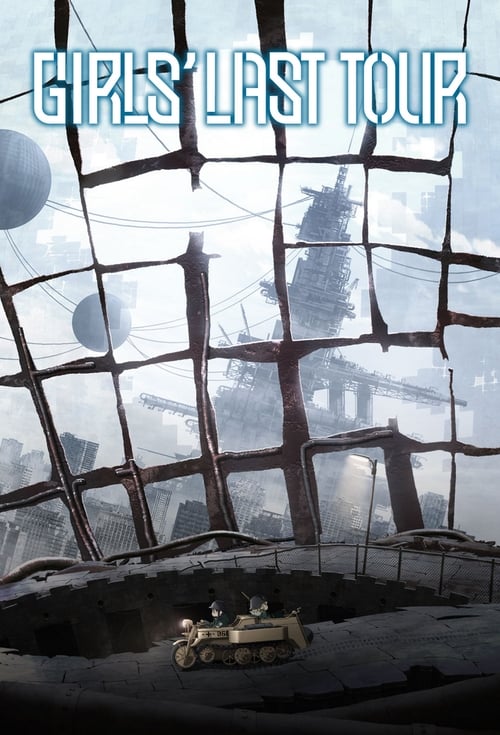










Popular
What challenges do Chito and Yuuri face while exploring the abandoned city?
How do Chito and Yuuri's personalities complement each other during their journey?
What significance does the vehicle they travel in hold for Chito and Yuuri?
How do Chito and Yuuri cope with the memories of their past lives?
What role does the environment play in shaping the girls' experiences and emotions?
Should I watch it?
Ask Your Own Question

What is the plot?
In the "Specials" of Girls' Last Tour, the narrative unfolds with the two main characters, Chito and Yuuri, continuing their journey through a desolate, post-apocalyptic world. The episode opens with the girls exploring a vast, abandoned cityscape, filled with remnants of a once-thriving civilization. The atmosphere is heavy with silence, punctuated only by the sound of their footsteps and the occasional rustle of debris. Chito, ever the curious one, examines the remnants of old technology, while Yuuri seems more focused on their immediate needs, such as food and warmth.
As they navigate through the ruins, they come across a dilapidated building that appears to have once been a library. The sight of the books, now covered in dust and decay, evokes a sense of nostalgia in Chito. She expresses a desire to read the stories contained within, but Yuuri, pragmatic as always, reminds her that they need to prioritize survival over nostalgia. This moment highlights the contrasting personalities of the two girls: Chito's yearning for knowledge and connection to the past versus Yuuri's focus on the present and their survival.
The scene shifts as they find a small stash of canned food in the library. Excited by their discovery, they sit down to eat, sharing a moment of camaraderie. As they enjoy their meal, they discuss their dreams and aspirations, revealing their inner thoughts and fears about the future. Chito expresses a desire to find a place where they can feel safe and happy, while Yuuri, with a more cynical outlook, questions whether such a place even exists anymore. This conversation deepens their bond, as they both grapple with the harsh realities of their world.
After their meal, the girls decide to explore further, venturing into the basement of the library. The darkness envelops them as they descend, and the atmosphere becomes tense. They stumble upon a hidden room filled with old photographs and artifacts from the past. Chito is captivated by the images, which depict scenes of life before the apocalypse. She becomes emotional, reflecting on the beauty of the world that once was. Yuuri, however, remains detached, urging Chito to focus on the present and not get lost in the past.
Suddenly, they hear a noise coming from the shadows, causing both girls to freeze in fear. They exchange worried glances, and Yuuri instinctively reaches for her weapon, ready to defend them. The tension escalates as they cautiously approach the source of the sound, only to discover a small, frightened animal hiding in the corner. The relief washes over them, and they share a laugh, momentarily forgetting the weight of their situation. This encounter serves as a reminder of the fragility of life in their world.
As they leave the library, the girls reflect on their experiences and the importance of their friendship. They realize that despite the bleakness surrounding them, they can find solace in each other. The episode concludes with them walking away from the library, hand in hand, ready to face whatever challenges lie ahead. The final shot lingers on the desolate landscape, a poignant reminder of their journey and the enduring hope they carry within them.








What is the ending?
In the ending of "Girls' Last Tour," the two main characters, Chito and Yuuri, find themselves in a desolate landscape, reflecting on their journey and the world around them. They come across a large, abandoned structure that seems to hold remnants of the past. As they explore, they share their thoughts and feelings about their experiences, the meaning of their journey, and the nature of existence. Ultimately, they embrace the uncertainty of their future, finding solace in their companionship as they continue to navigate the bleak world together.
As the final moments of "Girls' Last Tour" unfold, the scene opens with Chito and Yuuri trudging through the remnants of a once-thriving civilization, now reduced to ruins. The sky is a muted gray, casting a somber tone over the landscape. The air is thick with the weight of silence, broken only by the soft crunch of their footsteps on the debris-strewn ground.
They approach a massive, dilapidated structure, its walls crumbling and covered in rust. The building looms over them, a testament to a time long gone. Chito, with her keen sense of curiosity, suggests they explore it. Yuuri, ever the more carefree of the two, agrees, her eyes sparkling with a mix of excitement and apprehension.
Inside, the atmosphere shifts. Dust motes dance in the shafts of light filtering through broken windows. The interior is a labyrinth of forgotten machinery and scattered remnants of human life. As they wander deeper, they come across a room filled with old photographs and artifacts, each telling a story of the past. Chito picks up a photograph, her expression turning contemplative as she reflects on the lives that once filled this space.
Yuuri, noticing Chito's somber mood, tries to lighten the atmosphere with a joke, but the weight of their reality hangs heavily between them. They sit together on the floor, surrounded by the echoes of history, and share their thoughts about the world they inhabit. Chito expresses her fears about the future, the uncertainty of their existence in a world that seems to have forgotten them. Yuuri listens intently, her usual playful demeanor replaced by a rare seriousness as she acknowledges the gravity of their situation.
As the conversation deepens, they discuss the meaning of their journey. Chito wonders if they are merely wandering aimlessly, while Yuuri counters that their experiences, no matter how bleak, are valuable. They find comfort in each other's presence, realizing that their bond is a source of strength amidst the desolation.
The scene shifts as they decide to leave the building, stepping back into the open air. The landscape stretches out before them, a vast expanse of emptiness. They pause, taking in the view, and for a moment, the weight of their journey feels lighter. Chito and Yuuri share a quiet understanding, a silent promise to continue facing whatever lies ahead together.
In the final moments, they walk side by side, their silhouettes framed against the horizon. The camera lingers on their figures as they move forward, embodying resilience in the face of uncertainty. The screen fades to black, leaving the audience with a sense of hope intertwined with the stark reality of their world.
Chito and Yuuri's fate remains intertwined as they continue their journey, embodying the spirit of companionship and perseverance in a world that has lost its vibrancy. Their story concludes not with definitive answers but with the acknowledgment of their shared experiences and the strength they draw from one another as they navigate the unknown future together.
Is there a post-credit scene?
In the "Girls' Last Tour" Specials, there is indeed a post-credit scene that adds a poignant touch to the overall narrative. After the main events of the episode conclude, the screen fades to black, and a serene yet melancholic atmosphere envelops the viewer.
The scene opens with Chito and Yuuri sitting together on a hill, overlooking a vast, desolate landscape. The sky is painted in hues of orange and purple, suggesting either dawn or dusk, symbolizing the passage of time and the fleeting nature of their journey. The two girls are silent for a moment, lost in their thoughts, reflecting on their experiences and the world around them.
Chito, with her characteristic curiosity, breaks the silence by pointing out a distant silhouette of what appears to be a ruined structure. Her eyes sparkle with a mix of hope and nostalgia, as she wonders aloud about the stories that might be hidden within the remnants of the past. Yuuri, on the other hand, seems more contemplative, her expression a blend of acceptance and longing. She gazes at the horizon, contemplating their uncertain future in a world that has been stripped of its vibrancy.
As the camera zooms out, the girls' figures become smaller against the vastness of the landscape, emphasizing their isolation but also their resilience. The scene encapsulates the essence of their journey--two friends navigating a desolate world, finding solace in each other's company amidst the ruins of civilization.
The post-credit scene concludes with a soft, lingering shot of the sky, leaving viewers with a sense of bittersweet hope, as the screen fades to black once more. This moment serves as a reminder of the enduring bond between Chito and Yuuri, even in the face of an uncertain and bleak existence.
What challenges do Chito and Yuuri face while exploring the abandoned city?
Chito and Yuuri navigate through the remnants of a once-thriving civilization, encountering various obstacles such as crumbling buildings, treacherous terrain, and the constant threat of scarcity. Their journey is marked by moments of tension as they must find food, fuel, and shelter while grappling with the eerie silence of their surroundings. The emotional weight of their isolation often leads to introspective conversations about their past and the world they inhabit.
How do Chito and Yuuri's personalities complement each other during their journey?
Chito is often portrayed as the more serious and contemplative of the two, driven by a desire to document their experiences and understand the world around them. In contrast, Yuuri embodies a more carefree and adventurous spirit, often encouraging Chito to embrace spontaneity. This dynamic creates a balance between caution and exploration, allowing them to support each other emotionally as they face the harsh realities of their environment.
What significance does the vehicle they travel in hold for Chito and Yuuri?
The vehicle, a small, military-style truck, serves as both a mode of transportation and a symbol of their freedom and survival. It represents their ability to traverse the desolate landscape and seek out new experiences, while also being a reminder of the remnants of civilization. The truck becomes a safe haven for them, filled with their belongings and memories, and is often a focal point for their discussions about hope and the future.
How do Chito and Yuuri cope with the memories of their past lives?
Throughout their journey, Chito and Yuuri frequently reflect on their past, sharing stories of their previous lives and the world before the collapse. These memories are often tinged with nostalgia and sadness, as they grapple with the loss of friends, family, and a sense of normalcy. Their coping mechanisms include humor, philosophical discussions, and the creation of small rituals, which help them process their grief and maintain a sense of connection to their humanity.
What role does the environment play in shaping the girls' experiences and emotions?
The desolate and post-apocalyptic environment profoundly impacts Chito and Yuuri's emotional states. The stark landscapes, filled with remnants of human life, evoke feelings of loneliness and despair, yet also inspire moments of wonder and curiosity. The girls often find beauty in the ruins, which leads to contemplative discussions about existence and the meaning of life. The environment acts as both a backdrop for their adventures and a catalyst for their personal growth.
Is this family friendly?
"Girls' Last Tour" is generally considered to be a thoughtful and introspective series, but it does contain themes and scenes that may be sensitive for children or those who are easily upset.
-
Post-Apocalyptic Setting: The backdrop of a desolate, post-apocalyptic world can be unsettling, as it portrays the remnants of civilization and the struggles of survival.
-
Existential Themes: The characters often engage in deep philosophical discussions about life, death, and the meaning of existence, which may be heavy for younger viewers.
-
Visuals of Destruction: The series features imagery of ruined cities and abandoned landscapes, which can evoke feelings of sadness or despair.
-
Isolation and Loneliness: The emotional weight of the characters' isolation in a barren world may resonate deeply, potentially leading to feelings of melancholy.
-
Mature Conversations: Some dialogues touch on complex topics that may not be suitable for younger audiences, including reflections on mortality and the human condition.
While the series is not overtly graphic or violent, its themes and atmosphere may require parental discretion for younger viewers.