

Popular
What specific events led to the decision to invade Afghanistan after 9/11?
What role did the intelligence community play in the events leading up to 9/11?
How does the series portray the character of Osama bin Laden?
How does the series depict the impact of 9/11 on American society?
What were the key military strategies discussed in the lead-up to the Iraq War?
Should I watch it?
Ask Your Own Question

What is the plot?
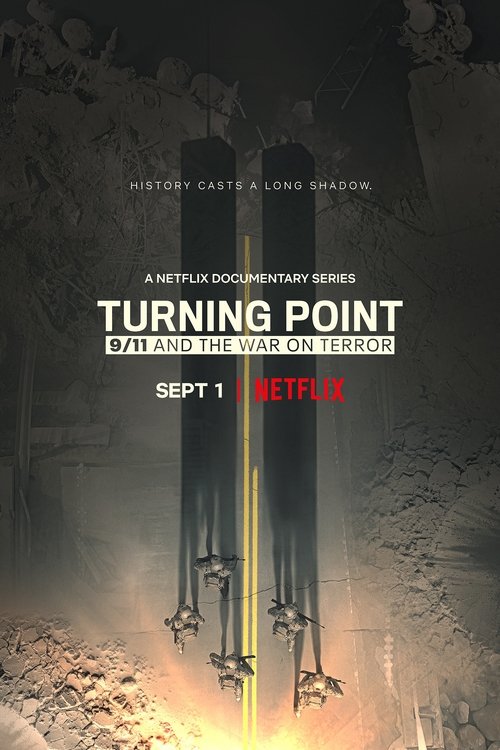
"Turning Point: 9/11 and the War on Terror" begins with a detailed recounting of the events leading up to September 11, 2001. The series opens with a montage of the United States in the late 1990s, highlighting the growing threat of terrorism, particularly from al-Qaeda. It introduces key figures, including Osama bin Laden, who is shown in various locations, articulating his grievances against the United States. The narrative emphasizes the lack of urgency in the U.S. government's response to these threats, setting the stage for the catastrophic events to come.
As the timeline progresses, the series delves into the morning of September 11, 2001. Viewers are taken through the chaotic moments as hijackers take control of four commercial airplanes. The first plane, American Airlines Flight 11, is shown taking off from Boston, with passengers unaware of the impending doom. The hijackers, motivated by their extremist beliefs, execute their plan with precision. The scene shifts to the cockpit, where the hijackers overpower the flight crew, creating a tense atmosphere filled with fear and confusion.
The second plane, United Airlines Flight 175, is also hijacked shortly after takeoff. The series captures the horror as both planes are flown into the North and South Towers of the World Trade Center. The impact is depicted with harrowing visuals of explosions, debris, and the immediate panic that ensues among the passengers and those in the buildings. The emotional weight of the moment is palpable, as the series shows the reactions of people inside the towers, many of whom are trapped and desperately trying to escape.
The narrative then shifts to the Pentagon, where American Airlines Flight 77 crashes into the building, causing significant destruction and loss of life. The series portrays the chaos within the Pentagon, highlighting the bravery of first responders and military personnel as they attempt to rescue those trapped inside. The emotional toll on survivors and witnesses is emphasized, showcasing their shock and grief.
Meanwhile, United Airlines Flight 93 is hijacked, but the passengers on board learn about the other attacks through phone calls. The series captures their courageous decision to fight back against the hijackers. The tension builds as the passengers, led by Todd Beamer, devise a plan to regain control of the plane. The struggle is depicted in a gripping sequence, showcasing their bravery and determination as they confront the hijackers in a desperate attempt to save their lives and prevent further destruction.
As the day unfolds, the Twin Towers are shown collapsing in a catastrophic sequence, with dust and debris engulfing the surrounding area. The series captures the immediate aftermath, focusing on the first responders who rush to the scene, facing unimaginable challenges as they search for survivors. The emotional impact of the collapse is felt deeply, as families await news of their loved ones, and the nation grapples with the enormity of the tragedy.
In the following episodes, the series explores the U.S. government's response to the attacks. It details the formation of the Department of Homeland Security and the implementation of the USA PATRIOT Act, showcasing the shift in national security policy. Key figures in the government, including President George W. Bush and members of his administration, are depicted as they navigate the complexities of responding to the attacks while addressing the fears of the American public.
The narrative also delves into the international response, particularly the decision to invade Afghanistan in pursuit of al-Qaeda and the Taliban. The series highlights the motivations behind the war, including the desire for justice and the need to prevent future attacks. It captures the emotional weight of soldiers deploying to Afghanistan, their hopes, fears, and the realities of combat.
As the war progresses, the series examines the challenges faced by U.S. forces, including the complexities of fighting an insurgency and the impact on Afghan civilians. The emotional toll on soldiers and their families is portrayed, emphasizing the sacrifices made in the name of national security.
The series concludes by reflecting on the long-term consequences of the events of September 11, 2001, and the ongoing war on terror. It highlights the continued threat of terrorism, the evolving nature of warfare, and the impact on global politics. The emotional resonance of the narrative lingers, as it captures the profound changes in American society and the world in the wake of that fateful day.




What is the ending?
In the ending of "Turning Point: 9/11 and the War on Terror," the series culminates in a reflection on the long-term consequences of the events of September 11, 2001. It highlights the ongoing impact of the War on Terror, the personal stories of those affected, and the complex legacy of the decisions made in the aftermath of the attacks. The series concludes with a somber acknowledgment of the lives lost and the enduring struggle for justice and understanding in a world forever changed.
As the final episodes unfold, the narrative shifts to the aftermath of the 9/11 attacks, focusing on the immediate responses from the U.S. government and military. The scenes are filled with a palpable tension as leaders grapple with the enormity of the situation. The audience witnesses President George W. Bush in the Oval Office, where he is briefed on the attacks. His expression is a mix of shock and determination, reflecting the weight of the decisions he must make in the coming days.
In the following scenes, the series delves into the chaos of the initial response. First responders are shown rushing into the burning towers, their faces grim and resolute. The camera captures the dust and debris swirling around them, emphasizing the danger they face. The emotional toll is evident as they recount their experiences, revealing the fear and uncertainty that gripped them as they fought to save lives.
The narrative then transitions to the military's preparations for retaliation. High-ranking officials discuss the need for a decisive response, leading to the decision to invade Afghanistan. The series portrays the urgency and gravity of these discussions, with military leaders expressing their concerns about the potential consequences of war. The tension in the room is palpable, as the weight of history hangs over their deliberations.
As the series progresses, it highlights the personal stories of those affected by the war. Families of soldiers who were deployed to Afghanistan share their fears and hopes, their emotional struggles laid bare. The camera captures their tears and moments of quiet reflection, underscoring the human cost of the conflict. The series does not shy away from showing the impact of loss, as families mourn loved ones who never returned.
In the final scenes, the series reflects on the broader implications of the War on Terror. It examines the rise of terrorism and the ongoing conflicts that have ensued, leaving viewers with a sense of the unresolved nature of these issues. The emotional weight of the narrative is underscored by interviews with survivors and experts, who provide insight into the lasting effects of 9/11 on American society and the world.
The series concludes with a montage of images from the aftermath of the attacks, interspersed with quotes from those who lived through it. The final moments are somber, as the screen fades to black, leaving the audience to contemplate the enduring legacy of 9/11 and the complex web of conflict that followed. The fate of the main characters--politicians, military leaders, and families--remains intertwined with the ongoing struggle for peace and understanding in a world forever altered by tragedy.
Is there a post-credit scene?
Turning Point: 9/11 and the War on Terror does not feature a post-credit scene. The series concludes with a powerful reflection on the events surrounding 9/11 and the subsequent impact on global politics and society. The final moments emphasize the lasting effects of the attacks and the ongoing struggle against terrorism, leaving viewers with a sense of contemplation rather than a traditional post-credit sequence. The focus remains on the emotional weight of the narrative and the stories of those affected by the events, rather than providing additional content after the credits.
What specific events led to the decision to invade Afghanistan after 9/11?
The series details the immediate aftermath of the 9/11 attacks, showcasing the urgency and chaos in the U.S. government as they grappled with the need for a response. Key figures, including President George W. Bush and his advisors, are depicted in tense meetings where they discuss intelligence reports linking Al-Qaeda to the attacks. The emotional weight of the tragedy drives their determination to take decisive action, leading to the decision to invade Afghanistan to dismantle the Taliban regime and target Osama bin Laden.
What role did the intelligence community play in the events leading up to 9/11?
The series delves into the failures and challenges faced by the U.S. intelligence community prior to the attacks. It highlights the internal struggles within agencies like the CIA and FBI, showcasing the frustration of agents who sensed the impending threat but were hindered by bureaucratic obstacles and lack of communication. The emotional toll on these agents is palpable as they reflect on their inability to prevent the tragedy, leading to a sense of guilt and urgency for reform in intelligence operations.
How does the series portray the character of Osama bin Laden?
Osama bin Laden is depicted as a complex figure, driven by a mix of ideological fervor and personal ambition. The series explores his background, including his upbringing and the formation of Al-Qaeda. Through interviews and archival footage, viewers gain insight into his motivations, his strategic thinking, and the charisma that allowed him to rally followers to his cause. The emotional stakes are heightened as the narrative reveals the impact of his actions on both his followers and the victims of the 9/11 attacks.
How does the series depict the impact of 9/11 on American society?
Turning Point captures the immediate emotional aftermath of the attacks on American society, portraying scenes of shock, grief, and unity among citizens. The series includes personal stories from survivors, first responders, and families of victims, illustrating the profound loss and trauma experienced across the nation. The emotional resonance is heightened through interviews and personal accounts, showcasing how the attacks reshaped public perception of safety, security, and the U.S. role in the world.
What were the key military strategies discussed in the lead-up to the Iraq War?
The series examines the shift in focus from Afghanistan to Iraq, detailing the strategic discussions among military leaders and government officials. It portrays the internal debates about the justification for war, the emphasis on weapons of mass destruction, and the desire to reshape the Middle East. The emotional conflict among military personnel and policymakers is evident as they grapple with the implications of their decisions, leading to a controversial and complex military engagement.
Is this family friendly?
"Turning Point: 9/11 and the War on Terror" is a documentary series that delves into the events surrounding the September 11 attacks and the subsequent war on terror. Given its subject matter, it may not be considered family-friendly for younger audiences or sensitive viewers.
Potentially objectionable or upsetting aspects include:
-
Graphic Descriptions of Violence: The series includes detailed accounts of the 9/11 attacks, which may involve graphic descriptions of the violence and chaos that ensued.
-
Emotional Testimonies: Interviews with survivors, first responders, and family members of victims may evoke strong emotions, including grief, trauma, and loss.
-
Images of Destruction: The series features footage and images of the destruction caused by the attacks, which can be distressing.
-
Discussion of Terrorism: The exploration of terrorism and its impacts may be unsettling, particularly for younger viewers who may not fully understand the context.
-
Political and Military Content: The series addresses complex political and military responses to the attacks, which may be difficult for children to grasp and could provoke anxiety.
Overall, the series is intended for a mature audience and may not be suitable for children or those who are sensitive to such heavy themes.









